In This Blog (Key Takeaways)
- Addiction does not develop overnight; it develops in predictable stages
- The cycle of addiction alters the brain chemistry and behavior.
- Tolerance and dependence play a role in the long-term addiction risk
- Relapse is a part of the addiction cycle, and not personal failure
- Successful treatment and support can help break the cycle
What is the Cycle of Addiction?
Addiction is often misunderstood as something that is the loss of control or weakness that is personal. In reality, the process of addiction involves a series of stages and influences of the brain, emotions, and behavior over a period of time. This cycle is called the cycle of addiction.
Addiction has been defined as a chronic disease of the brain impacting the reward, motivation, memory and self-control.
Repeated use of a substance over time affects the brain as to how it responds to pleasure and stress, which makes it exceedingly more difficult to quit or stop, despite the negative consequences of its use being made evident.
Understanding how addiction develops can help to reduce the stigma and encourage intervention early. When people recognize the warning signs in the cycle of addiction, they are more likely to consult with professionals to seek help before the condition gets severe.
100% Confidential Support is Available 24/7
No matter what you’re going through, you’re not alone. Our dedicated team is here to provide a safe, judgment-free space where you can talk openly and honestly. Whether you need emotional support, resources, or just someone to listen.
We’re here for you—completely confidential and always respectful of your privacy. Call us today!
How the Brain is Affected by Addiction
Addictive substances stimulate the reward system of our brain through the release of a lot of dopamine. With time, the brain finds an alternative by producing less dopamine naturally so that activities of daily life are no longer as rewarding.
As a result, their dependence on substances increases, and a person increasingly depends on substances to feel normal, motivated or feel emotionally balanced. This neurological shift is one of the most active factors and one of the key reasons for addiction being a repeating cycle as opposed to a one-time behavioral process.
What Are the Stages of Addiction?
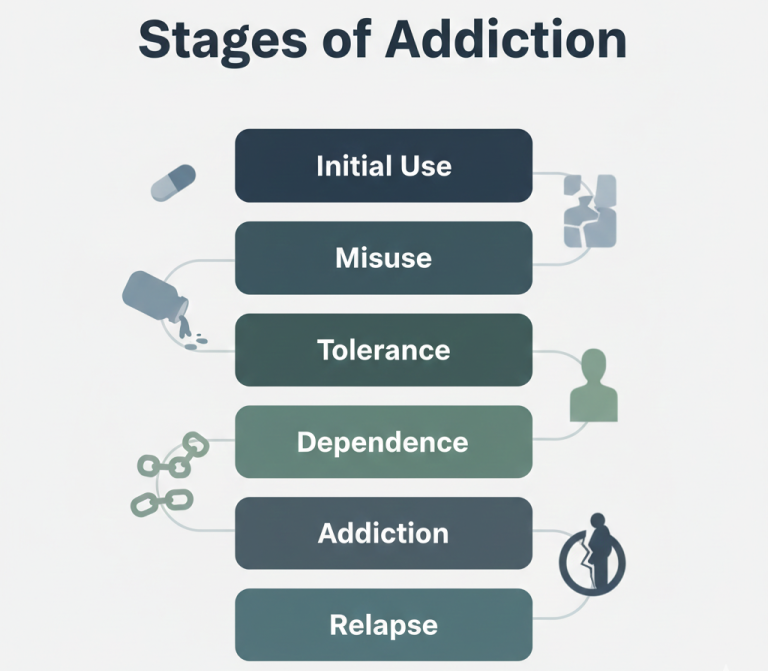
The addiction cycle has numerous stages and can occur in a short period of time or within months and years. While the experience is different for everyone, most people with substance use disorders pass through these phases of experience.
The Stages of Addiction Include:
- Initial use
- Misuse
- Tolerance
- Dependence
- Addiction
- Relapse
These phases often repeat themselves, forming a cycle that is going to be increasingly harder to break without treatment.
Need help breaking free from kratom dependence?
Contact Orlando Treatment Solutions
Stage 1: Initial Use
Initial use is the first time that a person uses a substance. This can be done through medical prescription, through social situations, curiosity or peer pressure.
At this stage it may seem that the use of a substance is under control and fitting. Risk factors like family history of addiction, trauma, mental health conditions, loneliness, and the permissive environment may drive progression of initial use. However, the risk factor does not guarantee being addicted.
Stage 2: Misuse
Misuse begins with substances being used in a bad or unprescribed way. This can include expressing the use of taking higher doses, using substances more regularly, binge drinking or using substances to cope with stress or emotions.
Misuse is a pattern of use that moves from casual or intended use towards a behavior that prioritizes short-term relief or pleasure, and the future consequence is long-term damage.
Stage 3: Tolerance
Tolerance occurs when the brain adapts to the exposure to the substance on a regular basis. The same amount no longer has the desired effect and thus increased dosages or frequencies are needed.
This escalation together boosts physical and mental health dangers along with the individual’s higher dependence as a result of the unresponsiveness of the brain without the substance.
Stage 4: Dependence
Dependence is the state where the brain or body becomes dependent on a substance for it to function normally. Without it, people can experience withdrawal symptoms such as anxiety, depression, irritability or physical discomfort.
Dependence on its own, however, is not always addiction. However, when combined with cravings, loss of control, and running around with continued use despite the harm, addiction is likely in play.
Stage 5: Addiction
Addiction is a diagnosable medical condition that is defined by the compulsive use of substances regardless of the harmful consequences. It impacts relationships, work, physical health, and mental health.
Common signs are cravings, not being able to stop, alteration of responsibilities, risky use, tolerance, and withdrawal symptoms. Severity ranges from mild to sever,e depending upon the number of symptoms.
Stage 6: Relapse
Relapse is at the time of consuming a substance, after a state of abstinence or undergoing treatment. It is normal under chronic conditions, and failure is not normal.
In most cases, relapse is an indication of how the treatment needs to be changed (more help, better coping strategies). Many people experienced relapse before experiencing long-term recovery. Learn more about how to deal with relapse in recovery
Ready to break the cycle of addiction?Contact Orlando Treatment Solutions for confidential help.
Emotional and Psychological Triggers in the Addiction Cycle
Stress, trauma, anxiety, depression and emotional pain that reside in the body can have a strong impact on the addiction cycle. Substances may have some short-term relieving value and make one want to keep on using them.
The identification of the emotional triggers is an important part of the effective treatment and the relapse prevention process. For those struggling with co-occurring disorders, dual diagnosis treatment addresses both addiction and underlying mental health conditions simultaneously.
Why Addiction Becomes a Repeating Cycle
Addiction is cyclical in nature because the substance brings a short-term relief of withdrawal symptoms, stress or emotional distress. This relief causes the reward pathway in the brain to be strengthened in doing this again and again.
Without treatment, people regularly alternate between cycles of use, abstinence, cravings and relapse. Professional treatment helps to get this pattern.
Interrupting the Cycle of Addiction
The cycle of addiction can be broken with the help of evidence-based treatment that can address the physical dependence and psychological patterns.
Treatment may involve medical detoxification, behavioral treatments, medication-assisted treatment, peer support, and long-term aftercare.
These methods are beneficially helpful in reducing cravings, managing triggers, and supporting continued recovery.
Relapse prevention therapy is also a critical component of sustainable recovery.

Support and Recovery Solutions
Orlando Treatment Solutions has caring, evidence-based drugs for addiction treatment that are intended to assist people with drug addiction to break the cycle. Their team provides individualized treatment plans and medical support and recovery programs that emphasize therapy.
Whether seeking help for the first time or after relapse, Orlando Treatment Solutions guides in a supportive, non-judgmental environment. Explore our outpatient programs, Intensive Outpatient Program (IOP), or Partial Hospitalization Program (PHP) based on your needs.
Call (321) 415-3213 to explore treatment options.
Key Takeaways
- Addiction has recognizable distinctive neurological and behavioral stages
- Emotional triggers are one of the main reasons for relapse
- Treatment targets both the brain and the behavior
- Professional care to achieve better recovery results in the long term
Frequently Asked Questions
Can addiction develop quickly?
Addiction can develop rapidly with certain substances, especially those that strongly affect dopamine levels. However, for many individuals, addiction develops gradually as repeated use alters brain chemistry, decision-making, and impulse control over time.
Is relapse a sign that treatment failed?
No, relapse does not mean treatment failed. Addiction is a chronic condition, and relapse often indicates the need for additional support, treatment adjustments, or improved coping strategies to manage triggers more effectively.
Can someone stop addiction without treatment?
While some individuals attempt to quit on their own, professional treatment significantly improves outcomes. Medical and therapeutic support help manage withdrawal, cravings, emotional triggers, and underlying mental health conditions.
Do all substances follow the same addiction cycle?
Most substances follow a similar addiction cycle involving use, tolerance, dependence, and relapse. However, the speed, intensity, and risks of each stage vary depending on the substance and individual factors.
How does treatment break the addiction cycle?
Treatment stabilizes the body, reduces cravings, addresses emotional triggers, and teaches coping skills. Ongoing care and support help prevent relapse and promote long-term recovery.
When should someone seek help?
Help should be sought when substance use interferes with health, relationships, work, or safety, or when repeated attempts to quit alone have failed. Early treatment leads to better recovery outcomes.
Conclusion
- Addiction develops through predictable stages
- Brain changes drive the addiction cycle
- Relapse is common and manageable
- Emotional triggers influence substance use
- Treatment can interrupt the cycle
- Recovery is possible with the right support