Key Takeaways
- Drug withdrawal symptoms vary depending on the drug used, history of drug use, and health
- The symptoms can be deadly and require medical care
- In-clinic detox is more pleasant and safe
- Emotional support is important as physical care
- Early treatment is best
A fear of withdrawal and going to treatment is one of the common things that stand in the way of recovery. So if you’re looking for help for yourself or a friend or family member, you may benefit from knowing a little more about what withdrawal means and how it’s treated, as this will help you be better prepared for what to expect and reduce the fear and danger of it.
I am an addiction counselor and have had many clients for whom the symptoms of withdrawal are terrifying. But the truth is, withdrawal is not impossible and is the first step to recovery, with support and medical supervision.
What are Drug Withdrawal Symptoms?
Drug or alcohol withdrawal is the body’s response to a drug or alcohol. Repeated drug or alcohol use will lead to adaptation and tolerance. Removing the drug will cause withdrawal symptoms.
These range from the flu to other, more serious illnesses such as convulsions and heart attacks.
Common Drug Withdrawal Symptoms
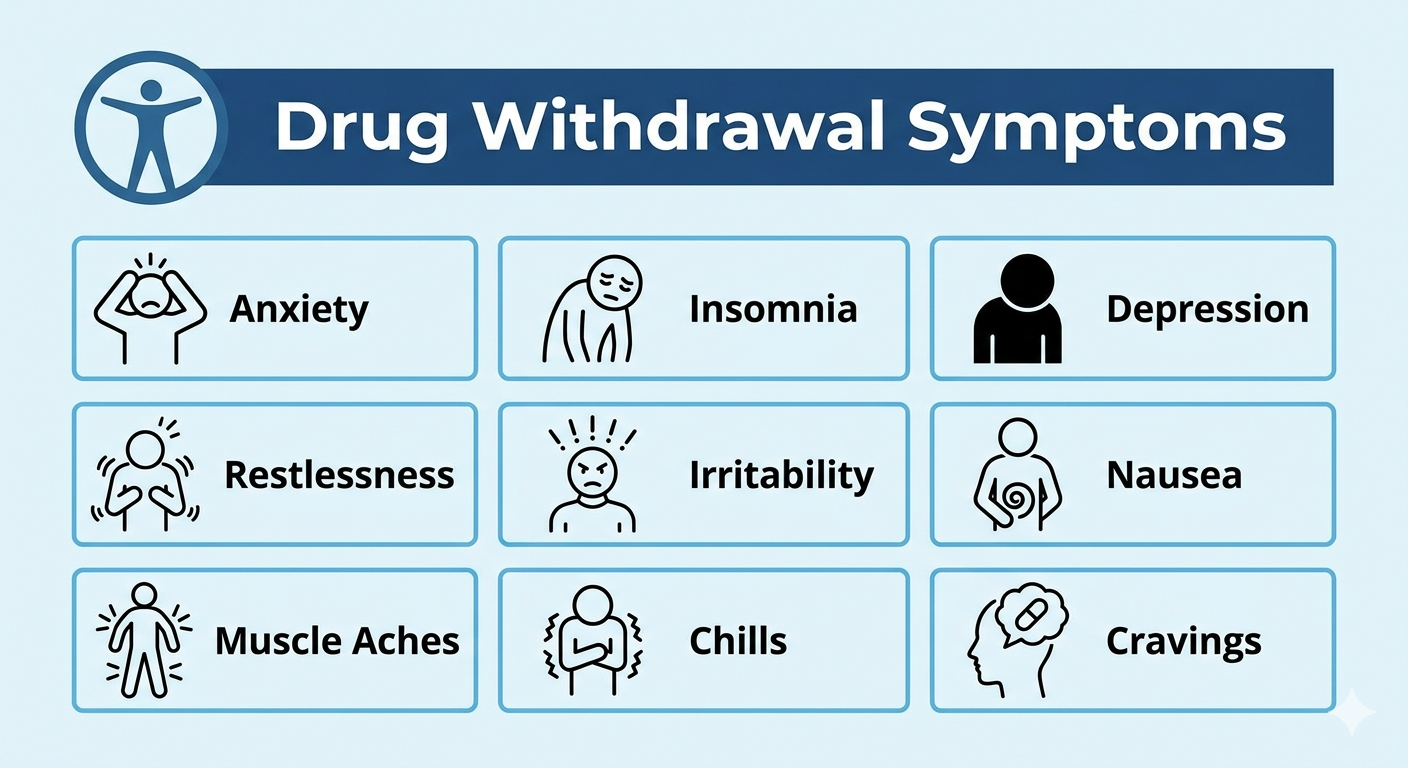
While the withdrawal symptoms may be different for different drugs, common symptoms include:
- Anxiety and restlessness
- Sweating and chills
- Nausea and vomiting
- Insomnia
- Muscle aches and tremors
- Increased heart rate
- Depression or mood swings
Some other severe withdrawal symptoms include hallucinations, fits and benzodiazepine withdrawal.
Withdrawal Timelines: What to Expect
But first, let’s understand how drug addictions occur to understand Drug withdrawal symptoms and treatment.
Drugs change body chemicals and messengers in the brain such as dopamine, that influence how you feel rewarded. Her body gets used to the drug. Then the body is unbalanced: withdrawal happens.
That’s why it can be unpleasant (even dangerous) to try to “cold turkey” an addiction.
Anyone’s Withdrawal Will Vary
Withdrawals don’t have a “one size fits all” approach. However, there are some guidelines from the research and our clinical work (including at leading treatment centers):
- Short-acting (e.g., heroin)
- Symptoms begin in 6-12 hours
- Peak within 1–3 days
- Disappear after 7 days
- Alcohol
- Signs and symptoms begin 6-24 hours later
- Peak at 24–72 hours
- Some of the more serious symptoms (e.g. DTs) can last up to seven days
- Prescription Drugs (e.g., benzodiazepines)
- Onset of signs and symptoms can take 1-4 day
- And may last months
This is why it’s important to monitor the time frame (especially at the beginning).
Drug Withdrawal Treatment Options
Drugs and other interventions for drug withdrawal symptoms must keep people safe and provide comfort. Medications and other responses are aimed at stabilizing people.
Medical Detox
Medical detox is usually the first step in drug treatment. This involves providing 24 hour medical care.
Benefits include:
- Immediate response to complications
- Medication-assisted symptom relief
- Chance of staying off drugs
Medication-Assisted Treatment (MAT)
These are for relieving withdrawal symptoms. For example:
- Methadone or buprenorphine to come off other opioids
- Benzodiazepines (with caution) to withdraw from alcohol
- Floctafenine for anxiety and discomfort
- We safely give these medications.
Counselling
Withdrawal is not only physical, but it’s also emotional.
Many people experience:
- Anxiety
- Irritability
- Depression
Psychotherapies such as Cognitive Behavioral Therapy (CBT) and counseling help the sufferer to deal with this and to develop coping mechanisms.
Water, Food, and Sleep
- Self-care promotes healing:
- Hydration eliminates toxins
- Good nutrition promotes good health
- Sleep helps the brain heal
- They are crucial factors often overlooked.
Why You Should Never Detox Alone
The idea that detox can be done at home is untrue. This can only be done in a very mild case, and is dangerous with alcohol, opioids, and benzodiazepines.
Potential dangers include the following:
- Severe dehydration
- Seizures
- Heart complications
- Cravings that lead to relapse
Medical detox is safe, professional and an opportunity for more care.

The Role of Ongoing Treatment After Withdrawal
Detox is not the answer.
To stay sober, the underlying problems that induce addiction must be tackled. This often includes:
- Individual therapy
- Group counseling
- Treatment for other mental health problems (dual diagnosis)
- Relapse prevention planning
You may need help to avoid the drug, even if you’re regularly tested to make sure it’s safe for you to pass the drug test.
When to Seek Help
If you think you’re dependent on the drug (e.g. you need more and more of the drug to achieve the same effect; you get withdrawal symptoms when you’re not taking the drug), seek help.
The earlier, the better, to avoid potentially dangerous Drug withdrawal symptoms and to optimize recovery.
Take the First Step Toward Recovery Today
Don’t go it alone. Orlando Treatment Solutions‘ staff is here to help with individual treatment. If you’re seeking information about treatment, or if you want help getting started, we’re here to help.
Call or fill out the form below. You’re worth your future.
Disclaimer
This content is for informational purposes only and does not replace professional medical advice, diagnosis, or treatment. Always consult a qualified healthcare provider for guidance specific to your situation.
Frequently Asked Questions (FAQs)
How long do drug withdrawal symptoms last?
Drug withdrawal symptoms vary by substance but typically last from a few days to a week. Some psychological symptoms, like anxiety or cravings, may persist longer and require ongoing treatment and support.
Are drug withdrawal symptoms dangerous?
Yes, some can be dangerous—especially with alcohol or benzodiazepines. Severe symptoms like seizures or delirium require immediate medical attention, which is why supervised detox is strongly recommended.
Can medications help with withdrawal symptoms?
Yes, medications can significantly reduce discomfort and risks. They are often used in medical detox programs to stabilize the body and manage cravings safely under professional supervision.
Is it possible to detox at home?
While mild cases may be managed at home, it’s not recommended for most people. Without medical supervision, complications can arise, increasing the risk of relapse or serious health issues.
What happens after detox?
After detox, individuals typically continue with therapy, counseling, and support programs. This helps address the root causes of addiction and build long-term recovery skills.