
Detox From Alcohol Timeline: Appearance and Treatment is among the most popular search results of people who are worried about themselves drinking and those who support the drinking of their loved ones. Detoxification of alcohol does not just mean getting alcohol out of your system. It is a complicated physical and mental process that comes in phases and may imply grave health dangers if it is not nurtured with the necessary attention.
When an individual is aware of the onset of symptoms, how the current condition develops, and how professional intervention helps the body and mind, the process becomes much more secure.
In the case of Orlando Treatment Solutions, we provide people with alcohol detox under medical care, emotional help, and effective recovery plan development, as the initial step is detox, and the following step is long-lasting change.
100% Confidential Support is Available 24/7
No matter what you’re going through, you’re not alone. Our dedicated team is here to provide a safe, judgment-free space where you can talk openly and honestly. Whether you need emotional support, resources, or just someone to listen.
We’re here for you—completely confidential and always respectful of your privacy. Call us today!
Detox From Alcohol Timeline
The alcohol withdrawal schedule is different in each specific individual, though the timing of the majority of alcoholics is more or less predictable. The duration of your drinking history, the amount of alcohol consumed, the overall health of your body, and the previous experience of withdrawal are some of the factors that determine the process of detox.
An average alcohol detox program entails:
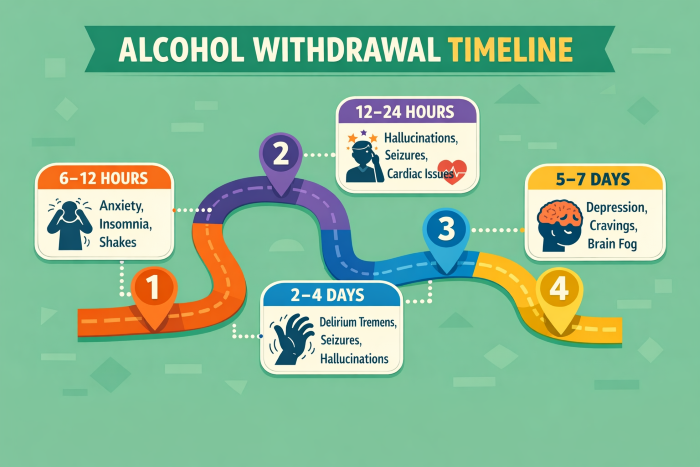
- 6-12 hours post-final intake: Early effects can be experienced, and these include anxiety, headache, nausea, sweating, and a slight tremor.
- 12-24 hours: In most cases, the symptoms become more severe. Other individuals feel disoriented, have a fast heart rate, have high blood pressure, and have sleeping problems.
- 24-72 hours: It is the most crucial time. In the absence of medical attention, serious side effects may be epilepsy or delirium tremens (DTs).
- 3–7 days on: There is an improvement of physical symptoms, although fatigue, mood swings, and cravings are not avoided.
Medical detox assists the patient in treating every stage safely to alleviate pain and avoid life-threatening complications.
What is Alcohol Withdrawal?
Alcohol withdrawal is an occurrence that happens whenever an individual who has been drinking heavily or regularly abruptly ceases or drastically cuts his or her alcohol consumption. The brain becomes accustomed to the depressant effects of alcohol with time. Removal of alcohol causes the nervous system to overreact, resulting in withdrawal symptoms.
There is no withdrawal as a measure of weakness or deficiency of willpower. It is a biological reaction that shows how intoxicated the brain and body are.
When Does Alcohol Withdrawal Start?
Withdrawal effects of alcohol usually start between 6 and 12 hours following the final intake. In people who engage in heavy and long-term use of alcohol, the symptoms can come out earlier and at a faster rate.
Early withdrawal signs are usually not severe, and people may do away with the jobs. That is just one reason it can be so dangerous to go it alone when it comes to detox, the symptoms may set in within a short time and may not be expected.
How Long Does Alcohol Withdrawal Last?
Most individuals take 5 to 7 days to stop drinking and still the withdrawal does not imply that one has recovered. The acute symptoms tend to reach their peak in the first 72 hours and then spread out.
Others have post-acute withdrawal symptoms (PAWS), including anxiety, sleeping disorders, depression, and cravings that may last for weeks and even months. Treatment and therapy are also stalemates in the management of such long-term effects.
What Causes Alcohol Withdrawal?
Alcohol inhibits the central nervous system. The brain becomes accustomed to it, hence releasing more stimulating chemicals to maintain the balance. In case of an abrupt withdrawal of alcohol, the stimulating chemicals are left uncontrolled.
The effects of this imbalance are shaking, anxiety, rapid heartbeat, and in severe cases, a seizure or a hallucination. The medical form of detox aimed at curing this imbalance is safe because it is monitored, and sometimes medication is prescribed depending on the case.
What Happens During Alcohol Withdrawal and Detox?
When the individual is going through a detox, the body strives to restore sanity in the absence of alcohol. Detox normally involves, in a business context such as Orlando Treatment Solutions, detox usually involves
- Constant health care scrutiny of vital signs.
- Drugs to lessen the severity of withdrawal and recurrence of epileptic attacks.
- Fluid and nutritional rehydration.
- Counseling and psychological evaluation.
Detox in itself is not a treatment of addiction per se, but a pretext to continual therapy and long-term treatment.
Common Withdrawal and Detox Symptoms
There may be mild or severe alcohol withdrawal symptoms that may include:
- Anxiety or irritability
- Tremors or shaking
- Sweating or fever
- Nausea or vomiting
- Headaches
- Insomnia
- Hallucinations and Seizures
- Loss of consciousness or delirium tremens (DTs).
Not all people have severe symptoms, but there is no sure method that specific individuals will. It is due to this indecision that medically controlled detox is highly advised.

Can I Prevent Alcohol Withdrawal?
Alcohol withdrawal is an unavoidable part of the process once physical dependence is developed; however, it can be brought under control. The self-control of alcohol is uncertain and rather ineffective.
Medical detox is the safest method of reducing withdrawal risks and it allows trained professionals to adjust any care in real time depending on the symptoms.
What is the Long-Term Outlook for Alcohol Withdrawal?
Most individuals recover well after withdrawing from alcohol with proper treatment, including regular detox. The most significant element is the post-detox process.
Recovery may be composed of:
- Individual or group therapy
- The role of relapse prevention planning.
- Anxiety case, depression case, or trauma treatment.
- Continued care by medical experts and fellow patients.
People who undergo direct detox, followed by the structured intervention, are much more prone to improvement in long-term results.
When to Seek Help for Alcohol Addiction
You must consult a professional who will offer you immediate assistance when:
- Post cessation of alcohol, you feel like you shake, are confused, or have a hallucination.
- You know you have had seizures or delirium tremors.
- You take a lot of/or drink daily and desire to quit.
- Alcohol is negatively impacting your health, relationships, or work.
Attempting to detox may be risky. Support among the professionals can be a matter of life-saving.
Struggling to regain balance? Contact Orlando Treatment Solutions for confidential help.
Get Help With Alcohol Detox Today
You do not have to deal with it yourself, in case you or a loved one is not okay. The services provided at Orlando Treatment Solutions include alcohol detox that is medically supervised and individualized recovery planning.
At Orlando Treatment Solutions, you can test at a convenient time and start living alcohol-free before it is too late. Call today to talk in a confidential manner with a specialist.
Disclaimer
This content is for informational purposes only and is not a substitute for professional medical advice, diagnosis, or treatment. Alcohol withdrawal can be dangerous and potentially life-threatening. Always seek care from a qualified healthcare provider before attempting to stop or reduce alcohol use.
Frequently Asked Questions
How long does it take to reset your body from alcohol?
Resetting the body after alcohol use varies. Physical detox usually takes 5–7 days, but brain chemistry, sleep, and mood can take weeks or months to stabilize, especially after long-term or heavy drinking.
What do 7 days of no alcohol do?
Seven days without alcohol allows the body to clear toxins, improve hydration, reduce inflammation, and stabilize blood sugar. Many people notice better sleep, clearer thinking, and reduced anxiety within the first week.
How long does it take for alcohol to leave your system?
Alcohol generally leaves the bloodstream within 24 hours, depending on body weight, metabolism, and amount consumed. However, its effects on the brain and nervous system can last much longer.
How many days does it take to be fully sober?
Physical sobriety may begin within days, but full recovery is ongoing. Emotional balance, mental clarity, and reduced cravings often improve over weeks to months with continued treatment and support.
What is the 1/2/3 rule for drinking?
The 1/2/3 rule suggests limiting intake to one drink per hour, two drinks per occasion, and no more than three drinking days per week. It’s a guideline, not a guarantee against dependence.
How many alcohol free days to cleanse the liver?
The liver begins healing within days of stopping alcohol. Significant improvement often occurs after 2–4 weeks, though longer periods are needed for heavy drinkers or those with liver damage.