
Key Takeaways
- Kratom is not typically detected in standard drug tests (like 5-panel or 10-panel screens).
- Specialized tests can identify kratom’s active compounds.
- Detection time varies based on dosage, metabolism, and frequency of use.
- Regular use can lead to dependence and withdrawal symptoms.
- Many drug recovery centers in Orlando offer support for kratom misuse.
When you or a loved one is trying to cope with substance use, then such questions as “Does kratom show up on a drug test?” are more or less frequent than ever. This is one of the issues that are raised frequently at most addiction treatment programs in Orlando, as usage of kratom is increasing throughout the U.S. Although many present kratom as a safe substitute for painkillers or mood stimulants, the substance presents risks, and it is important to know how it reacts to drug testing.
This guide simplifies all of it: the mechanism of action of kratom, its presence on drug tests, the duration of subsequent retention, and the moment they may need help.
What is Kratom and Why are More People Using It?
Kratom is an Asian plant-based compound which has a low-dose stimulant effect and a high-dose (like an opioid) effect. Its active constituents, i.e., mitragynine and 7-hydroxymitragynine, interact with the opioid receptors that are located in the brain.
People can use kratom due to a number of reasons:
- Pain relief
- Anxiety reduction
- Increased energy
- Patient treatment of opioid withdrawal.
However, kratom is not safe, despite the fact that it can be called natural. The majority of the drug rehabilitation facilities in Orlando are pointing towards the rising numbers of kratom abuse cases, which, in most cases, are the direct cause of its addictiveness and unpredictability.
100% Confidential Support is Available 24/7
No matter what you’re going through, you’re not alone. Our dedicated team is here to provide a safe, judgment-free space where you can talk openly and honestly. Whether you need emotional support, resources, or just someone to listen.
We’re here for you—completely confidential and always respectful of your privacy. Call us today!
Which Drug Tests Can Detect Kratom
Frequent drug analysis, wherein 5-panel or 10-panel tests are done is not commonly used to test kratom. Drugs like opioids and cocaine, THC, and amphetamines, as well as benzodiazepines, can be identified through these tests.
However, kratom can be determined by:
- Specialized laboratory testing
- Extended drug tests (20 or more panel tests)
- Targeted kratom-specific screening
Overall, employers and legal agencies are not used to conducting regular testing of kratom, except upon request. However, it is not in vain that there are healthcare or legal facilities where they can be tested with quality technology and identify its presence.
How Long Does Kratom Stay in Your System?
Kratom detection window differs according to the parameters such as dosage, rate, and metabolism of a particular individual.
On average:
- The half life of mitragynine is approximately 24 hours.
- The period out of the system may take between 5 and 7 days.
With that said, individuals who consume kratom in large amounts or regularly can continue with it longer. This is one of the reasons why substance abuse treatment professionals in Orlando stress early intervention and monitoring.
Urine Tests
- Urine testing is the most common and is used in the screening of drugs.
- Routine urine analysis: No generally responding to kratom.
- Urine special tests: With up to 5-7 days of detection of kratom.
This period of detection may increase with frequent or heavy use.
Blood Tests
- Blood tests are reduced due to the reduced margin of detection.
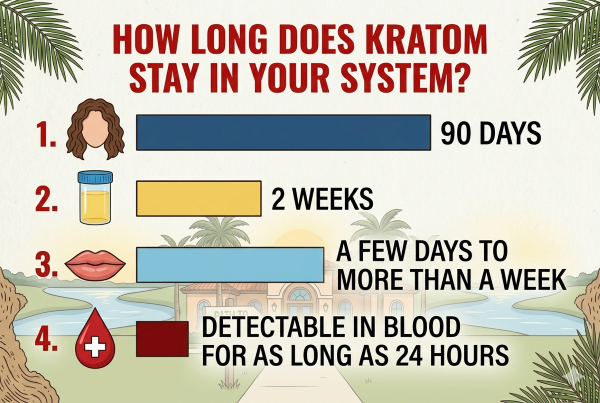
- Kratom is normally detectable in blood for as long as 24 hours.
- Normally applied in legal or medical investigations.
Saliva Tests
- Saliva is a non-invasive and fast test.
- Detection window: How much time can it take to detect it? 1-2 days.
- It does not have a target application in the identification of kratom.
Hair Tests
- The hair testing method takes the longest time to detect drugs.
- A maximum of 90 days can be modeled on kratom.
- This, however, is not a usual procedure when screening specifically to kratom.
Orlando Treatment Solutions
Battling with Drug and Alcohol Addition? Remember, you are not alone and we are here to help you!
Detection Windows for Kratom
Test Type | Detection Window |
Urine | 5–7 days |
Blood | Up to 24 hours |
Saliva | 1–2 days |
Hair | Up to 90 days |
Even though the kratom does not appear on the typical drug tests, the specialists within the drug treatment center have declared it to be not safe or harmless.
What Factors Influence Kratom Detection Time?
These variables can affect the length of time the kratom will remain in your system:
- The use of dosages and routes.
- Composition of body and metabolism.
- Health conditions and old age.
- Hydration levels
- Liver function
A good example of this is that an alcoholic who takes kratom daily and in large amounts will hold kratom significantly longer than someone who takes the drug in occasional cases.
Signs of Kratom Dependence
Kratom has been misconceived to be harmless; however, its constant abuse may result in addiction. Everything may include information that can warn about it.
- Tolerance (it takes more to be produced) is augmented.
- Continuous desire to use.
- Totality of impossibility to lessen or cease unconsciousness.
- And withdrawal effects on discontinuation.
- Neglecting responsibilities
Most of them believed that kratom was safe until it began to interfere with their day-to-day activities, when a large number of them visited the addiction recovery center.
What Does Kratom Withdrawal Feel Like?
Kratom withdrawal may resemble the mild to moderate withdrawal on opioids.
Common symptoms include:
- Irritability and mood change.
- Muscle aches
- Insomnia
- Nausea
- Anxiety
- Sweating
The kratom symptoms typically occur between 12 and 24 hours post-intake and are only prolonged by a number of days. Whereas it may not be very intensive, withdrawal is at times uncomfortable to the level of causing the use or relapse without the relevant support.
Is Kratom Legal in Florida?
Florida also has legal Kratom, except in Sarasota County, which bans it. However, laws and regulations are subject to change as research advances.
The legalization of kratom in most of the places does not imply that it is safe, according to the law. This is why many co-occurring disorder treatments tend to highlight much on the dangers and likelihood of abuse.
Treatment Options are Available for Kratom Dependence
Professional treatment can be used in case the use of kratom becomes hard to control. Options may include:
- Safe withdrawal by medical detox.
- Outpatient programs of flexible care.
- Organized assistance in the inpatient rehabilitation.
- Counseling and therapy (CBT, group therapy, etc.)
- When it is appropriate (clinically), medication-assisted treatment.
The treatment programs are created within the well-known substance use recovery center to address the physiological and psychological addiction.
CTA 👉 Take the First Step Toward Recovery
There is no reason, as an individual, to struggle with it if you are reluctant whether or not to use kratom or can do without it. It can be supported, and it is possible to provide recovery.
Get in touch with Orlando Treatment Solutions today and discuss the opportunities to find a compassionate expert to talk to. One can have a healthy and more stable future.
When Should You Seek Help for Kratom Use?
In case you need the assistance of professionals, you may use:
- It is impossible to stop using kratom after you have attempted it a few times.
- It is negatively impacting your work, relationships or even health.
Do you Experience Withdrawal Symptoms?
You use kratom to overcome stress or emotional problems.
Earlier intervention of the recovery center in Orlando will also save the future serious issues in your life and bring you back under control.
Begin Your Recovery at Orlando Treatment Solutions.
The majority of drug tests would not show signs of the presence of Kratom but this does not mean that it is a safe drug. The fact that it has a high likelihood of dependence and withdrawal exists and is becoming more popular.
You must understand that you are not alone and that there exist other individuals who may assist you and help you know what to do in situations when you are worried about your use and at this stage, the most comfortable thing one can do is to contact the experienced professionals in a drug rehab center in Orlando.
You need to be assisted, and you can always be healed.
Disclaimer
This content is for informational and educational purposes only and is not intended as medical advice, diagnosis, or treatment. Always consult a qualified healthcare provider or licensed addiction specialist for personalized guidance regarding substance use or mental health concerns.
Frequently Asked Questions (FAQs)
What shows up on a 12-panel drug test?
A 12-panel drug test typically screens for substances like opioids, cocaine, amphetamines, benzodiazepines, barbiturates, marijuana, methadone, and more. Kratom is not usually included unless specifically added as part of an expanded testing panel.
Can kratom cause a false positive?
Kratom rarely causes false positives on standard drug tests. However, in some cases, it may interfere with results, potentially triggering false positives for opioids or methadone, depending on the test sensitivity and chemical cross-reactivity.
What type of drug is kratom?
Kratom is a plant-based substance with both stimulant and opioid-like effects. At low doses, it acts as a stimulant, while at higher doses, it mimics opioids by interacting with brain receptors.
What does a 25-panel drug test test for?
A 25-panel drug test screens for a wide range of substances, including prescription medications, illicit drugs, and synthetic compounds. Some advanced versions may include kratom if specifically requested by the testing authority.
What will make you fail a 10-panel drug test?
Failing a 10-panel drug test usually means testing positive for substances like THC, cocaine, opioids, amphetamines, or benzodiazepines. Kratom alone typically won’t cause a failure unless the test includes specialized screening.
Sources
- U.S. Food and Drug Administration (FDA) – Kratom Information
- National Institute on Drug Abuse (NIDA)
- Substance Abuse and Mental Health Services Administration (SAMHSA)
- Mayo Clinic – Substance Use and Drug Testing Resources