Quick Answer: Heroin addiction signs can be divided into three categories. Physical symptoms are pinpoint pupils, drowsiness, shallow breathing, constipation, and needle marks. Behavioral signs are new secrecy, loss of money, dropping of routine, and withdrawal from the family. Withdrawal symptoms occur between doses: sweating, cramping, restlessness, and a runny nose as the drug comes to an end.
Key Takeaways
- Small pupils are one of the most reliable physical clues that someone is hooked on heroin and remains small even in bright light.
- Many have jobs and appearances for months, and they look fine; there is no evidence that something is wrong.
- If the person is breathing less than 12 times a minute, it’s a medical emergency, not sleeping it off.
- Prescription drug misuse that occurs before the onset of opioid use disorder is the greatest risk factor for opioid use disorder.
Nobody spots this on day one. Families usually notice a feeling that something is off long before they can name it.
Opioids act on receptors throughout the body, which is why signals surface in so many places at once:
- Pupils constrict and stay constricted
- Breathing slows and shallows
- The gut stops moving normally
- Mood swings between relief and agitation on a cycle tracking the last dose
What Are the Physical Signs of Heroin Addiction?
Physical signs come from what opioids do to the nervous system, the gut, and the skin, which makes them harder to hide than behavior. StatPearls lists the classic findings as depressed mental status, reduced respiratory rate and tidal volume, decreased bowel sounds and miosis, and the pinpoint pupils most people recognize.
What to look for and why it happens
Physical sign | What it looks like | Why it happens |
Pinpoint pupils | Stay small even in dim light | Opioids act on nerves controlling the iris |
Nodding off | Drifting in and out mid-sentence | Sedation of the central nervous system |
Slowed, shallow breathing | Long pauses, quiet breaths | Suppression of brainstem respiratory centers |
Constipation | Chronic, often severe | Opioid receptors slow the digestive tract |
Needle marks and bruising | Arms, hands, feet, between toes | Repeated injection and vein damage |
Skin infections or abscesses | Swollen, warm, painful areas | Non-sterile injection practices |
Weight loss | Noticeable over weeks | Appetite suppression and skipped meals |
Itching and flushed skin | Scratching the face and arms | Histamine release triggered by opioids |
One caveat matters. StatPearls notes miosis can be absent when stimulants or anticholinergics are taken alongside, so normal pupils do not rule opioids out.

What heroin looks like, and what turns up at home
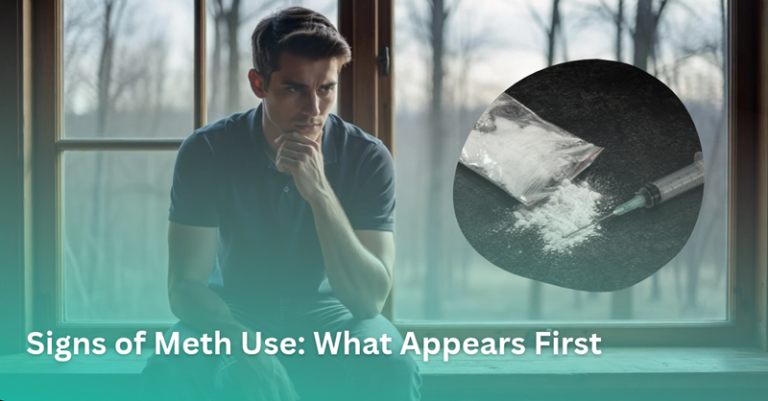
Objects say what the person will not. Burnt foil, blackened spoons, cut straws, small sealable bags, cotton pieces, belts or shoelaces kept somewhere odd, and lighters that keep appearing. The drug itself has no fixed appearance, which is why people miss it. It can be a white or brown powder or a dark sticky substance, and strength changes from batch to batch because of what it has been mixed with. Fentanyl is often part of that mix, and nobody handling it can tell by looking.
Which Behavioral Heroin Addiction Signs Appear First?
Behavioral signs usually arrive before physical ones, because concealing use takes effort that shows up as changed habits. Money goes missing, privacy tightens, old friends drop away, and stories stop lining up. The clearest marker is a daily rhythm organized around something nobody else can see.
Where the changes show
Area of life | What changes |
Money | Cash disappears, items go missing, unexplained borrowing |
Privacy | Locked doors, phone face down, long unexplained absences |
Social circle | Old friends drop away, new contacts nobody has met |
Work or school | Late arrivals, missed days, falling performance |
Mood | Calm and distant after use, irritable and anxious before |
Appearance | Long sleeves in warm weather, declining hygiene |
Honesty | Stories that do not line up, defensiveness about small questions |
Mental and emotional signs that come with it
Mood is part of the pattern, not a separate problem running alongside it. Anxiety that never fully clears, interest draining out of things that used to matter, guilt that ends a conversation before it starts, and concentration that slips at work. Families read these as stress or burnout, which is exactly why they get explained away for months.
Counting explanations rather than incidents changes the picture. Orlando Treatment Solutions can walk through it:
Which Early Signs of Heroin Addiction Get Missed?
The earliest ones look like ordinary problems, so they pass without comment. Someone seems tired, is short on money again, and cancels plans twice. What separates this from normal life is repetition with an explanation that keeps shifting. Four missed dinners with four different reasons is a pattern.
The ones most often explained away
- Tiredness attributed to a long week, every week
- Cash shortfalls blamed on a bad memory
- Nodding off blamed on poor sleep
- A painkiller prescription running out early, repeatedly
- Plans canceled late, with a different reason each time
NIDA describes the initial decision to use as typically voluntary, while continued use seriously impairs self-control, which it calls the hallmark of addiction.
Expert Advice: Name what you saw, not what you concluded, when raising concerns.
What Are the Signs of Heroin Withdrawal?
They appear as the drug wears off, usually six to twelve hours after the last dose. Withdrawal means the physical reaction a dependent body has when the opioid it is adapted to drops away. The telling part is how completely symptoms resolve within an hour of someone disappearing into another room.
What shows up between doses
- Yawning, runny nose, and watery eyes
- Goosebumps and sweating
- Restless legs, unable to settle
- Sudden irritability that lifts completely and quickly
- Cramping and nausea as the gap widens
People mistake this cycle for a recurring flu. The giveaway is how fast symptoms vanish and how predictably they return. NIDA notes that major withdrawal symptoms peak within one to two days of the last dose and ease after about a week, though some people report signs that linger far longer.
What Are the Warning Signs of Heroin Dependence?
Dependence is a separate marker from use, and it arrives faster than most families expect. With regular use, it can take hold within weeks. Two changes signal it clearly: the amount stops working, and the reason for using changes quietly.
Needing more to get the same effect
Tolerance means the body adapts and the old dose falls flat. Amounts climb, money goes faster, and the person chases a feeling that no longer arrives. Rising tolerance raises overdose risk on its own. So does the reverse, because tolerance drops during any break in use, and a return to the previous amount can be fatal.
Using to stop feeling sick, not to feel high
This is the shift that marks real dependence. Use is no longer about getting high; it is about staying functional and avoiding withdrawal. People who have used for a long time often say the pleasure disappeared a while ago and the sickness is the only thing still driving it. From the outside, it looks like someone whose entire day is timed around one thing.
What Does Heroin Addiction Do to Health?
Damage accumulates across several systems at once and quietly. Lungs, heart valves, veins, liver and kidneys all take it, and infection risk climbs with every non-sterile injection. StatPearls names prior nonmedical use of prescription opioids as the strongest risk factor for developing heroin use disorder.
System affected | Common consequences |
Lungs | Aspiration pneumonia, fluid in the lungs |
Heart and blood vessels | Endocarditis, collapsed and scarred veins |
Liver and kidneys | Hepatitis B and C, kidney damage |
Brain | Hypoxic injury after overdose, memory and judgment problems |
Immune and infection risk | HIV, abscesses, cellulitis, tuberculosis |
Hormonal | Cycle disruption, reduced hormone function |
That risk factor puts painkiller and prescription drug use on the same pathway as heroin use.
What long-term use does to the brain
NIDA reports that repeated heroin use alters the structure and physiology of the brain and produces imbalances that are not easily reversed, including deterioration of white matter that can affect decision-making, behavior regulation, and responses to stress. Brain imaging research suggests normal functioning can take months or longer to return after someone stops. It is one reason judgment and follow-through look impaired well into early recovery, and why support needs to outlast the detox stage.
Which Heroin Overdose Signs Need Emergency Help?
An overdose is not deep sleep. The difference is whether the person responds and whether breathing is adequate. StatPearls states a respiratory rate below twelve breaths per minute is the best predictor of opioid toxicity, so count breaths rather than judging how heavily someone appears to be sleeping.
Heavily sedated against overdosing
Heavily sedated | Overdosing |
Rouses when shaken or shouted at | Will not wake at all |
Breathing slow but steady | Shallow, gasping, or stopped |
Normal skin color | Blue or grey lips, fingertips, face |
Can speak, even if slurred | Silent, limp, unresponsive |
Pulse normal | Pulse faint, slow, or absent |
If it is the right-hand column
- Call 911 before anything else
- Give naloxone if you have it, available over the counter in the US since 2023
- Lay the person on their side
- Be ready to give more, since newer synthetic opioids often need repeated doses
- Stay until help arrives, because symptoms can return
Fact: A breathing rate under twelve breaths per minute signals opioid danger.
How Do Heroin Addiction Signs Overlap Mental Illness?
A mental health condition sits underneath a large share of heroin use, most often depression, PTSD, or untreated anxiety. Flattened mood, broken sleep, panic and irritability belong to both the addiction and the condition beneath it, which is why treating only one leaves the other driving the behavior.
The overlap is not a complication to work around. It is usually the reason the pattern survived every previous attempt to stop.
NIDA states that where someone has a co-occurring disorder, it is usually better to treat both at the same time rather than separately.
Orlando Treatment Solutions treats addiction and depression together
How Should You Respond to Heroin Addiction Signs?
Lead with what you observed rather than what you concluded, because three specific observations are harder to argue with than an accusation. Supervised withdrawal happens at a licensed detox facility first, and outpatient programs begin once that stage is complete. Knowing the sequence saves a frustrating week of calls.
Levels of care, and who each suits
Level of care | Who it generally suits |
Medical detox | Physical dependence: needing supervised withdrawal first |
Partial hospitalization | Needs structured clinical hours most days, sleeps at home |
Intensive outpatient | Stable enough to keep working while in treatment |
Standard outpatient | Stepping down, or catching a recent return to use early |
Aftercare and alumni support | Holding gains once formal treatment ends |
Why early action changes the outcome
Waiting for a clear breaking point is the most common mistake families make, and it is expensive. Every additional month adds overdose exposure, infection risk and organ damage, and it narrows the options available when someone finally agrees to go. Raising it early, while the person is still working and still has a routine to protect, usually means outpatient care is enough. Raising it after a crisis usually means it is not.

Heroin Addiction Treatment at Orlando Treatment Solutions
Care here is outpatient throughout, which matters because the hardest stretch is the ordinary week after treatment hours end. Clients live off-site, keep working where they can, and practice coping skills where they actually live.
What applies to the signs above
- Heroin treatment and opioid addiction treatment on one pathway
- Co-occurring disorder treatment for the depression, PTSD or anxiety underneath
- A partial hospitalization program stepping down through intensive outpatient and outpatient care
- Group and family therapy for the relationships this damages
- Relapse prevention therapy aimed at the window when overdose risk peaks
“Families arrive with a list and apologize for it. The list is the useful part. It is the only record of what happened, and nobody else kept one.” Our clinical team at Orlando Treatment Solutions
If the signs of heroin addiction here match what you have been watching for weeks, an assessment will tell you more than another round of guessing. Orlando Treatment Solutions serves Oviedo, Orlando, and Central Florida at (321) 415-3213.
Summary:
The signs of heroin addiction fall into three groups: physical, behavioral, and withdrawal. Physical signs include pinpoint pupils, slowed breathing, constipation, and needle marks. Behavioral signs include secrecy, missing money, and isolation. Withdrawal brings sweating, cramping, restlessness, and a runny nose between doses.
Questions About Signs of Heroin Addiction
How quickly can heroin addiction develop?
Opioid dependence and addiction can develop after repeated heroin use, sometimes over a relatively short period. The timeline varies with frequency, amount, individual biology, and other factors. Injecting also introduces additional health risks. No specific number of uses can guarantee safety from dependence or overdose.
Can someone use heroin without visible signs?
Yes. Someone may use heroin without obvious physical signs, particularly early on or when they conceal their use. Changes may appear in sleep, mood, finances, relationships, or work performance instead. However, these changes have many possible explanations and cannot confirm heroin use without further assessment.
What do pinpoint pupils mean with heroin?
Pinpoint pupils can occur after opioid use, including heroin, but certain medications and medical conditions can cause them too. Other substances may alter the signs. Small pupils alone do not prove opioid use. If someone is unresponsive or breathing slowly, call emergency services and administer naloxone if available.
Should families keep naloxone for heroin overdose?
Yes. Keeping naloxone available can help reverse a suspected opioid overdose, including one involving heroin or fentanyl. Administer it according to the product instructions, call emergency services immediately, and follow their guidance. Additional doses may be necessary because overdose symptoms can return after naloxone wears off.
Does a clean appearance rule out heroin use?
No. Someone may maintain their appearance, employment, and daily responsibilities while experiencing substance-related problems. Appearance alone cannot establish whether heroin use or addiction is present. Consider broader patterns involving health, behavior, relationships, and finances, while remembering that these changes can also have other explanations.
Should I search a room for heroin evidence?
Consider whether searching someone’s belongings could damage trust or escalate conflict. If you are concerned, describe the specific behaviors you have observed and explain why you are worried. If someone faces immediate danger, prioritize safety, seek professional guidance, and contact emergency services when necessary.
Why do people deny heroin use when confronted?
People may deny heroin use because of shame, stigma, fear of consequences, or difficulty acknowledging a problem. Denial is not always deliberate, and confrontation can increase defensiveness. Stay calm, describe specific concerns without accusations, and offer practical support, such as arranging a confidential professional assessment.
Is snorting heroin less dangerous than injecting?
Snorting heroin avoids some injection-related risks, including infections associated with contaminated equipment, but it remains dangerous. Both routes can cause dependence, respiratory depression, and fatal overdose. The presence of fentanyl or other unexpected substances increases uncertainty and risk, regardless of how heroin is taken.
Can someone stop using heroin on willpower alone?
Some people stop without formal treatment, but withdrawal symptoms, cravings, and relapse risks can make recovery challenging. Tolerance often decreases after a period without opioids, increasing overdose danger if someone returns to a previous dose. Medication treatment, counseling, and ongoing support can improve recovery outcomes.
How do I raise heroin use without an argument?
Choose a calm moment when the person is sober. Describe specific behaviors that concern you, ask an open question, and listen without labels or accusations. Offer to help arrange a professional assessment. If emotions escalate, pause the conversation and return to it when everyone feels safer.
Do heroin addiction signs look different in teenagers?
Teenagers may show changes in school performance, friendships, mood, sleep, or behavior before obvious physical signs appear. These changes can also reflect stress, mental health concerns, or normal developmental challenges. Avoid jumping to conclusions; a supportive conversation and professional assessment can help clarify what is happening.
Medical Disclaimer: This blog is for informational purposes only and should not replace professional medical advice, diagnosis, or treatment. If you or someone you know is struggling with substance use, contact Orlando Treatment Solutions or visit https://orlandotreatmentsolutions.com/ to learn about available treatment options.