
Quick Answer: The symptoms of methamphetamine use come in a certain order. It starts with sleep disturbances, secrecy, and money issues and can last for weeks before any of this gets visible. Loss of weight; dental damage and skin sores accumulate over months. With continued use, paranoia and agitation increase. It is better to see the initial behavioral signs than the physical signs that come later.
Key Takeaways
- Behavioral changes occur weeks before physical signs, and sleep and secrecy are the first signs of meth use.
- Physical changes are not noticeable for months on end, making it easy to put off looking for help.
- Just having a positive amphetamine screen does not mean that one is using methamphetamine, as some drugs will cross-react with the screen.
- CDC reported that 68.8% of methamphetamine overdose deaths also involved opioids.
Signs of meth use fall into a sequence. Sleep disruption, secrecy and money trouble typically appear first. Weight loss, dental deterioration, and skin sores build over months. Paranoia and agitation intensify as use continues.
Maybe a relative now disappears for two days at a time. Maybe a partner has lost a noticeable amount of weight and explained it three different ways. Maybe a drug test came back positive and nobody expected it.
What Are the Early Signs of Meth Use?
The earliest signs of meth use are behavioral rather than physical. Sleep goes first, with long stretches awake followed by heavy crashes. Money and hours go missing, and explanations shift between retellings. Nothing about appearance has changed yet, which is exactly why these weeks get attributed to stress.
100% Confidential Support is Available 24/7
No matter what you’re going through, you’re not alone. Our dedicated team is here to provide a safe, judgment-free space where you can talk openly and honestly. Whether you need emotional support, resources, or just someone to listen.
We’re here for you—completely confidential and always respectful of your privacy. Call us today!
How the signs sequence over time
Stage | What tends to appear |
Early, first weeks | Long periods awake, then heavy crashes, secrecy, unexplained spending, missed commitments |
Established, months in | Noticeable weight loss, dental problems, skin sores, irritability between uses |
Advanced | Paranoia, confusion, social withdrawal, visible decline in self-care and functioning |
Methamphetamine suppresses the need for sleep, which is why that marker arrives first.
Orlando Treatment Solutions
Battling with Drug and Alcohol Addition? Remember, you are not alone and we are here to help you!
What Is Meth, and What Does It Look Like?
NIDA describes methamphetamine as a stimulant chemically similar to amphetamine, usually a white bitter-tasting powder or a pill, with crystal meth appearing as glass fragments or shiny bluish-white rocks.
Form says nothing useful about strength. Powder and crystal are the same drug, and neither appearance tells you what a batch has been cut with.
What meth paraphernalia looks like
Objects often register before symptoms do. Small glass or metal pipes, scorched foil, hollowed-out pen casings, cut drinking straws, burnt spoons, syringes, and razor blades all turn up depending on how someone is using them. Finding any of it tells you something is happening. It does not tell you how long it has been happening, and it is not a substitute for a clinical assessment.

Which Physical Signs Appear, and When?
Physical signs build over months rather than arriving at once. Weight loss usually shows first, driven by appetite suppression. Dental deterioration follows from dry mouth, grinding, and reduced hygiene. Skin sores, tremors, and dilated pupils come later. Waiting for the visible changes means waiting a long time.
Where the changes show up
Area affected | What it looks like |
Appetite and weight | Rapid, often substantial weight loss |
Mouth and teeth | Dry mouth, grinding, decay, and gum deterioration |
Skin | Sores from picking, poor healing, acne-like breakouts |
Sleep | Days awake followed by prolonged sleeping |
Nervous system | Tremor, agitation, rapid speech, dilated pupils |
NIDA describes methamphetamine as a stimulant chemically similar to amphetamine, usually a white bitter-tasting powder or a pill, with crystal meth appearing as glass fragments or shiny bluish-white rocks.
Skin picking produces sores on the face and arms. The sensation driving it is a known stimulant effect rather than an imagined one.
Why does meth cause itchy skin?
Skin picking produces sores on the face and arms. The sensation driving it is a known stimulant effect rather than an imagined one. People describe it as something moving beneath the skin, which is why the picking is so persistent and why the same sores keep reopening instead of healing.
How Do Mood and Behavior Change?
Mood tracks the use cycle rather than the person. Someone may seem energized and talkative during use, then turn irritable, flat and exhausted as it fades. Paranoia is the change families find most alarming, and suspicion about being watched is a drug effect rather than a personality shift.
Social withdrawal follows. Old friendships thin out, new contacts appear without introduction, and commitments get missed.
The sign that unsettles families most is rarely the weight loss. It is hearing someone they trust describe a surveillance that is not happening.
What the crash looks like
The crash arrives when use stops, usually after several days with little or no sleep. Heavy sleeping, flat mood, hunger and exhaustion follow, and it can run across more than a day. Families often read it as illness, burnout or laziness rather than one stage of a repeating cycle, which is part of why the pattern goes unnamed for so long.
What Are Five Warning Signs of Addiction?
Five warning signs cross every substance: losing control over amount or frequency, neglecting responsibilities, withdrawing from people who know you well, needing more for the same effect, and continuing despite clear harm. What narrows it toward stimulants is the sleep pattern, because few other categories produce multi-day wakefulness.
Those five apply to alcohol, opioids, and stimulants alike. The crash after days without sleep is what points to meth.
How Can You Tell Someone Is Using?
Look at patterns across weeks rather than single moments. One odd evening proves nothing, while a repeating cycle of disappearance, exhaustion, and financial strain is worth acting on. Changes in function matter more than changes in appearance, and thyroid problems, diabetes, depression and sleep disorders can all look similar.
Expert Advice: Write down dates and behaviors you observe, because memory blurs under stress.
What Else Shows Up as Amphetamine?
Screening immunoassays identify drug classes presumptively, not definitively, so a positive amphetamine result is not proof of meth. A 2024 study in the Journal of Analytical Toxicology found solriamfetol and mCPP, a trazodone metabolite, both triggered false positives. Mass spectrometry is what separates a true positive from a cross-reaction.
What can trigger a positive amphetamine screen?
What triggers it | What the evidence shows | What settles it |
mCPP, a trazodone metabolite | Produced a positive result at high urinary concentration | Confirmatory mass spectrometry |
Solriamfetol | Produced a positive result at high urinary concentration | Confirmatory mass spectrometry |
Prescribed ADHD stimulants | Contain amphetamine, so the result is genuine | Disclosure plus confirmatory testing |
The 2024 study tested several other medications on the same assay, and trazodone itself, aripiprazole and atomoxetine did not produce positives. Cross-reactivity is specific to the compound and the assay rather than general to a drug class.
Orlando Treatment Solutions confirms screens before conclusions
Which Risks Rise Alongside Meth Use?
The most dangerous risk is what else is in the supply. CDC found that 68.8% of methamphetamine-involved overdose deaths between January 2021 and June 2024 also involved opioids. Injection adds infection and bloodborne virus risk, and multi-day wakefulness degrades judgment, reaction time and emotional regulation.
That contamination risk is now visible in clinical testing as well. Among patients tested through one laboratory network between October and December 2025, 84.6% of fentanyl-positive urine specimens also tested positive for cocaine or methamphetamine, though CDC notes that the sample is not representative of everyone who uses drugs.
Sleep deprivation compounds all of it. Judgment and emotional regulation degrade without rest, which is when accidents and conflict happen.
Complications and side effects that build over time
The route of use shapes which complications show up. Smoking is associated with dental damage and respiratory problems, snorting with nasal damage, and injecting with skin infections, abscesses and bloodborne infections. Across every route, longer use is associated with cardiovascular strain, malnutrition, psychosis, and difficulty with memory and attention. Early recognition matters because some of these take hold quietly and are far harder to reverse once established.
Fact: A positive amphetamine screen needs laboratory confirmation before anyone calls it proof.
When Do Signs of Meth Need Emergency Care?
Some signs need a response the same day rather than a conversation next week. Chest pain, very high body temperature, seizures, stroke symptoms, unresponsiveness, slowed breathing, hallucinations, and severe paranoia all warrant emergency services. Stimulant overdose and stimulant-induced psychosis are both medical situations, not behavioral ones.
What are the signs of a meth overdose?
Stimulant overdose commonly presents as a racing or irregular heartbeat, dangerously high body temperature, chest pain, severe agitation or confusion, seizures, or stroke symptoms such as slurred speech or weakness on one side. It is a medical emergency in every case.
Signs that need same-day care
- Chest pain, very high body temperature, seizures, or stroke symptoms
- Unresponsiveness, or breathing that slows or stops
- Hallucinations, severe paranoia, or losing touch with reality
- Talk of suicide, or an inability to stay safe
Call emergency services for any of those. Given how often opioids appear alongside meth, naloxone is worth giving while waiting for help.
What Should You Do After Noticing?
Noticing is the beginning rather than the conclusion, and what changes an outcome is a clinical assessment. Pick a calm moment rather than an episode, describe the specific signs of meth use you have observed, skip the argument about labels, and name one concrete next step.
Co-occurring conditions usually need addressing too. NIMH describes integrated care as combining mental health and substance use treatment in one place, which matters because depression and anxiety frequently sit underneath stimulant use.

Outpatient Meth Treatment in Orlando
Orlando Treatment Solutions treats stimulant use on an outpatient basis, which suits someone whose use has been recognized early and whose home situation remains workable. Programs run across Orlando, Oviedo and the wider Central Florida area.
Care here is outpatient only, so anyone needing medically supervised withdrawal completes that step at a detox facility first.
How the intensity steps down
- A partial hospitalization program for anyone needing daily structure
- An intensive outpatient program as routines re-establish
- Outpatient care with an aftercare program behind it
What the clinical work includes
- Cognitive behavioral therapy, acceptance and commitment therapy and group therapy
- Family therapy, trauma therapy, and motivational enhancement therapy
- Relapse prevention and holistic approaches
- A dual diagnosis program where a mental health condition sits alongside the stimulant use
“Families almost always apologize for calling before they are certain. Certainty is not the threshold. An assessment is cheaper than another six months of guessing.” Our clinical team at Orlando Treatment Solutions.
The meth rehab program page covers what treatment involves, and the contact page works for anyone who would rather write first.
Summary:
The first signs of meth use are behavioral, not physical. Sleep disruption, secrecy and unexplained spending usually appear weeks before weight loss, dental damage, or skin sores. Paranoia and agitation build as use continues. A positive amphetamine screen needs laboratory confirmation before it proves methamphetamine use.
Questions People Ask About Meth
How long do the effects of meth last?
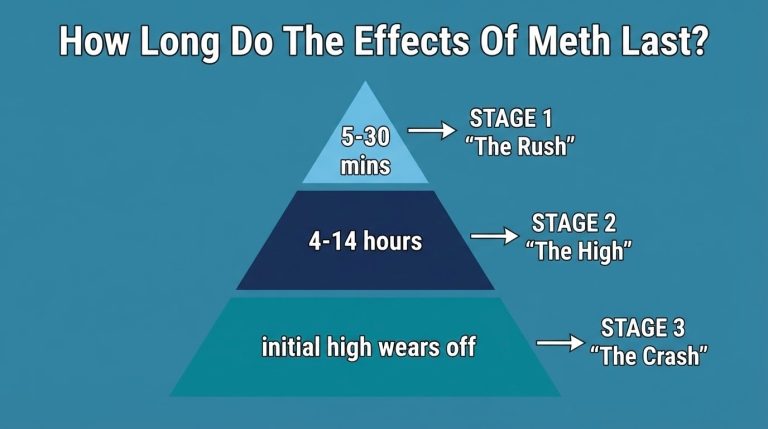
Methamphetamine effects can last several hours, depending on the dose, route of administration, and individual factors. Repeated use may prolong stimulation and increase risks. The comedown can bring exhaustion, disrupted sleep, irritability, and low mood, sometimes lasting several days after the initial effects fade.
Can you smell meth use?
Smoking methamphetamine may produce a chemical odor, but smells vary and cannot reliably confirm drug use. Other substances can produce similar odors. Changes in sleep, behavior, mood, or daily functioning may raise concerns, but a professional assessment is needed to understand what is happening.
How long does meth show on a hair test?
Hair testing can often detect methamphetamine exposure over approximately 90 days, depending on hair length, the testing method, and individual factors. Very recent use may not appear immediately because affected hair needs time to grow above the scalp. Results require careful interpretation by qualified professionals.
What does tweaking mean?
“Tweaking” is slang for an agitated state sometimes associated with prolonged methamphetamine use, particularly after extended periods without sleep. Symptoms may include irritability, repetitive behavior, anxiety, and paranoia. “Tweaker” is the related slang term for a person in that state, though it is often used more loosely. Neither is a formal diagnosis, and severe confusion, overheating, or dangerous behavior warrants urgent medical assessment.
Is crystal meth different from powdered meth?
Both are methamphetamine. Crystal meth appears as clear or bluish shards resembling glass, while powdered meth is usually white or off-white. Appearance does not indicate potency or what a batch has been mixed with. Risk comes from the drug itself and how it is used, not the form it arrives in.
What does meth withdrawal look like?
Stopping after sustained use commonly brings intense cravings, fatigue, prolonged sleeping, low mood, anxiety and headaches. Symptoms are largely psychological rather than physically dangerous, though depression can become severe. Professional support matters, particularly where use has been heavy or a mental health condition sits alongside it.
Are the signs different in teenagers?
Teenagers may show signs such as sleep disruption, mood changes, appetite changes, and declining school performance, but these can overlap with normal adolescent development. Sudden weight loss, prolonged wakefulness, or major behavioral changes deserve attention. Approach concerns calmly and consider seeking a professional assessment together.
Do signs differ by how meth is used?
Yes. Smoking and injecting methamphetamine typically produce faster effects than snorting or swallowing it. Injection also introduces additional risks, including serious infections. However, no route is safe, and outward behavior alone cannot reliably establish whether someone is using methamphetamine or identify their method.
Can someone hide meth use at work?
Someone may conceal methamphetamine use temporarily, and stimulant effects can sometimes make them appear unusually alert. However, sleep deprivation, mood changes, mistakes, and attendance problems may eventually affect work. These issues have many possible causes, so discuss specific observations without assuming substance use is responsible.
Does meth use always cause weight loss?
No. Methamphetamine can suppress appetite, but weight changes vary with frequency of use, nutrition, and individual health. Some people experience serious physical or psychological harm without obvious weight loss. Appearance alone cannot reliably establish whether someone uses methamphetamine or indicate the severity of any problem.
Can meth cause lasting memory problems?
Prolonged methamphetamine use can affect memory, attention, and decision-making. Some cognitive difficulties improve with sustained abstinence and appropriate treatment, although recovery varies between individuals. Persistent problems deserve professional evaluation because sleep disruption, mental health conditions, and other medical issues can also affect concentration and memory.
Should I search someone’s belongings?
Searching someone’s belongings can damage trust and escalate conflict, particularly when evidence is uncertain. Consider describing the specific behaviors that concern you and offering help accessing a professional assessment. If you suspect immediate danger, prioritize safety and seek appropriate emergency assistance rather than confronting the person alone.
What support exists for the family?
Family members can benefit from counseling, family therapy, and peer support groups while navigating a loved one’s methamphetamine use. These resources can strengthen communication, establish healthy boundaries, and reduce stress. Support remains valuable even when the person using methamphetamine is not ready to pursue treatment.
References
- https://nida.nih.gov/research-topics/methamphetamine
- https://academic.oup.com/jat/article/48/2/126/7458233
- https://www.cdc.gov/mmwr/volumes/74/wr/mm7432a1.htm
- https://www.cdc.gov/overdose-prevention/data-research/facts-stats/cdtd-key-findings.html
- https://www.nimh.nih.gov/health/topics/substance-use-and-mental-health
Medical Disclaimer: This blog is for informational purposes only and should not replace professional medical advice, diagnosis, or treatment. If you or someone you know is struggling with substance use, contact Orlando Treatment Solutions or visit https://orlandotreatmentsolutions.com/ to learn about available treatment options.