Key Takeaways
- Alcohol use disorder is a health problem that interferes with the functionality and the behavior of the brain.
- Early treatment of alcohol use disorder improves therapy.
- The diagnosis is done using the diagnostic criteria as set in the DSM-5.
- The effects and frequency of the symptoms can be mild or serious.
- Professional treatment is the most promising way of attaining long-term recovery.
The awareness of having a diagnosis of alcohol use disorder is a tremendous step in the realization that drinking turns not only into an occasional activity but into a life-threatening circumstance. The social drinking and problem behavior are somehow unclear to most individuals, and therefore, one can make a great difference by learning about the issues at a very tender age. We strongly believe that awareness is action, and action is recovery at Orlando Treatment Solutions.
The more common myth is that alcohol use disorder (AUD) is a phenomenon that only afflicts a few other individuals and families every year, since it affects millions of individuals and families. The fact is that it is curable, and when the red flags are detected during its first phases, you or a person with whom you share close relations and contacts will provide the beginning of the curing process.
Alcohol Use Disorder (AUD)
Alcohol Use Disorder (AUD) is a continuous, recurring health condition that consists of the inability to quit or manage alcohol consumption, despite its negative health, social or work-based effects. It is a variety of health effects involving the brain, which leads to strong cravings and withdrawal symptoms mild to severe. Treatments that are effective are those that use behavioral therapies, support groups and medications.
It is not just a lapse or indulgence here and there. It is characterized by physical addiction, emotional a dependency and behavioral habits that interfere with normal daily living. Over time, the brain will change the way it works, as alcohol will not allow us to make healthy decisions and recognize the damage.
Alcohol Use Disorder (AUD) Diagnosis
It is not a simple add-up of the decisions made to determine drinking habits in order to make a good diagnosis of alcohol use disorder. The behavioral, emotional, and physical symptoms and tendencies investigated by healthcare providers are used to diagnose AUD.
Alcohol Use Disorder DSM-5
The revisioning tool that clinicians use to diagnose AUD is the Diagnostic and Statistical Manual of Mental Disorders, Fifth Edition (DSM-5). It outlines a set of guidelines that are used to determine that someone is mildly, moderately, or severely affected by alcohol use disorder.
Patterns that DSM-5 focuses on involve loss of control, tolerance, and continued use despite the harm. These principles make sure that all alcohol use disorder diagnoses are reliable, consistent, and work based on the existing medical standards.
Alcohol Use Disorder Criteria
To be diagnosed with an alcohol use disorder, an individual has to fulfill at least two among the 11 criteria that are contained in the DSM-5 within a period of 12 months. These criteria include:
- Partaking too much or too many drinks.
- This is unsuccessful when reduction efforts are considered.
- Spending – When individuals use up more or spend a longer time to consume alcohol, it is said to be spending.
- This is not effective when it comes to reduction efforts.
- Wasting much time on drinks or reverence.
- Inspiration to consume alcohol or thirst.
- Neglecting responsibilities
- During the path of social or health problems.
- Increased tolerance
- Withdrawal symptoms
The severity of the condition depends on the number of met criteria.
Alcohol Use Disorder Types
AUD can be subdivided into three levels that include the following:
Mild AUD
Typical of the accomplishment of 2 or 3 requirements. Early warning signs are available and people will be able to go on with their work as usual.
Moderate AUD
At age 4-5, there was a major impact on daily life and interpersonal relationships.
Severe AUD
Responding to 6 or more criteria. On this stage, the physical dependence and rather general predilection to all life aspects are typical.
The identification of these levels would help in planning the treatment and well-being of developing the right level of care.
How do you Identify an Alcohol Use Disorder?
Schizophrenia starts with the diagnosis of AUD. Ask yourself:
Is alcohol taking on a habitual situation?
Do you feel that you can never stop once you start?
Problem at workplace, family or relationships with alcohol?
Whether the answer to the above questions is yes or not may be the time to consider a professional diagnosis of alcohol-use disorder. It is easy to recognize that there is a trend in its initial stages and can even circumvent more severe predicaments to come.
Symptoms of Alcohol Use Disorder
It is crucial to detect the symptoms of alcohol use disorder so that it can be intervened in the initial phases. Such symptoms usually occur slowly and might include:
Greater alcoholic tolerance.
These withdrawal symptoms include anxiety or nausea.
Strong cravings
Difficulty limiting intake
Development of the consumption of alcohol notwithstanding adverse effects.
Such symptoms do not always manifest themselves immediately and that is why continuous self-awareness is the primary factor.
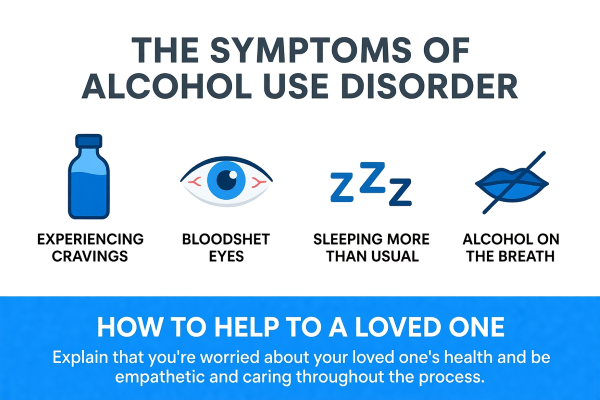
Signs of Alcohol Use Disorder (AUD)
Symptoms explain what goes on inside the individual, whereas alcohol use disorder symptoms can be observable by a third party. These may include:
- Mood or behavior change.
- Neglecting responsibilities
- Secretive drinking habits
- Monetary or legislative problems with alcohol.
- Social withdrawal
Friends and relatives can also be the ones to notice such changes first and their observations can also help in identifying the early signs of alcoholism.
Stages of Alcohol Use Disorder
The alcohol use disorder (AUD) exists in stages, which are usually characterized into early stages (pre-alcoholic/experimentation) and middle stages (early alcoholic/dependence) and also into late stages (chronic/end-stage) dependency.
The primary stages consist of tolerance, alcohol use as a coping mechanism, loss of memory, loss of control and severe withdrawal signs or a health crisis.
Common Stages of Alcohol Use Disorder
Pre-Alcoholic/Experimental Stage: This stage is social in nature, with the first intoxication attempts being conducted under social pressures or experimentation with initial progress in toleration.
Early/Prodromal Stage: Drinking becomes a habitual coping process, which is typified by regular binge drinking, blackouts and secret/alone drinking.
Middle/Crucial Stage: It results in dependence, causing apparent loss of control, physical dependence (i.e. shakes or anxiety between drinks), and disruption of work/family life.
Late/Chronic Phase: The alcohol is on top of the life and the consequences of alcohol are extreme and physical and mental health such as liver damage, severe memory losses, and the withdrawal effect of alcohol is life-threatening.
How is Alcohol Use Disorder Diagnosed?
Diagnosis of a professional alcohol use disorder is an extensive assessment. This may include:
- Long medical and psychopathological history.
- Interrogatives regarding drinking. Interrogatives concerning drinking.
- Laboratory tests and physical examinations.
- Questionnaires and other screening instruments.
The health practitioners will be eager to brand the physical and emotional effects of alcohol consumption. Such a multidisciplinary approach may guarantee that the diagnosis will be valid, and that it will aid the needs of a specific individual.
Find Alcohol Use Disorder Treatments Near You
Behavioral Therapies
Other techniques of counseling, such as cognitive-behavioral therapy (CBT) assist individuals in modifying thoughts and drinking behaviors.
Medication-Assisted Treatment (MAT)
Some drugs might decrease the desire to drink or make alcohol less desirable.
Support Groups
Support and responsibility are provided by peer support programs.
Medical Detox
In extreme cases, detox is observed to ensure that it is safe when withdrawing.
There are also Inpatient and Outpatient Programs.
Other forms of treatment become available in the form of treatment programs, which are designed according to various levels of care depending on the level of severity of the condition.
Ready to Take the First Step?
In case you or a loved one are having a difficult time, a professional alcohol use disorder diagnosis can become the gateway to the actual, permanent change. At Orlando Treatment Solutions, evidence-based treatment is combined with compassionate care, assisting you to progress and live using your own abilities and encouragement. Today, discover your opportunities and make your first step towards having a healthier future.
Being conscious of the fact that the alcohol use disorder diagnosis is needed does not mean the bit of weakness; it is the way to realizing, help and recovery. Orlando Treatment Solutions is here to see you to the conclusion.
Disclaimer
This content is for informational and educational purposes only and should not be considered medical advice. Always consult a qualified healthcare professional for diagnosis, treatment, and personalized guidance regarding alcohol use disorder or any medical condition.
Frequently Asked Questions (FAQ)
Is AUD a mental illness?
Yes, AUD is classified as a mental health disorder. It affects brain function, behavior, and emotional regulation, often requiring both psychological and medical treatment for effective recovery.
What does AUD mean?
AUD stands for Alcohol Use Disorder. It refers to a condition where a person has difficulty controlling alcohol use despite negative consequences on health, relationships, or daily responsibilities.
How is AUD treated?
AUD is treated through a combination of therapies, medications, and support systems. Treatment plans are personalized and may include counseling, detox, and long-term recovery programs.
What are the early signs of AUD?
Early signs include increased tolerance, frequent cravings, drinking more than intended, and difficulty cutting back. These changes often appear gradually and may be easy to overlook at first.
Is binge drinking an alcohol use disorder?
According to the World Health Organization (WHO), any amount of alcohol consumption affects your health. This is a particular concern for the 44.5% of people who report drinking alcohol excessively, which can also be called binge drinking. Binge drinking puts people at greater risk for an alcohol use disorder.
What are the 11 symptoms of AUD?
The 11 symptoms include cravings, loss of control, tolerance, withdrawal, neglecting responsibilities, and continued use despite harm. Meeting at least two within a year may indicate AUD.
What are the diagnostic criteria for alcohol use disorder?
The DSM-5 outlines 11 criteria, including behavioral, physical, and psychological indicators. The number of criteria met determines whether the condition is mild, moderate, or severe.
Is alcoholism a mental illness or medical condition?
Alcoholism is both a mental illness and a medical condition. It affects brain chemistry while also impacting physical health, making integrated treatment essential.
What is the cause of alcohol use disorder?
AUD can result from a combination of genetic, environmental, and psychological factors. Stress, trauma, and family history often play significant roles.
What does AUD feel like?
AUD can feel like a loss of control over drinking, accompanied by cravings and guilt. Individuals may feel trapped in a cycle of use despite wanting to stop.
How many drinks are considered AUD?
AUD isn’t defined by a specific number of drinks but by patterns of behavior. However, frequent heavy drinking increases the risk of developing the disorder.
What does AUD do to your brain?
AUD alters brain chemistry, affecting decision-making, memory, and impulse control. Over time, these changes can make it increasingly difficult to stop drinking without help. Learn more about how alcohol affects your brain and mental health.