
If you’ve ever wondered, how does alcohol affect physical health? You’re not alone. Most individuals drink regularly, but not much is known on how alcohol affects the body in the long run. Alcohol affects almost all organs of your body, including your brain and heart, liver, and even your immune system. Although the effects of moderate drinking might not be harmful, habitual or excessive drinking can cause severe and at times permanent physical harm.
This manual unravels the actual impact of alcohol on your body in an accessible, practical manner, so you can decide on the condition of your health.
Start your recovery today with compassionate, personalized alcohol addiction treatment at Orlando Treatment Solutions now.
Understanding How Alcohol Works in the Body
Drinking alcohol gets into your blood as it is transported to your stomach and small intestines. Thence it quickly goes to the mind, the other organs. The National Institute on alcohol Abuse and Alcoholism has also gone an extra mile to stipulate that alcohol hinders the communication networks in the brain and causes the various bodies to cease functioning.
The liver is the largest organ and aids in breaking down alcohol, though there is a limited amount of alcohol to be broken down at a given time. Exceeding this capacity, the absorption will accumulate and will start to kill tissues. For those struggling, professional treatment/alcohol services are available.
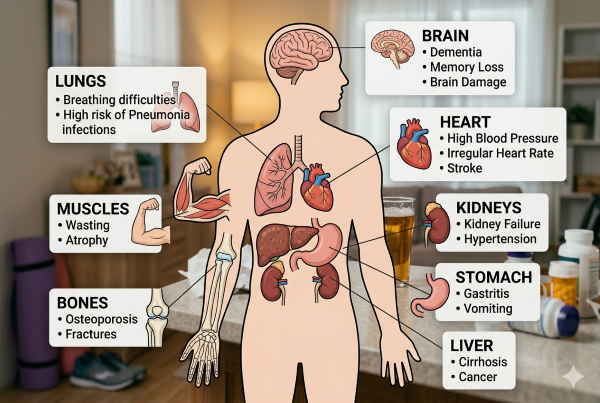
The Effects of Alcohol on Major Organs
Brain and Nervous System
Alcohol is also a depressant in that it decelerates the brain. This can cause short-term poor judgment, sluggish reaction times and coordination. The changes caused cumulatively might cause memory loss, mood changes and cognitive deficiencies in the long term.
Having too much alcohol can also cause loss of brain tissue along with disrupting the neurotransmitters, which control mood and behavior.
Understanding alcohol and depression: an unhealthy combination is a crucial effect of alcohol on mental health.
2. Liver Damage
There is a mild to the liver. It decomposes poisons, but excessive exposure could exceed its.
The most common of these liver diseases related to alcohol are
- Fatty liver disease (reversible, in youths)
- Alcoholic hepatitis (inflammation)
- Cirrhosis (permanent scarring)
Cirrhosis is also a severe condition since it interferes with the functionality of the liver, the whole body is affected. Learn more about the effects-of-alcohol-on-the-body including long-term liver damage.
3. Heart and Cardiovascular System
There are various effects of alcohol on the heart. Small amounts can have a beneficial effect on the heart, but extreme imbibing is dangerous.
Potential effects include:
- High blood pressure
- Irregular heartbeat (arrhythmias)
- Bad quality heart muscle (cardiomyopathy).
- Risk of stroke.
- Ultimately, these problems may result in life-threatening heart diseases.
4. Digestive System
The digestive tract is also impacted by alcohol since it can result in inflammation and might not be able to absorb nutrients.
It can cause:
- Aches in the stomach and acid reflux.
- They are pancreatitis (inflammation of the pancreas).
- Obviously, hyperactivity of tendency of blood loss in the gastrointestinal tract.
The pancreas plays a crucial role in the digestive process and control of blood sugar levels and, thus, the destruction of this organ can be a generalized one. Discover how how-do-blood-sugar-and-alcohol-relate and impact digestion.
Break free from alcohol dependence and reclaim your life with care at Orlando Treatment Solutions.
5. Immune System Suppression
Alcohol weakens the immune system, leaving your body unable to rid itself of infections easily, through the use of your body. Even a single episode of high drinking levels can have an effect on immune capabilities, even after 24 hrs.
Constant practice inclines towards:
- Respiratory infections
- Pneumonia
- To need more time to recuperate when sick.
- 6. Bone and Muscle Health
Calcium and hormone production, the secrets to healthy bones, are interfered with by alcohol. It may cause a decrease in bone density and bone fractures in the long run.
The weakness of the muscles and loss, particularly when there is poor dieting, are the other usual indicators of being one with chronic alcohol use.
Short-Term vs Long-Term Effects
Short-Term Effects
- Impaired coordination
- Slurred speech
- Dehydration
- Poor decision-making
- Sleep disruption
Long-Term Effects
- Organ damage
- Chronic diseases
- Nutritional deficiencies
- Increased cancer risk
Addiction, both physical and psychological. Recognizing signs-of-drug-addiction early can prevent long-term damage.
At least by valuing differences of this kind, it becomes possible to get to understand why even in exceptional instances, binge drinking may be detrimental.
Alcohol and Chronic Disease Risk
It can be attributed to the long-lasting alcohol use that leads to a variety of chronic illnesses, such as:
- Liver disease
- Heart disease
- Some types of cancers (cancer of the breast, the mouth, liver, throat and so on)
- Diabetes complications
- Neurological disorders
These hazards contribute to the number of drinks and the occurrence of drinking frequency. Understanding substance-use-disorder is key to managing these risks.
How Much Alcohol is Too Much?
However, moderation is supposed to be done after the definition can change. Generally:
- The moderate drinker: Not more than 1- 2 drinks per day for ladies, 2 drinks for men.
- Heavy drinking: Women more than 8 drinks/week; men more than 15 drinks/week.
- Binge drinking: 4-5 drinks in a brief amount of time.
Even in moderate amounts, personal tolerance, health status, and drugs can greatly impact the impact of alcohol on you. If you’re concerned, exploring programs/alcohol-use-disorder can provide clarity.
The Hidden Impact on Sleep and Energy
It is also thought that alcohol aids in sleep however, it disturbs normal sleep patterns. Although it might assist you to sleep more quickly, it diminishes the quality of REM sleep that results in you being left with poor sleep.
This can result in:
- Daytime fatigue
- Reduced concentration
- Mood swings
This may be inclined to make a low-energy circle of energy and reliance on alcohol.
Alcohol and Weight Gain
Alcohol contains empty calories i.e. insignificant or even no nutrients. It may also retard metabolism and growth of the appetite, which normally results in overeating fat.
Common effects include:
- Increased belly fat
- Slower fat burning
- Hormonal imbalances
This renders taking healthy weight difficult. Many ask, is-alcohol-a-drug given its metabolic effects?
Can the Body Recover from Alcohol Damage?
The bad news is that the body will recover in the majority of cases, i.e., when the body is stopped or prematurely enters in contact with the alcohol.
Improvements may include:
- Better liver function
- Improved sleep quality
- Stronger immune response
- Increased energy levels
Not all the evils are, however, reversible, i.e., cirrhosis. This is why it is important to intervene early. Review the benefits of quitting alcohol to understand recovery potential.

When to Seek Help
Until alcohol is exacting its punishment on your health, relationships and even your day-to-day life, then you can seek professional help. Signs include:
- Difficulty cutting back
- Withdrawal symptoms
- Increased tolerance
- Health complications
Take the First Step Toward Better Health
And in case you have any concern with the effects of alcohol on physical health. At Orlando Treatment Solutions, we provide personal treatment of each person, employing the loving services of specially trained professionals who are directed towards restoring the well-being and health of the person.
The starting point of a long-run recovery process and a healthier future can always be a contact, whether you are inquiring about the treatment processes or just have a question that needs to be answered. Explore our programs/outpatient options for flexible care.
Final Thoughts
And what effect does alcohol have on physical health? The question is uncomplicated: it influences almost all the parts of your body. Though the occasional drinking may not be that bad, the clubbing or overboard drinking may have certain pathological effects in the long run, on health. Seeking help through programs/substance-abuse-treatment can be a life-changing decision.
The problematic point of view is that change cannot be determined ever. The first step to undertake is awareness of the dangers to achieve essential measures to protect your body and increase the quality of life. For immediate support, consider our drug-rehab-orlando services.
Disclaimer
This content is for informational and educational purposes only and is not intended to replace professional medical advice, diagnosis, or treatment. Always consult a qualified healthcare provider regarding any questions or concerns about your health or alcohol use.
Sources
- National Institute on Alcohol Abuse and Alcoholism (NIAAA)
- Centers for Disease Control and Prevention (CDC) – Alcohol and Public Health
- World Health Organization (WHO) – Alcohol Consumption and Health Effects
- Harvard T.H. Chan School of Public Health – Alcohol: Balancing Risks and Benefits
- Mayo Clinic – Alcohol Use and Health Risks
Frequently Asked Questions
What are the 10 harmful effects of alcohol on the body?
Alcohol can damage the liver, heart, brain, and pancreas, weaken the immune system, disrupt sleep, increase cancer risk, cause digestive issues, impair memory, raise blood pressure, and contribute to weight gain and nutrient deficiencies.
Can alcohol make SIBO worse?
Yes, alcohol can worsen SIBO by irritating the gut lining, disrupting gut bacteria balance, and slowing digestion. This may increase bloating, discomfort, and bacterial overgrowth symptoms, making recovery more difficult without dietary and lifestyle changes.
What are 5 physical effects of long-term alcohol abuse?
Long-term alcohol abuse can lead to liver disease, heart problems, weakened immunity, digestive issues, and brain damage. These effects often develop gradually and can become severe or irreversible without early intervention and treatment.
What are the 7 effects of alcohol?
Seven common effects include impaired judgment, slowed reaction time, liver strain, dehydration, sleep disruption, mood changes, and reduced coordination. These effects vary based on the amount consumed and individual tolerance levels.
What is “wet brain” from alcohol?
“Wet brain,” or Wernicke-Korsakoff syndrome, is a serious brain disorder caused by vitamin B1 deficiency due to chronic alcohol use. It affects memory, coordination, and vision, and may become permanent without immediate medical treatment.
What is the #1 worst drink for your heart?
There isn’t a single “worst” drink, but high-sugar cocktails combined with excessive alcohol are particularly harmful. They increase blood pressure, inflammation, and calorie intake, raising the risk of heart disease over time.