
In This Blog
- What cocaine addiction is and how it is caused
- Behavioral, emotional and physical symptoms of cocaine addiction
- How cocaine impacts mental / and daily function
- When the signs of addiction suggest the need for professional help
- Why timely recognition is the key to a good recovery
The issue of cocaine addiction may turn out to be a silent robber that develops in front of people and people around them remain unknown of the consequences of the problem. Although the initial-use can be considered as recreational or regulated, the influence of cocaine on the reward system of the brain can easily facilitate the tendencies to compulsiveness. The early warning signs are very important in order to respond timely and with support towards recovery.
The judgment on cocaine addiction is not something that is going to involve understanding. It is regarding consciousness, sympathy and empathy when a professional behavioral support may be necessary.
What is Cocaine Addiction?
Cocaine addiction is a problem of substance use, which is when a person continues to use cocaine despite harmful consequences. Cocaine releases dopamine, and a feeling of euphoria which increases cravings for more of this drug and the addicts continue doing it.
Over a period of time, the brain adapts to the drug which means more cocaine is required to create the original effect. This cycle escalates the problem of compulsive use and poor impulse control and makes it a difficult task for the individual to stop using without serious addiction treatment.
The National Institute on Drug Abuse lists cocaine as a highly addictive and stimulating drug.
100% Confidential Support is Available 24/7
No matter what you’re going through, you’re not alone. Our dedicated team is here to provide a safe, judgment-free space where you can talk openly and honestly. Whether you need emotional support, resources, or just someone to listen.
We’re here for you—completely confidential and always respectful of your privacy. Call us today!
Why Cocaine Addiction Can Be Hard to Detect
Cocaine addiction will often hide in times of high energy, confidence or productivity. Individuals can look socially involved and successful and cover up the underlying dependency. Unlike some substances, dopamine interruptions would not necessarily impact everyday activities on the early usage of cocaine.
Social stigma and shame is part of what promotes secrecy. As the tolerance increases, consequences increase along with denial and recognition. This means one postpones for professional help.
EXPERT’S ADVICE: “Early behavioral changes often signal stimulant addiction before physical symptoms appear.”
Orlando Treatment Solutions
Battling with Drug and Alcohol Addition? Remember, you are not alone and we are here to help you!
Behavioral Signs of Cocaine Addiction
Behavioral changes are some of the first indicators of cocaine addiction. Individuals may become even more obsessed with receiving and using cocaine to the point that it comes at the expense of any and all responsibilities, relationships, and well-being.
Risk-taking behaviour, impulsive decisions, and being secretive are increased. Missed obligations, unexplained absences, and failing to be reliable are often accompanied by continued use and impulse control issues.
100% Confidential Support is Available 24/7
No matter what you’re going through, you’re not alone. Our dedicated team is here to provide a safe, judgment-free space where you can talk openly and honestly. Whether you need emotional support, resources, or just someone to listen.
We’re here for you—completely confidential and always respectful of your privacy. Call us today!
Common Behavioral Signs of Cocaine Addiction
Behavioral Sign | Potential Impact |
Secrecy | Erosion of trust |
Impulsivity | Risky decisions |
Neglecting responsibilities | Work or relationship strain |
Increased spending | Financial instability |
Emotional and Psychological Signs of Cocaine Addiction
Cocaine addiction causes a major impact on emotional control. People suffer mood swings, are irritable, anxious, or paranoid. Emotional crashes are witnessed after using cocaine since it causes depression, restlessness, or agitation.
In time, emotional dependence develops as the cocaine becomes a vehicle for coping with stress or discomfort. This reinforces the repetition of use and emotional instability often linked with anxiety and depression.
As per the research by PubMed, stimulant addiction is closely related to mental health disorders.
Physical Signs of Cocaine Addiction
Physical signs may vary depending upon frequency and duration of use. Cocaine stimulates the nervous system; it produces the physiological effects that are quite obvious.
Some of the most common physical signs include: dilated pupils, increased heart rate, decreased appetite, disruption in sleeping patterns, and unexplained weight changes. The constant usage can lead one to face strain on the cardiovascular system and get tired in the long run, often requiring medical detox.
The Centers for Disease Control and Prevention note increased risks with chronic stimulant use.
Physical Indicators of Cocaine Use
Physical Indicator | Possible Effect |
Dilated pupils | Nervous system stimulation |
Insomnia | Fatigue and irritability |
Appetite suppression | Weight loss |
Elevated heart rate | Cardiovascular strain |
How Cocaine Addiction Impacts Mental Health
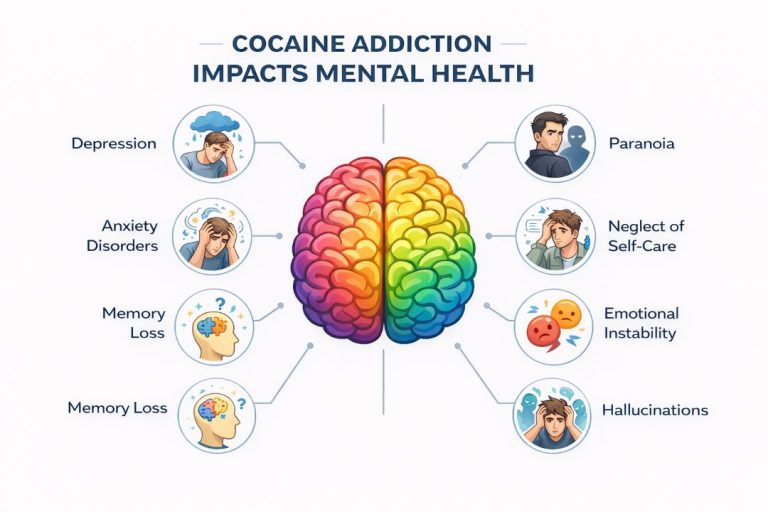
Cocaine addiction tends to go hand in hand with mental illness. Symptoms of anxiety, panic, depression, and paranoia may worsen as the usage continues. Emotional crash from one use to the next can be overpowering to the user and cause him or her to be even more reliant on the cocaine to balance the disarray.
This cycle is making recovery difficult without treatment, both for substance use and emotional health. Integrated behavioral health support helps with this in the long-term to have better stability.
Changes in Social and Occupational Functioning
Cocaine addiction typically results in failed relationships and work. Increased irritability withdrawal and secrecy causes stress in one’s communication with their loved ones. Due to absenteeism, impaired judgement, or fatigue, the work performance may decrease.
As consequences also build upon each other, often social isolation is increased, which creates emotional dependence on cocaine and reduced access to healthy support systems.
Why Early Signs Matter
When they find addicts to be addicted to cocaine during the initial stages, they recover better. It is possible that with the early intervention, people can get the following: a reduction in the number of complications, worsening of relationships, and more active work with the support services.
Individuals who disregard the initial indications also provide their patterns of addiction with the chance to evolve and become more difficult to overcome. The education leads to faster debates, limits and professional counseling.
FACTS: Cocaine strongly activates dopamine pathways, increasing addiction risk and compulsive behavior.
When Cocaine Use Becomes Addiction
Not everyone who uses cocaine becomes addicted; however, patterns of use place people at greater risk. The signs of an addiction are lack of control, being dependent despite the harm that is occurring, and emotional dependency on cocaine to either control or escape.
It is paramount to know about this change. Addiction is a change of brain functioning, and is not a moral failing, and needs behavioral support and evidence-based treatment.
Struggling to regain balance? Contact Orlando Treatment Solutions for confidential help.
The Emotional Impact on Loved Ones
Families and friends tend to be confused, worried, and frustrated. Trust issues, emotional exhaustion, and financial stress are common occurrences. Without any guidance, loved ones can unintentionally face burnout.
Supporting the families is an important part of recovery-oriented care. Talking about emotional stress is one part of a family therapy involvement.
Orlando Treatment Solutions provides organized, evidence-based behavioral support to people addicted to cocaine. Their rehabilitation programs deal with substance use behavior in addition to emotional regulation and emotional needs, where people are restored to a stable state and families are provided assistance in the recovery process.
Call Orlando Treatment Solutions at (321) 415-3213 to discuss recovery options
Medical Disclaimer: This article is for informational purposes only and is not a substitute for professional medical advice.
Key Takeaways
- Cocaine addiction often begins insidiously with changes in one’s behavior and emotion.
- Emotional crash, mood instability reinforces compulsive patterns of usage.
- The physical signs may develop later as the tolerance and dependence develops.
- Often cocaine addiction accompanies anxiety and depression.
- Early recognition improves recovery outcomes and reduces long-term harm.
- Professional behavioral care support is implemented in the treatment of both substance use and emotional drivers.
FAQs
1. What are the earliest signs of cocaine addiction?
Early signs include increased secrecy, mood swings, impulsive behavior, and preoccupation with cocaine. Individuals may prioritize use over responsibilities while denying problems. Emotional changes often appear before physical symptoms, making behavioral awareness critical for early recognition and timely support.
2. Can someone hide cocaine addiction effectively?
Yes. Cocaine addiction is often hidden due to social stigma and intermittent use patterns. Individuals may appear functional while secretly experiencing cravings, emotional crashes, and escalating use. Over time, concealment becomes harder as consequences increase and behavioral changes intensify.
3. Does cocaine addiction affect mental?
Cocaine addiction significantly affects mental. Anxiety, paranoia, depression, and emotional instability commonly occur. Emotional crashes between uses worsen symptoms, increasing reliance on cocaine. Addressing both substance use and mental is essential for sustained recovery.
4. Are physical symptoms always present with cocaine addiction?
Physical symptoms may not appear early. Many individuals show behavioral and emotional signs first. Over time, physical indicators such as sleep disruption, appetite changes, and cardiovascular strain may develop as use becomes more frequent and compulsive.
5. How quickly can cocaine addiction develop?
Cocaine addiction can develop rapidly due to its strong effects on dopamine pathways. Frequency, dosage, and individual vulnerability influence progression. Some individuals experience loss of control within weeks or months, especially with repeated or binge use.
6. When should professional help be considered?
Professional support is recommended when cocaine use affects emotional stability, relationships, or daily functioning. Early intervention improves outcomes, reduces risks, and supports long-term recovery through structured behavioral care.