
Outpatient alcohol rehab is probably the most asked question when individuals have started to seek help, and they usually ask, “How does outpatient alcohol rehab work. This question usually arises out of a certain form of concern, not only the concern of recovery, but also the concern of being able to keep on working, family, school and everyday life. The issue with a lot of people seeking assistance in their alcohol consumption is that they are ready to abandon all that gives their life organization.
Outpatient alcohol rehab enables individuals to receive professional and structured care and at the same time can stay at their homes and be involved in their daily duties. Outpatient care received at facilities such as the Orlando Treatment Solutions is made to be functional, relaxed, and helpful without undermining the integrity of clinical and accountability and quality of care.
Citizens prefer outpatient alcohol rehabilitation because they are not acutely ill, are willing to change, and seek therapies that are compatible with reality. The participants are attending regular therapy sessions throughout the week and applying the knowledge they gain in their home, work, and social settings.
What is Outpatient Alcohol Rehab?
Outpatient alcohol re-habs, also referred to as outpatient addiction treatment, is a way of treating and curing addiction where people are not required to be in a treatment center but rather receive therapy, education, and recovery through the outpatient program. Rather than spending the delightful night, people gather at set sessions and go home later.
The model is aimed at assisting individuals to learn how to relate better to alcohol, learning better coping mechanisms, and have sustainable habits that could promote long-term recovery. Outpatient service is commonly appropriate to those who are balanced regarding their living environment and supportive relationships and have responsibilities that render it less justifiable to undergo residential treatment.
100% Confidential Support is Available 24/7
No matter what you’re going through, you’re not alone. Our dedicated team is here to provide a safe, judgment-free space where you can talk openly and honestly. Whether you need emotional support, resources, or just someone to listen.
We’re here for you—completely confidential and always respectful of your privacy. Call us today!
What Happens in Outpatient Alcohol Rehab?
Alcohol rehab takes an organized form of treatment depending on the individual’s needs of the addict. The combination of most of the programs entails:
- Individual counseling
- Group therapy
- Thus, relapse prevention education.
- Neural health and behavioral health positivity.
Individual sessions involve individual work by participants with therapists to discover the triggers and stress and improve the skills of emotional control and communication. The group therapy provides a learning opportunity, support, and group responsibility, among other things, with peers who are undergoing equal challenges.
The possibility to exercise new coping skills during the care and discuss the success or failures during the therapy sessions is one of the most valuable parts of the outpatient care.
Is Outpatient Alcohol Rehab Right for Me?
The outpatient alcohol rehab can be a good choice in case you need professional assistance but at the same time, you want to remain self-sufficient. It tends to be suitable when patients have mild or moderate use disorders of alcohol or when patients have been on either inpatient or detox programs.
This option can be suitable and appropriate if you:
- Have a steady and sound domestic setting.
- It is not put under 24/7 medical care.
- Get inspired to be at meetings regularly.
- Desire to work, further study and care.
Outpatient care is not less treatment; it is just a question of getting the right amount of care in the given circumstance.
Outpatient Alcohol Rehab Programs
Rehabilitative programs of alcohol outpatients are different in form and severity. Others just take an occasional portion of hours in a week, whereas others have to take sessions daily. The similarity between them is therapy, education, responsibility, and development of recovery skills but not under residential supervision.
Evidence-based programs that include cognitive behavioral therapy (CBT), motivational interviewing and family involvement are implemented in many programs. This is aimed at ensuring long-term recovery, rather than abstinence.
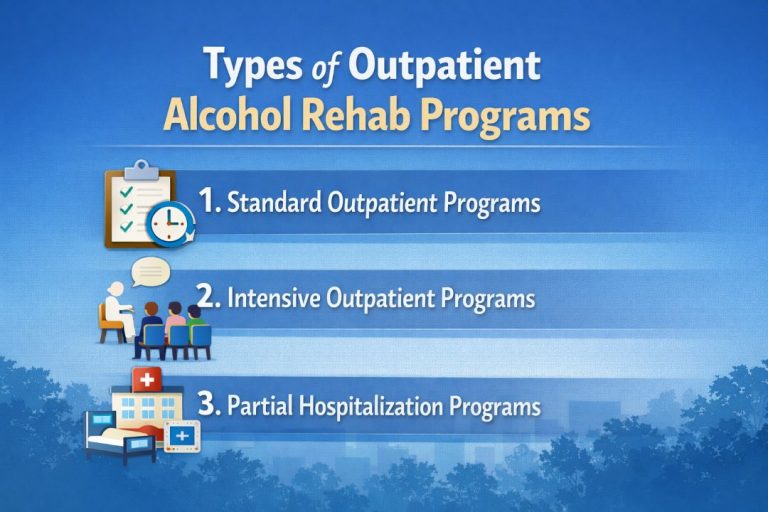
Types of Outpatient Alcohol Rehab Programs
Outpatient alcohol rehabilitation programs normally have different levels of care to satisfy different clinical requirements:
- Standard Outpatient Programs (OP): A number of hours every week and this is said to be suitable in cases of early recovery and also in the continuous support.
- Intensive Outpatient Programs (IOP): Multiple sessions weekly, containing a more rigid therapeutic program.
- Partial Hospitalization Programs (PHP): Day hospitals having all-inclusive services but still allowing individuals to go home.
Every tier is distinguished by professional support and flexibility and autonomy.
Benefits of Outpatient Alcohol Rehab
The advantages of the outpatient alcohol rehab are also significant to various individuals and especially those who appreciate the need to strike a balance between treatment and life.
Key benefits include:
Reduced expenses in comparison with inpatient care.
- As soon as possible, the use of coping skills in real life.
- Powerful emphasis on preventing the relapse.
- Greater inventive approach to family and community demands.
- Promotion of Personnel accountability and expert mentoring.
This will enable people to come out stronger and more confident and play an active role in recovery.
How Long Does Outpatient Alcohol Rehab Last?
The outpatient alcohol rehab process differs in length depending on the progress of the patient, the objectives of treatment, and the intensity of programs. Some attend the courses for 8-12 weeks and some stay in the courses for over several months.
The concept of recovery does not follow a set time. The therapeutic intervention is aimed at attaining the state of control, acquiring practical coping strategies, and gaining assurance in long-term recovery. Most of the programs decrease in intensity as the persons build a strong recovery base.
How to Choose an Outpatient Alcohol Rehab Program
Convenience is not the only factor in determining the appropriate outpatient alcohol rehab. Find programs with licensed clinicians, treatment planning of an individual kind and combined mental health care.
One should inquire about the following:
- What are the Medicare treatment methods?
- Get the flexibility of the appointment times.
- Is it co-occurring mental health treatment?
The quality program must be organized but not rough and not dominating, but encouraging, all at the same time.
Get Help for Alcohol Addiction
You will not need to work out how to cope with alcohol, whether it is hurting your health, relationships, or peace of mind. Orlando Treatment Solutions is a medium-intensity, evidence-based alcohol rehabilitation outpatient intervention based on caring and compassion.
Having a conversation with one of the knowledgeable admissions professionals can help you understand your options and take a significant first step toward permanent recovery. There can be a place in your life where you can receive support, and you can recover.
Disclaimer
This content is provided for informational and educational purposes only and is not intended to replace professional medical, psychological, or addiction treatment advice. Always consult a qualified healthcare provider for diagnosis, treatment, or personalized guidance related to alcohol use or mental health concerns.
Frequently Asked Questions
How long does outpatient rehab usually last?
Outpatient rehab usually lasts between 8 and 16 weeks, but some individuals stay longer. Duration depends on progress, program intensity, and personal recovery goals. Treatment often tapers gradually to support long-term stability and independence.
How does outpatient alcohol detox work?
Outpatient alcohol detox involves medical monitoring without overnight stays. A provider evaluates withdrawal risk, prescribes medications if needed, and schedules regular check-ins. It’s appropriate only for individuals with mild to moderate withdrawal symptoms and stable home support.
How does outpatient therapy work?
Outpatient therapy includes scheduled individual and group counseling sessions. Participants attend appointments during the week and return home afterward. Therapy focuses on understanding triggers, building coping skills, and developing healthier patterns in daily life.
What do they do in rehab for alcoholics?
Rehab for alcohol use focuses on therapy, education, and relapse prevention. Individuals explore the causes of drinking, learn coping strategies, address mental health concerns, and build a recovery plan that supports long-term change.
How many times does an alcoholic go to rehab?
There’s no set number of times someone may attend rehab. Recovery is individual, and some people need multiple treatment episodes. Each experience can build insight and skills that contribute to lasting recovery.
What is the 60% rule in rehab?
The 60% rule often refers to program attendance or participation benchmarks used by some insurers or facilities. It emphasizes consistent engagement in treatment activities as a factor in measuring progress and program effectiveness.