If you or a loved one has been prescribed Suboxone, you may have a question on your mind: “But is Suboxone addictive?” It’s a very reasonable question. Many people are confused about it since Suboxone includes an opioid element, and opioids are precisely what people are attempting to bounce back from.
So the bottom line is that Suboxone does have addictive properties, but they are very different from the ones it’s meant for. The difference is greater than you might imagine.
During heroin, fentanyl or prescription drug recovery, the last thing a person wants to do is to replace one addiction with another. This concern is what prevents many people from seeking treatment. But this is what the research really does say: The use of Suboxone when prescribed by a physician is in no way comparable to taking heroin or street drugs.
What is Suboxone?
Suboxone is a drug that is available in two forms: a small tablet or a thin film to be placed under the tongue. It’s a combination of two medications: buprenorphine and naloxone. The “Team” analogy can be helpful: each team member has a designated role.
Buprenorphine is an opioid, yes, but it’s a special kind called a “partial opioid agonist.” Instead of filling your opioid receptors all the way like heroin does, buprenorphine only partially fills them. This is the whole point. It tricks your brain into thinking it’s getting opioids, so you don’t feel sick and you stop craving drugs. But because it’s only “partially” activating those receptors, you don’t get high. There’s no rush, no intense feeling. It’s boring, which is exactly what you want in recovery.
100% Confidential Support is Available 24/7
No matter what you’re going through, you’re not alone. Our dedicated team is here to provide a safe, judgment-free space where you can talk openly and honestly. Whether you need emotional support, resources, or just someone to listen.
We’re here for you—completely confidential and always respectful of your privacy. Call us today!
Is Suboxone Addictive When Used as Prescribed?
No, Suboxone is not considered addictive when you take it exactly as your doctor prescribes.
This is super important to understand the difference between “dependence” and “addiction.” These words get mixed up all the time, but they’re not the same thing. Dependence means your body adjusts to a medication and might have withdrawal symptoms if you stop suddenly. Addiction is when you use something out of control and it runs your life. You can be dependent on insulin if you have diabetes, but that’s not an addiction. It’s medicine doing its job.
“Dependence refers to the physical cravings and consequences of not taking a drug, like a headache from skipping a morning cup of coffee. While it sometimes co-occurs, it is different from addiction. Addiction is out-of-control use that leads to the substance controlling the priorities of the individual who is affected.” – Dr. Ian Powell, Addiction Specialist at Rogers Behavioral Health
When you take Suboxone as prescribed, you will likely develop physical dependence on it. That’s normal. If you stop taking it suddenly, you might feel withdrawal symptoms like sweating, body aches, or irritability. But that’s not an addiction. That’s just your body adjusting.
The real difference shows up in how you use the medication. Someone with a Suboxone addiction would:
- Lie to their doctor to get more Suboxone
- Use it in ways not prescribed (like crushing and injecting it)
- Sell it or trade it on the street
- Keep using it even when it’s harming their relationships or work
- Feel out of control with their Suboxone use
Someone in legitimate Suboxone treatment would take it exactly as prescribed, go to their appointments, work with their doctor, and gradually reduce their dose over time.
100% Confidential Support is Available 24/7
No matter what you’re going through, you’re not alone. Our dedicated team is here to provide a safe, judgment-free space where you can talk openly and honestly. Whether you need emotional support, resources, or just someone to listen.
We’re here for you—completely confidential and always respectful of your privacy. Call us today!
How is Suboxone Different From Other Opioids?
Let’s compare how Suboxone stacks up against other opioid medications. This chart shows the key differences:
Feature | Suboxone (Buprenorphine) | Heroin | Methadone | Oxycodone |
Type of opioid | Partial agonist | Full agonist | Full agonist | Full agonist |
High potential | Very low | Very high | High | High |
Overdose risk | Much lower | Extremely high | High | High |
Addiction potential | Low | Extremely high | High | High |
Withdrawal severity | Mild to moderate | Severe | Severe | Severe |
Used in treatment? | Yes | No | Yes | No |
Doctor prescribed? | Yes | No | Yes | Yes (for pain) |
“The effects of buprenorphine are mild, its onset is slow, and the drug has a long duration, which gives it a much lower risk of addiction than opioid agonists.” – American Addiction Centers
Orlando Treatment Solutions
Battling with Drug and Alcohol Addition? Remember, you are not alone and we are here to help you!
Can You Become Addicted to Suboxone?
Yes, technically you can become addicted to Suboxone, but it’s rare. Studies show it happens in less than 10% of people taking it properly, and in most cases, those people were already struggling with addiction issues.
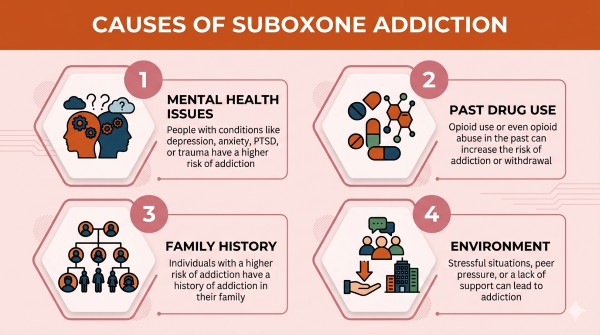
When Suboxone addiction does happen, it usually involves misusing the medication. Someone might:
- Inject the crushed film or tablet to feel a rush
- Combine it with other drugs like benzodiazepines or alcohol
- Take higher doses than prescribed
- Buy it on the street without medical supervision
In these situations, yes, addiction can develop. The medication is being abused, not used as treatment.
But here’s what’s really important: studies consistently show that people in structured Suboxone treatment have much lower addiction rates than people trying to quit opioids cold turkey or without any medication. Research shows that medication-assisted treatment (which includes Suboxone) is one of the most effective ways to stay in recovery and avoid relapse.
“Addiction to Suboxone isn’t a concern when prescribing the medication. Part of the confusion is people using the terms ‘addiction’ and ‘dependence’ as synonyms.” – Dr. Ian Powell, Rogers Behavioral Health
Suboxone Addiction Symptoms to Watch
If someone is struggling with actual Suboxone addiction (not just taking it as prescribed), what would that look like? These are the warning signs:
- Running out of medication early because they’re taking more than prescribed
- Lying to doctors or visiting multiple doctors to get more Suboxone
- Mixing Suboxone with alcohol or other drugs
- Mood swings or acting out of character
- Problems at work or school that get worse
- Neglecting family, friends, or responsibilities
- Trying to buy Suboxone on the street or from other people
- Showing signs of overdose or dangerous behavior
If you notice these signs in yourself or someone else, it’s important to talk to a doctor right away. This isn’t a judgment thing; it’s just recognizing that the medication needs to be adjusted or that additional support is needed.
How Long Does Suboxone Stay in Your System?
Buprenorphine stays in your body for a really long time compared to other opioids. After you take a dose, it peaks in about 3 to 4 hours. But it sticks around much longer. The half-life (the time it takes for half the drug to leave your system) is about 24 to 60 hours. That means if you miss a dose, you usually don’t feel terrible for a couple of days. Compare that to heroin, which has a half-life of only 30 minutes to an hour.
This long-acting nature is actually a benefit for treatment. You take it once or twice a day, you don’t have to worry about withdrawal between doses, and you can build a stable life without constant cravings. It gives your brain and body time to heal.
The Dependence vs. Addiction Thing
Physical Dependence means your body adjusts to medication. Your body becomes used to having it. If you stop suddenly, you might have withdrawal symptoms. But dependence is not inherently bad. If you take blood pressure medication every day, you’re dependent on it. If you stop, your blood pressure goes up. That’s dependence, not addiction. The same goes for Suboxone. You can be dependent and still be in healthy recovery.
Addiction is a behavioral disorder. It involves losing control and continuing to use something despite harm. It’s about the choices you make, the lies you tell, and how the substance takes over your priorities. Addiction is what lands people in jail, ruins relationships, costs thousands of dollars, and puts lives at risk.
You can have dependence without addiction. You can be dependent on your diabetes medication and it not be an addiction. Same with Suboxone. Millions of people depend on medications daily without being addicted to them.
What About Withdrawal From Suboxone?
If your doctor decides it’s time to stop Suboxone, you won’t just quit cold turkey. That would be uncomfortable and unnecessary. Instead, your doctor will create a tapering plan, slowly reducing your dose over weeks or months. This gentle approach means minimal withdrawal symptoms.
Typical Suboxone tapering looks like this:
- Start at your stable maintenance dose (for example, 8 mg per day)
- Reduce by 25% every 1 to 2 weeks
- Continue slowly reducing until you reach the smallest dose
- Eventually stop completely
Withdrawal symptoms you might feel (especially if tapering too quickly) could include the following:
- Body aches and joint pain
- Sweating or chills
- Nausea or vomiting
- Trouble sleeping
- Anxiety or irritability
- Restlessness
These are usually mild compared to withdrawal from heroin or other full opioids. And if they do happen, your doctor can adjust the taper schedule to make it easier.
Suboxone as a Medical Treatment
The reason Suboxone is so widely used isn’t that doctors are lazy or just replacing one addiction with another. It’s because the evidence shows it works better than almost anything else for helping people recover from opioid addiction.
Here’s what the research proves:
- People on Suboxone are more likely to stay in treatment
- They’re less likely to relapse to heroin or other opioids
- They have fewer cravings and less withdrawal suffering
- They’re more likely to keep their jobs and stay housed
- Their health outcomes are better overall
- The overdose risk is much, much lower
The FDA approved Suboxone for opioid use disorder in 2002. Since then, it’s become the most commonly prescribed medication for helping people recover from opioid addiction. Millions of people have used Suboxone successfully to build stable, sober lives. That’s not a coincidence.
“Research shows that the combination of buprenorphine and naloxone is as therapeutically beneficial as methadone.” – American Addiction Centers
Combining Suboxone With Other Support is Key
Here’s something super important: Suboxone works best when it’s part of a complete treatment plan, not just a pill you take and hope for the best.
Suboxone by itself is medicine. But you also need:
- Regular meetings with an addiction counselor or therapist
- Group therapy or support groups
- Help fixing the behaviors and thought patterns that led to addiction
- Treatment for mental health issues like depression or anxiety
- Family support and sometimes family therapy
- Lifestyle changes, coping skills, and new routines
Think of Suboxone like the foundation of a house. It’s essential, but you need walls, a roof, and everything else too. Medication plus therapy equals the best outcomes. That’s what the research shows, over and over again.

Real Support is Available Right Now
Speak with an Admissions Representative.
.
Getting Help With Suboxone Treatment in Orlando
If you’re struggling with opioid addiction or you’re concerned about Suboxone use, Orlando Treatment Solutions is here to help. Located in Orlando, Florida, we offer comprehensive treatment for opioid use disorder, including medication-assisted treatment and personalized therapy.
Our treatment approach combines evidence-based therapy like Cognitive Behavioral Therapy (CBT) with medical supervision and family support. We understand that recovery isn’t one-size-fits-all. Whether you’re just starting treatment or you’re working on tapering off Suboxone safely, our team creates a plan that works for you.
We offer multiple levels of care, from intensive outpatient programs (IOP) for people who need flexibility to partial hospitalization programs (PHP) for more intensive support. Many insurance plans are accepted, and we work with you to verify coverage.
You can reach our admissions team at (321) 415-3213 or visit our contact page anytime. All calls are 100% confidential. Recovery is possible, and you don’t have to do it alone.
References
- American Addiction Centers, “Is Suboxone Addictive? Symptoms of Suboxone Addiction”
- NAMI, “Buprenorphine/Naloxone (Suboxone)”
- Medical News Today, “Suboxone: Side effects, dosage, use for dependence, and more”
- Rogers Behavioral Health, “Is Suboxone really trading one addiction for another?”
- WebMD, “Suboxone for Opioid Use Disorder”
- Addiction Center, “Suboxone Addiction, Abuse, and Treatment”
- National Center for Biotechnology Information (NCBI), “Suboxone: History, controversy, and open questions”
- UAMS Psychiatric Research Institute, “What is Buprenorphine?”
Medical Disclaimer:
This blog is for informational purposes only and does not replace professional medical advice. Always consult a licensed healthcare provider or addiction specialist before starting or stopping any medication. Orlando Treatment Solutions provides professional evaluation and personalized treatment planning for opioid use disorder and co-occurring mental health conditions.
FAQs
Q: Will taking Suboxone as prescribed get you high?
No. Buprenorphine only partially activates opioid receptors in your brain. Most people feel stable and normal, not high. Some people actually feel calmer and more clear-headed once their body adjusts.
Q: Can you overdose on Suboxone?
It’s very difficult. Because of how buprenorphine works (that ceiling effect), your breathing doesn’t get dangerously suppressed the way it does with heroin or oxycodone. Overdose is rare when Suboxone is taken alone. However, mixing it with alcohol, benzodiazepines, or other opioids significantly increases overdose risk.
Q: Is Suboxone the same as methadone?
No. Both are medications for opioid use disorder, but they work differently. Methadone is a full opioid agonist (like heroin), while buprenorphine in Suboxone is a partial agonist. Suboxone has lower overdose risk and is easier to stop. Methadone is stronger and works better for some people.
Q: What’s the difference between Suboxone and Subutex?
Subutex contains only buprenorphine. Suboxone contains buprenorphine plus naloxone. Naloxone was added to discourage people from injecting the medication. Both treat opioid addiction, but Suboxone is more commonly prescribed because of the naloxone’s abuse deterrent.
Q: Can you become addicted to Suboxone if you have no history of addiction?
It’s unlikely but theoretically possible. Someone without opioid addiction history has much lower risk of becoming addicted to buprenorphine because they don’t have the same brain vulnerability that addiction creates. But any opioid carries some risk if misused.
Q: How long are people typically on Suboxone?
It varies widely. Some people stay on it long-term (years or even indefinitely), which is safe and effective. Others taper off after 6 months to 2 years. There’s no “right” timeline. It depends on your recovery, your mental health, and what works for you. Work with your doctor on this decision.
Q: Is it safe to drink alcohol while taking Suboxone?
No. Mixing alcohol with Suboxone increases the risk of overdose, respiratory depression, and dangerous side effects. Alcohol also interferes with your recovery work. Many people in Suboxone treatment avoid alcohol completely.
Q: Can you take Suboxone while pregnant?
Yes, but only under close medical supervision. Stopping Suboxone suddenly during pregnancy is riskier than continuing it. Untreated opioid addiction during pregnancy carries serious risks. Talk to an addiction specialist and your OB doctor about the safest plan for you and your baby.
Q: What happens if you take Suboxone when you’re not opiate-dependent?
If you’re not dependent on opioids and you take buprenorphine, you might feel mild sedation or nausea, but you won’t get high. The medication is designed for people with opioid dependence. In non-dependent people, it doesn’t produce the same effects.
Q: Can I drive while taking Suboxone?
Yes, after your body adjusts to it. Most people on stable Suboxone doses can drive safely. However, some people feel drowsy initially, especially if they’re also taking other medications. Ask your doctor about your specific situation.
Q: If I get addicted to Suboxone, what are my treatment options?
If someone develops Suboxone addiction, treatment usually involves adjusting the dose, adding stronger therapy and counseling, possibly tapering to a different medication, and treating any underlying mental health issues. Relapse doesn’t mean failure. It means your treatment plan needs tweaking.
Q: Does insurance cover Suboxone treatment?
Most insurance plans do cover Suboxone treatment because it’s an FDA-approved medication for a recognized medical condition. Coverage varies by plan, so you’ll want to call your insurance company or work with a treatment center’s admissions team to check your specific coverage and any out-of-pocket costs.