If you’re searching for help with alcohol abuse, you probably have questions. Maybe you’ve been diagnosed with an ICD-10 code like F10.10, or someone you love is struggling with drinking that’s affecting their life. The medical terminology feels overwhelming, and you just want to understand what’s actually happening and what treatment options are available.
You’re not alone. In fact, alcohol abuse is one of the most common yet misunderstood conditions affecting Americans today. The good news? Understanding your diagnosis is the first step toward recovery, and evidence-based treatment really works.
It’s time to look into the ICD-10 code and understand its implications, as well as take steps necessary for getting your life back on track. We’ll make it easy for you to understand all the medical terminology and we’ll tell you what your recovery from addiction will look like with the support of skilled addiction professionals who know your problem and understand your struggle.
What Alcohol Abuse ICD-10 Code Mean
Alcohol abuse is defined as a problematic pattern of drinking that causes you to fail at work, school, or home, continue drinking despite serious consequences, and put yourself in physical danger while drinking. The ICD-10 system uses the code F10.10 for alcohol abuse without complications, which is essential for accurate treatment planning.
Think of the ICD-10 code as a diagnostic fingerprint. It tells your doctor, therapist, and insurance company exactly what’s going on. When a clinician assigns F10.10, they’re saying: your drinking is causing real harm, but you haven’t yet developed dependence, withdrawal symptoms, or acute medical complications from alcohol.”
The key difference: alcohol abuse focuses on the negative consequences of drinking. Alcohol dependence, coded as F10.20, involves your brain and body becoming chemically dependent on alcohol. Dependence includes tolerance, withdrawal symptoms, and loss of control over drinking.
“The distinction between abuse and dependence matters clinically and financially,” explains addiction medicine research from the National Institute on Alcohol Abuse and Alcoholism (NIAAA). “Proper coding ensures patients receive the appropriate level of care and insurance covers treatment appropriately.”
Your ICD-10 code determines which treatment level your insurance will approve and helps your treatment team understand your specific situation. It’s not a judgment or label, it’s a tool for getting you the right care and support you deserve.
Alcohol Abuse: Physical Effects on the Body
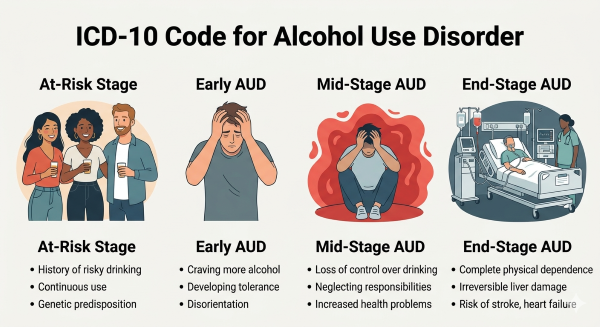
Alcohol abuse damages nearly every organ system in your body, starting with the brain and moving outward. Understanding these effects helps explain why treatment matters so much and why early intervention can prevent permanent damage.
When alcohol enters your bloodstream, it disrupts neurotransmitters and damages brain cells. Your cognitive functions decline, your memory weakens, and your emotional regulation suffers.
Your liver bears the heaviest burden. Alcohol is metabolized in the liver, and excessive drinking causes inflammation, scarring, and eventually cirrhosis. Pancreatitis, an inflammation of the pancreas, strikes about 15% of heavy drinkers. Your digestive system suffers from acid reflux, gastritis, and stomach ulcers. Your heart rate becomes irregular, your blood pressure climbs, and your risk of stroke increases significantly.
Long-term alcohol abuse also damages your nervous system (leading to numbness and weakness in extremities), bone density (increasing fracture risk), immune system (making infections more likely), sexual function (erectile dysfunction is common), and sleep quality (insomnia and disrupted REM sleep). The cumulative effects of these changes make professional help essential.
“Alcohol misuse is the fourth leading preventable cause of death in the United States,” according to the American Psychiatric Association. “The effects are both immediate and cumulative, damaging organs over time with each drink.”
The good news: some of these changes are reversible with treatment and abstinence, especially when you get help early.
Professional help can make a difference.
👉 Contact Orlando Treatment Solutions for compassionate support.
What Can Reverse: Brain and Body Healing
This is where hope enters the picture. Your brain is remarkably resilient, and evidence-based recovery programs show that significant alcohol-related damage can reverse if you stop drinking and get proper treatment. Research shows that significant alcohol-related damage can reverse if you stop drinking and get comprehensive care.
Brain volume loss, one of the most concerning effects of alcohol abuse, begins reversing within two weeks of abstinence. Scientists found that brain cells don’t die from alcohol; they shrink due to dehydration. When you quit drinking, these cells swell back to normal size. The grey matter that seemed lost starts coming back, making cognitive behavioral therapy more effective as your brain heals.
Cognitive improvements follow a predictable timeline as your brain recovers with proper therapeutic support:
- First week: Sleep improves, anxiety decreases slightly
- Weeks two to four: Short-term memory begins improving, concentration sharpens
- First three months: Emotional stability improves, impulse control strengthens
- Six months to one year: Significant cognitive recovery, decision-making abilities restored
Your liver, too, can heal. If cirrhosis hasn’t developed, proper treatment and abstinence lead to dramatic liver function improvement within months of sobriety. Inflammation decreases, enzymes normalize, and your body’s natural detoxification returns.
Sleep quality improves within days. Your immune system strengthens. Bone density begins rebuilding. Your sexual function returns. These aren’t theories; they’re documented clinical outcomes supported by personalized treatment plans.
“Research from the Recovery Research Institute shows that cortical thinning from alcohol can be reversed with six months or less of abstinence,” according to peer-reviewed studies on brain recovery. “The brain’s neuroplasticity allows it to rewire itself and repair damaged neural connections.”
The timeline varies by person, but the principle is universal: your body wants to heal, and it will with dedicated professional support and commitment
What Cannot Reverse: Permanent Damage
It’s important to be honest about what can’t be undone. Some alcohol-related damage is permanent, and understanding this motivates people to seek treatment earlier rather than waiting for conditions to worsen.
If significant brain cells die from prolonged heavy drinking, that damage is irreversible. Wernicke-Korsakoff Syndrome, a condition caused by thiamine deficiency and severe alcohol abuse, causes permanent memory loss and cognitive decline. This typically happens only in cases of extreme, prolonged abuse, but it’s a stark reminder that early intervention matters tremendously.
Certain cognitive abilities may never fully recover even with extended recovery support. Sustained focus, complex planning skills, visual-spatial reasoning, and multi-tasking abilities can remain impaired even after brain volume returns to normal. Some heavy drinkers continue struggling with these functions years into sobriety, which is why ongoing therapy and support are essential.
Alcohol-related neuropathy, nerve damage in the extremities, often doesn’t improve even with sustained abstinence. The damage to peripheral nerves can be permanent. Certain alcohol-induced mental health conditions may persist as well, though anxiety and depression often improve significantly with sobriety and professional treatment.
Recovery Timeline: Week by Week
Understanding what to expect during recovery reduces anxiety and keeps you motivated. Recovery isn’t linear, but it follows a general pattern supported by personalized treatment approaches.
Days 1-3: Your body begins eliminating alcohol as medical supervision helps manage withdrawal safely. Withdrawal symptoms like shakiness, sweating, and anxiety may appear. Sleep is disrupted. Your brain chemistry is chaotic. This is the hardest phase for many people, which is why professional support during this period matters.
Week 1: Withdrawal typically peaks and then begins subsiding with proper therapeutic intervention. Sleep improves slightly. Your body’s systems start rebalancing. Appetite may return. Irritability is common. Cravings are intense but manageable with group therapy support.
Weeks 2-4: Brain fog starts lifting as your neurons begin healing. Short-term memory improves. You notice clearer thinking. Emotional stability increases. Sleep quality continues improving. Many people feel a burst of hope and motivation around week three. Anxiety and irritability decrease noticeably with ongoing therapy.
Month 2: Cognitive function improves dramatically with consistent evidence-based treatment. Attention span lengthens. You can focus on tasks for longer periods. Sleep normalizes. Energy levels increase. Some of the damage to your prefrontal cortex (decision-making center) starts repairing.
Months 3-6: Sustained cognitive improvement continues with personalized recovery plans. Complex thinking becomes easier. Emotional regulation is notably better. Your liver function tests improve significantly if your liver wasn’t severely damaged. You feel like yourself again, perhaps for the first time in years. Family therapy during this phase helps rebuild important relationships.
Months 6-12: Long-term memory recovery continues as your brain heals. Brain imaging shows grey matter regrowth. Your cardiovascular system stabilizes. Quality of life improvements are substantial. Many people report feeling better than they did in years. Relapse prevention training becomes increasingly important at this stage.
Year 2 and beyond: The brain continues subtle repairs as ongoing support keeps you connected to your recovery community. Some cognitive functions continue improving. The risk of relapse requires ongoing commitment to treatment and support, but your physical health continues stabilizing.
“Brain plasticity allows your brain to rewire itself even in adulthood,” explains neuroplasticity research from the National Institute of Mental Health. “New neurons can be generated to replace damaged ones, contributing to your recovery. This is true for people who’ve abused alcohol for years.”
Individual timelines vary based on your age, how long you’ve been drinking, your genetics, and the quality of treatment and support you receive. Some people experience faster recovery; others need more time. What matters is staying consistent with your recovery plan.
Alcohol Abuse vs. Dependence: Know the Difference
Understanding how alcohol abuse differs from alcohol dependence helps you recognize where you are in the disease progression and what treatments are most appropriate for your situation.
Alcohol Abuse (F10.10) means your drinking causes serious problems in your life, but your brain and body haven’t developed the chemical dependence that’s the hallmark of the next stage. You can stop for periods of time without severe withdrawal. Your body doesn’t crave alcohol at a physiological level, though your mind certainly does. With evidence-based therapy, you can address the underlying issues driving your drinking.
Alcohol Dependence (F10.20) means your brain has adapted to the presence of alcohol and begins withdrawing without it. You need alcohol to feel normal. You’ve developed tolerance, needing more alcohol to feel the same effects. Your body experiences withdrawal symptoms like shaking, sweating, and seizures when you stop drinking. Medical supervision becomes essential to manage these symptoms safely.
The ICD-10 system puts dependence codes first. If you meet criteria for both abuse and dependence, clinicians code only dependence. Dependence is considered more serious because it involves physical, not just behavioral, changes supported by specialized treatment.
Why does this distinction matter? Because it affects which treatment level your insurance approves, whether you need medical detox vs. outpatient care, your recovery timeline and prognosis, and the type of medications your doctor prescribes with guidance from qualified clinicians.
The severity hierarchy in DSM-5 terms, supported by comprehensive assessment:
- F10.10 = Mild alcohol use disorder (2-3 criteria met)
- F10.20 = Moderate to Severe alcohol use disorder (4+ criteria met)
If you’ve received the F10.10 diagnosis, you’re at a critical juncture. Getting help now with evidence-based programs prevents progression to dependence. Many people with F10.10 stop drinking successfully with the right therapy support and never develop dependence. That’s genuinely possible for you.
Contact Orlando Treatment Solutions today for a confidential consultation. Your first step toward recovery is just one call away.
Understanding Diagnostic Criteria for Alcohol Abuse
Your diagnosis didn’t appear randomly. Clinicians use specific criteria to diagnose alcohol abuse. Knowing these criteria helps you understand your diagnosis and track your progress in personalized recovery.
You meet criteria for alcohol abuse if your drinking has caused at least one of the following in the past 12 months: Failure to fulfill major responsibilities at work, school, or home, drinking in physically hazardous situations (like driving), recurring alcohol-related legal problems, or continued drinking despite persistent social or interpersonal problems. Each of these consequences is what evidence-based treatment directly addresses.
Notice that dependence criteria include tolerance, withdrawal, and loss of control. Abuse criteria focus on consequences. Your drinking has consequences, but you still have some control. You can stop or reduce drinking, though it’s difficult. This distinction is why your diagnosis, while serious, comes with better long-term outcomes than dependence supported by specialized care.
“DSM-5 criteria for alcohol use disorder are based on decades of research into how alcohol affects brain chemistry and behavior,” explains the American Psychiatric Association. “These criteria help clinicians distinguish between heavy drinking and disordered drinking.”
Understanding this framework helps you see your situation clearly and recognize that treatment directly targets these criteria. With proper comprehensive treatment, many people stop having these consequences and no longer meet diagnostic criteria.

How to Get a Proper Alcohol Abuse Diagnosis
Getting an accurate diagnosis requires a thorough assessment by a qualified clinician. This ensures you receive the right level of care and prevents misdiagnosis that could delay your recovery.
A proper assessment includes your complete drinking history (when you started, patterns, amount per week), physical health consequences from drinking, mental health screening (depression and anxiety often accompany alcohol abuse), family history of addiction and mental health, social and occupational functioning, previous treatment attempts, and a physical examination with possibly lab tests from your primary care provider.
The clinician will ask detailed questions about your drinking. They’re not being nosy; they’re gathering information necessary for accurate diagnosis and treatment planning. Be honest. The more accurate your assessment, the better your personalized treatment plan.
Lab tests may include liver function tests, blood alcohol levels, and assessments of vitamin deficiencies common in alcohol abuse. An honest conversation about your drinking patterns matters more than lab results. Some heavy drinkers have normal liver function tests early in their disease; some people with light drinking have abnormal tests due to genetic factors. Comprehensive medical evaluation ensures nothing is missed.
If you suspect you have alcohol abuse, start with your primary care doctor or contact an addiction specialist or mental health treatment facility. Many people’s first step is a screening conversation, not a formal diagnosis. Orlando Treatment Solutions offers confidential assessments to help you understand your situation.
“Clinical assessment should be non-judgmental and trauma-informed,” advises SAMHSA’s treatment standards. “The goal is accurate diagnosis and engagement in treatment, not diagnosis for its own sake.”
Getting diagnosed is actually good news. It means you can stop guessing about your drinking problem and start addressing it with evidence-based care from qualified professionals.
Evidence-Based Treatments for Alcohol Abuse
The good news is that alcohol abuse responds well to treatment. Multiple evidence-based approaches have strong research supporting their effectiveness. Treatment works, especially when you get it early through qualified professionals.
Cognitive Behavioral Therapy (CBT) addresses your thoughts, feelings, and behaviors. It teaches you to identify triggers, develop coping skills, and restructure thoughts about drinking. CBT typically involves 12 weekly sessions focused on building skills for lasting recovery. Orlando Treatment Solutions offers comprehensive CBT services tailored to your unique needs and circumstances.
Motivational Enhancement Therapy (MET) helps resolve ambivalence about change. Many people with alcohol abuse feel stuck between wanting to drink and knowing it’s harming them. MET uses a collaborative, non-confrontational approach to strengthen your motivation for change. Our motivational enhancement programs guide you toward your personal goals.
Medications: It can reduce cravings and support recovery. Naltrexone blocks alcohol’s rewarding effects in your brain, acamprosate stabilizes brain chemistry disrupted by alcohol, and disulfiram creates an unpleasant reaction if you drink. Medication combined with behavioral therapy shows better outcomes than either alone.
Group Therapy and Support provides community and accountability. Hearing others’ stories reminds you that recovery is possible. Group settings reduce shame and isolation. Group therapy programs at Orlando Treatment Solutions connect you with others in recovery.
Intensive Outpatient Programs (IOP) offer structured treatment while you live at home. You attend therapy sessions multiple times weekly, learning skills and processing emotions. Our IOP program provides flexibility if you need to maintain work or family responsibilities during treatment.
Partial Hospitalization Programs (PHP) provide intensive daily treatment with medical supervision but allow you to go home at night. PHP services are appropriate if you need more structure than outpatient but prefer living off-site.
Holistic and Complementary Approaches support your overall healing. Exercise rebuilds brain structure and improves mood. Holistic therapy options integrate mindfulness, wellness practices, and lifestyle changes into your recovery plan. Mindfulness meditation specifically helps with cravings and emotional regulation during treatment.
Family Therapy addresses relationship damage and builds support systems. Alcohol abuse doesn’t just affect you; it affects everyone close to you. Family therapy programs help loved ones heal and learn to support your recovery without enabling relapse.
Relapse Prevention Training teaches you to recognize high-risk situations and develop specific strategies to stay sober when tempted. Relapse prevention therapy gives you practical tools for handling cravings and stress without drinking.
“Research shows that multidisciplinary treatment addressing multiple domains of functioning produces better outcomes than single-modality treatment,” confirms NIAAA’s evidence-based treatment guidelines. “Treatment should address your specific co-occurring conditions, not just alcohol abuse.”
Alcohol Abuse ICD-10 and Your Treatment Path
Your ICD-10 diagnosis of alcohol abuse influences your treatment path in several important ways guided by professional assessment.
Insurance Coverage: Your code determines what your insurance will authorize and pay for. F10.10 typically authorizes outpatient treatment and possibly IOP. More severe codes like F10.20 or those with complications authorize higher levels of care like PHP or residential treatment. Accurate coding ensures appropriate coverage through insurance verification.
Treatment Level: F10.10 suggests outpatient treatment is likely sufficient, though some people benefit from more intensive programs. Your clinician will assess whether outpatient, IOP, or PHP is appropriate based on your specific situation, not just your code.
Medication Eligibility: Certain medications are more appropriate for abuse vs. dependence. Your code helps guide medication selection with support from experienced clinicians.
Prognosis: People diagnosed with F10.10 (abuse) generally have better outcomes than those with F10.20 (dependence) because the disorder hasn’t progressed as far. Your prognosis is good, especially with early intervention from qualified specialists.
Documentation and Progress Tracking: Your code creates a baseline for measuring progress with ongoing monitoring. As you improve, your clinician may update your diagnosis code if appropriate, documenting your recovery.
Here’s what matters most: your diagnosis is not a life sentence. With proper comprehensive treatment, many people recover completely and permanently modify their relationship with alcohol. You’re not defined by your ICD-10 code. It’s simply a diagnostic tool helping you get the right care from knowledgeable professionals.
Finding Professional Help for Alcohol Abuse
Taking the step to seek help is the hardest and most important decision. Here’s how to find qualified professionals who understand alcohol abuse treatment.
Start by contacting your primary care doctor. They can perform initial screening and refer you to addiction specialists. If you prefer specialists directly, contact a treatment center specializing in alcohol abuse.
Look for providers with licensed clinical social workers or therapists with addiction training, medical professionals board-certified in addiction medicine, facilities accredited by recognized organizations like The Joint Commission, evidence-based treatment approaches backed by research, and individualized treatment planning, not cookie-cutter programs.
Ask about their approach to treating alcohol abuse specifically. Every clinician should be able to explain how they would address your drinking, what outcomes to expect, and what the timeline looks like for your personalized recovery.
Orlando Treatment Solutions specializes in comprehensive, evidence-based treatment for alcohol abuse and co-occurring mental health conditions. Our team of experienced clinicians offers personalized treatment plans combining multiple evidence-based therapies.
We offer multiple levels of care to meet you where you are:
- Outpatient programs for mild to moderate cases
- Intensive Outpatient Programs (IOP) for those needing structure but maintaining work or family commitments
- Partial Hospitalization Programs (PHP) for intensive treatment with medical supervision
- Dual diagnosis treatment if you’re dealing with depression, anxiety, or other mental health conditions alongside alcohol abuse
- Individual and family therapy addressing the whole picture of your recovery
Our treatment includes Cognitive Behavioral Therapy, group therapy, family therapy, mindfulness practices, and relapse prevention training. We’re fully licensed and accredited, with a team combining over 45 years of addiction treatment experience.
We accept most major insurance plans. If you’re unsure whether your insurance covers treatment, our admissions team can verify your coverage. Call (321) 415-3213 to speak with a treatment specialist today.
Disclaimer
This information is educational and should not replace consultation with a healthcare professional. If you’re struggling with alcohol abuse, contact Orlando Treatment Solutions or call (321) 415-3213 for professional evaluation and treatment.
Frequently Asked Questions About Alcohol Abuse ICD-10
What does F10.10 mean exactly?
F10.10 is the ICD-10 code for alcohol abuse, uncomplicated. It means your drinking is causing significant problems in your life, but you haven’t developed physiological dependence on alcohol. The code helps clinicians diagnose, treat, and bill for your care accurately.
Is alcohol abuse curable?
Alcohol abuse responds well to treatment. With proper therapy and support, many people stop meeting diagnostic criteria and modify their relationship with alcohol successfully. “Cured” isn’t quite the right word because alcohol use disorder is a chronic condition requiring ongoing management, but sustained recovery is absolutely possible.
How long does alcohol abuse treatment typically last?
Most people benefit from 8 to 12 weeks of intensive treatment for alcohol abuse, followed by ongoing support like therapy or support groups. Some people need longer; others recover faster. Treatment duration should be tailored to your needs, not predetermined.
Can I recover from alcohol abuse without treatment?
While some people quit drinking on their own, professional treatment significantly increases success rates. Treatment provides skills, medical support, and accountability that make recovery more likely to stick. The investment in comprehensive care pays dividends.
Will my employer find out about my alcohol abuse diagnosis?
No. Medical records are confidential. Your employer won’t know about your diagnosis unless you tell them. You have legal protections under HIPAA and the Americans with Disabilities Act. You can disclose only what you choose to with confidential support from treatment professionals.
Is there medication for alcohol abuse?
Yes. FDA-approved medications like naltrexone, acamprosate, and disulfiram help reduce cravings and support recovery. Medication works best combined with therapy and behavioral support. Your clinician will determine if medication is appropriate for your situation.
What if I’ve tried treatment before and relapsed?
Relapse is common and doesn’t mean treatment failed. It means the previous approach needed adjustment. People often need multiple treatment attempts before finding what works. Each attempt teaches something valuable about your recovery needs.
How do I explain my ICD-10 diagnosis to family members?
You can explain it simply: the code tells your doctor that your drinking is causing problems, and you need treatment and support. You don’t owe detailed medical explanations to anyone. Saying “I’m getting help for my drinking” is sufficient, and family therapy can help your loved ones understand and support your recovery.
Can alcohol abuse ever become alcohol dependence if I don’t treat it?
Yes. Alcohol abuse can progress to dependence if drinking continues and worsens. This is why early treatment matters. Getting help now with evidence-based programs prevents progression to more severe disease.
What’s the success rate for treating alcohol abuse?
Research shows that 30-40% of people achieve long-term recovery on their first treatment attempt, and overall, 60-70% achieve recovery within a few years with proper treatment and support. Success depends on treatment quality, ongoing support, and your commitment.
How do I know if outpatient treatment is enough or if I need something more intensive?
Your clinician will assess factors like: severity of symptoms, whether you have support at home, whether you can abstain from alcohol while in outpatient treatment, and whether you have mental health conditions requiring more intensive care like PHP or IOP. Honest discussion with your treatment team helps determine the right level of care.