You may have heard stereotypes related to Native American communities and alcohol. In reality, it’s much more complicated; historical traumas, imbalances and intentional colonization have played their part in the past few centuries. To understand Native American alcohol addiction, one must understand this history and not allow myths to oversimplify this serious public health issue that affects millions of people.
The numbers are true and the numbers are important. Alcohol addiction is more common among native Americans than in most other segments of the U.S. population. It is not due to cultural disposition or genetic fate. It’s a reaction to reported historical abuses, the continued physical and social obstacles to health and wellness, poverty, and the intergenerational trauma from forced removal, family separation, and cultural oppression.
This guide dispels some of the myths and provides insight into why alcohol abuse is such a problem among Native Americans, what the actual health consequences are and, most significantly, what evidence-based medicine and culturally based healing can do to help address Native American alcohol addiction. With the proper support, a person with a drinking problem or someone they care for can recover.
Native American Alcohol Addiction: The Real Statistics
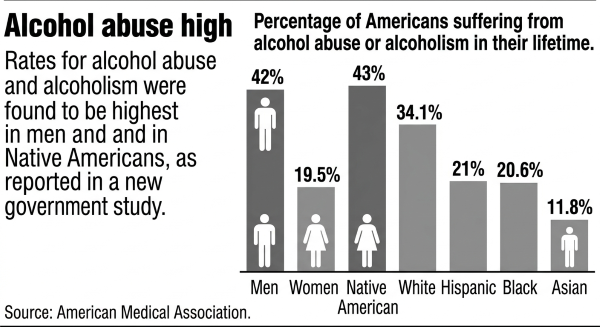
The numbers reveal a serious public health disparity that demands attention and compassionate response. Native Americans face higher rates of alcohol use disorders compared to other demographic groups in the United States, though the exact rates vary widely between different tribes and communities.
“Despite only representing 1.3% of the total U.S. population, Native Americans have some of the highest rates of alcohol use disorders and experience disproportionately high rates of mortality and morbidity related to alcohol.” Source: American Addiction Centers
Here’s what the data actually shows:
Alcohol use rates:
- 56.5% of Native Americans reported drinking alcohol in the past year
- 37.6% reported drinking in the past month
- 21.2% reported binge drinking in the past month, similar to other demographic groups
- 7.2% reported heavy alcohol use in the past month, which is higher than the general U.S. population
- 59.9% report being abstinent from alcohol
Alcohol use disorder rates:
- 10.7% of Native Americans have alcohol use disorder compared to 7.6% across all populations
- Only 3.5% of the 13% of Native Americans who need substance use treatment actually receive it
- Treatment access gap: 13% need help, but only about one quarter receive care
Health consequences:
- Native Americans experience alcohol-related death rates approximately five times higher than the general American population
- In some tribes, fetal alcohol spectrum disorder rates reach 1.5 to 2.5 per 1,000 live births, more than seven times the national average
- Alaska Natives have even higher rates at 5.6 per 1,000 live births
Youth alcohol use:
- Native American youth are more likely to experiment with alcohol at younger ages than non-Native youth
- Among eighth-grade students on or near reservations, 56.2% reported alcohol or marijuana use compared to 16.4% in the general population
- Prescription opioid and heroin abuse among Native youth is two to three times higher than the national averages
These statistics reflect real people in real communities struggling with addiction. They also reflect a broken healthcare system that fails to meet their needs.
Understanding Colonization and Alcohol
Before European colonization, Native American tribes had limited contact with alcohol in its potent forms. What existed was different, used differently, and understood differently.
“Before European colonization, Native American consumption of alcohol was mostly limited to weak brews that were used predominantly for ceremonial purposes. More potent forms of alcohol were not available; thus, alcohol misuse was virtually nonexistent.” Source: Laguna Treatment Center
What changed:
When European colonists arrived, they rapidly introduced Native Americans to distilled spirits with significantly higher alcohol content. But this wasn’t an innocent cultural exchange. Alcohol was used as a tool of control and profit. Colonists traded alcohol for valuable furs, land, and goods, creating addiction and dependency that benefited colonial economies.
Simultaneously, the U.S. government implemented policies designed to suppress Native culture entirely. In the late 1800s, children were forcibly removed from their families and sent to government-run boarding schools where speaking their native languages was forbidden, traditional practices were criminalized, and cultural identity was systematically destroyed.
“The history of First People (particularly the past 300 years) is filled with violence, oppression, displacement, and loss of self-determination. This legacy of trauma, as well as the social isolation, poverty, education, high incarceration rates, and inadequate access to health care on reservations, are all root factors of substance abuse.” Source: The Red Road
The pattern:
Violence and displacement created psychological wounds. Forced assimilation stripped away the cultural and spiritual practices that once provided community cohesion and meaning. When traditional ceremonies and cultural identity were criminalized, alcohol became an accessible coping mechanism for pain that had no other outlet.
This is not a weakness. This is a rational response to impossible circumstances.
Historical Trauma: The Invisible Hand Still Shaping Outcomes
Historical trauma isn’t just about what happened in the past. It’s about how those experiences alter brain chemistry, family systems, and community mental health in ways that persist across generations.
Native American communities experienced the following:
- Forced removal from ancestral lands during the Indian Removal Act of 1830 and subsequent trail marches where thousands died
- Systematic destruction of traditional governance, spiritual practices, and cultural education
- Boarding school policies that separated children from families for years, traumatizing both generations
- Broken treaties and promises of federal assistance that never materialized
- Continued discrimination and systemic barriers to employment, education, and healthcare
“The Native American community in the United States has experienced numerous collective traumatic events, ranging from direct physical violence to forced relocation, cultural suppression, and economic exploitation and the denial of benefits promised to them by the federal government.” Source: Journal of Student Research
This trauma doesn’t disappear in one generation. Neuroscience shows that severe stress and trauma can alter how the nervous system responds to future stress. Children of people who experienced severe trauma show elevated stress responses themselves, even without directly experiencing the original trauma. This intergenerational transmission of trauma creates vulnerability to self-medication through alcohol and other substances.
When you combine historical trauma with poverty, lack of healthcare access, high unemployment, discrimination, and loss of cultural identity, you create conditions where alcohol becomes not just an escape, but a survival response.
Risk Factors Specific to Native American Communities
While alcohol addiction can affect anyone, certain factors increase vulnerability specifically within Native American populations. Understanding these helps explain why rates are higher and why treatment must address more than just alcohol dependence.
Socioeconomic barriers:
- Poverty rates among Native Americans are twice as high as the general U.S. population
- Unemployment rates are significantly higher, creating economic instability and hopelessness
- Many reservations lack basic infrastructure, including reliable transportation to healthcare facilities
- Limited job training and educational opportunities restrict pathways out of poverty
Healthcare and mental health disparities:
- Lack of health insurance is more common among Native Americans
- Mental illness and depression are more prevalent in these communities
- Suicide rates are among the highest in the nation, with Alaska Native suicide rates more than double the general U.S. average
- Access to mental health treatment is severely limited, especially in rural reservation communities
- Indian Health Service resources are often inadequate for the population served
Violence and trauma exposure:
- Gang violence, domestic violence, and sexual assault occur at elevated rates
- Unintentional injuries are a leading cause of death
- Many individuals experience multiple forms of trauma across their lifespan
- Family separation through incarceration is common (70 to 95% of arrests in some communities are alcohol-related)
Loss of cultural identity:
- Limited access to traditional spiritual and cultural practices
- Language loss as older generations pass away and younger generations aren’t taught
- Geographic separation from tribal lands and the community
- Educational systems that don’t reflect or honor Native American history and culture
Biological and genetic considerations:
Biological and genetic considerations: While some research suggests genetic variations might affect alcohol metabolism in certain populations, this is often overstated. Genetic factors play a role, but they explain only a small part of the disparity. The vast majority of the difference in addiction rates comes from the social, economic, and trauma factors listed above.
100% Confidential Support is Available 24/7
No matter what you’re going through, you’re not alone. Our dedicated team is here to provide a safe, judgment-free space where you can talk openly and honestly. Whether you need emotional support, resources, or just someone to listen.
We’re here for you—completely confidential and always respectful of your privacy. Call us today!
The Myth of “Native American Alcoholism”
One of the most persistent and harmful myths is that Native Americans are inherently predisposed to alcoholism. This stereotype is not only false, it actively harms individuals and communities by shifting blame away from systemic inequality and onto culture itself.
The data actually contradicts this myth:
- 59.9% of Native Americans report being abstinent from alcohol, which is higher than the general U.S. average of 52.3%
- 24.7% report being light to moderate drinkers
- Only 8.3% are heavy drinkers, compared to the population average
- Binge drinking rates (17.3%) are not dramatically different from those of other groups (15%)
What appears as a higher addiction rate is not a reflection of inherent Native American weakness or genetic predisposition. Instead, it reflects the following:
- Higher prevalence of heavy drinking among those who do drink, likely driven by trauma
- Fewer people have access to treatment when they become addicted
- Worse health outcomes when addiction does occur, including higher mortality
“The myth about American Indian predisposition to alcoholism is as false as saying that white people are naturally predisposed to alcoholism.” Source: Pacific Standard Magazine
The real story is about how poverty, trauma, lack of healthcare access, and systemic discrimination create conditions where alcohol becomes destructive. It’s not about Native American genetics or culture. It’s about colonialism and its ongoing effects.
How Alcohol Addiction Affects Health and Communities
Untreated alcohol addiction in Native American communities creates cascading health and social consequences that extend far beyond individual health.
Physical health impacts:
- Liver disease and cirrhosis occur at elevated rates
- Alcohol-related injuries and accidents are a leading cause of death, particularly in younger individuals
- Fetal alcohol spectrum disorder affects infants born to mothers drinking during pregnancy
- Increased rates of chronic diseases including diabetes and heart disease
- Higher vulnerability to infections and reduced immune function
Mental health and suicide:
- Depression and anxiety are more common and often undertreated
- Suicide rates among Native Americans are among the highest in the nation
- Alcohol use frequently co-occurs with mental health disorders, creating a dual-diagnosis challenge
- Self-harm behaviors increase in those with untreated trauma and addiction
Family and social consequences:
- Family separation through parental incarceration on alcohol-related charges
- Child neglect and maltreatment in homes where alcohol is primary coping mechanism
- Intergenerational transmission of trauma and addiction risk
- Domestic violence escalation
- Community breakdown and loss of social cohesion
Economic and legal impacts:
- Incarceration for alcohol-related crimes, which then creates employment barriers
- Loss of employment and economic productivity
- Strain on limited tribal and federal healthcare resources
- Cycle of poverty perpetuation across generations
The alcohol use itself is not the root problem. The root problem is unhealed historical trauma, systemic poverty, discrimination, and lack of culturally appropriate treatment options.
Evidence-Based Treatment for Native American Alcohol Addiction
Recovery from alcohol addiction is possible for Native Americans, but treatment must acknowledge the unique context of historical trauma and cultural loss while incorporating both modern medical approaches and traditional healing practices.
Successful programs share several common elements:
Medical treatment:
- Medical detoxification with physician monitoring for safety during withdrawal
- Medication-assisted treatment when appropriate (such as naltrexone or acamprosate)
- Treatment of co-occurring mental health disorders like depression, anxiety, and PTSD through dual diagnosis programs
- Comprehensive health assessment and management of alcohol-related health complications
Behavioral therapy:
- Cognitive behavioral therapy (CBT) to address thought patterns and coping skills
- Group therapy to build community and reduce isolation
- Family therapy to repair damaged relationships and involve loved ones in recovery
- Individual counseling tailored to personal needs and trauma history
Cultural and spiritual healing:
This is where Native American treatment differs most importantly from standard addiction programs. Research consistently shows that programs incorporating cultural elements have better outcomes.
Traditional healing practices that have proven effective include:
- Drum circles and powwows that reconnect individuals to cultural community
- Sweat lodge ceremonies for purification and healing
- Talking circles where community members share experiences
- Medicine wheel teachings about balance and interconnectedness
- Meditation with Native American elders
- Vision quests for spiritual insight and renewal
- Sacred pipe ceremonies
- Instruction in traditional languages and cultural history
- Connection to ancestral lands and tribal practices
“Studies have shown that cultural identity and spirituality are important issues for Native Americans seeking help for substance abuse, and these individuals may experience better outcomes when traditional healing approaches (such as powwows, drum circles, and sweat lodges) are incorporated into treatment programs.” Source: American Addiction Centers
The integration of these approaches addresses a fundamental need. Alcohol addiction in many cases represents disconnection from identity, culture, and community. Recovery requires reconnection to these sources of meaning.
Holistic lifestyle approaches:
- Nutrition and physical wellness practices
- Connection to nature and outdoor activities
- Educational and vocational training to build economic hope
- Community service and contribution
- Peer support and mentorship
Finding Treatment: Breaking the Access Barrier
One of the biggest challenges in Native American alcohol addiction is that only 3.5% of the 13% of Native Americans who need treatment actually receive it. The barriers are real and systemic.
Access barriers include:
- Geographic distance to treatment facilities, especially on reservations
- Limited treatment facilities that understand or respect Native American culture
- Lack of health insurance and inability to pay for treatment
- Insufficient federal and tribal funding for treatment programs
- Shortage of providers knowledgeable about both addiction and historical trauma
- Transportation challenges
Orlando Treatment Solutions understands the need for culturally responsive, evidence-based addiction treatment. While located in Florida, we work with individuals from across the country seeking comprehensive care that respects cultural identity while delivering medical and psychological expertise.
Our treatment programs include:
- Medical detoxification with physician oversight for safe withdrawal management
- Residential treatment programs for those needing immersive care and distance from triggering environments
- Intensive Outpatient Program (IOP) for those balancing treatment with work and family responsibilities
- Cognitive Behavioral Therapy (CBT) and other evidence-based modalities
- Dual Diagnosis Program for those with co-occurring mental health conditions
- Family Therapy to repair and rebuild relationships
Treatment doesn’t have to happen in isolation. Many tribes are developing their own culturally grounded treatment programs that combine traditional healing with modern medicine. Some of the most effective models are led by tribal members and incorporate community healing alongside individual recovery.
We accept most major insurance plans and work to make treatment accessible. Call or visit Contact Orlando Treatment Solutions
Recovery is Possible: Real Pathways to Healing
Recovery from Native American alcohol addiction is not just possible; it’s happening. Across the country, individuals and communities are finding their way back to health, culture, and meaning.
What makes recovery work:
- Professional help: Medical treatment, therapy, and counseling from people who understand both addiction and cultural context
- Cultural reconnection: Learning language, practicing traditions, participating in ceremonies
- Community support: Being part of a recovery community, whether in formal groups or within tribal networks
- Spiritual practice: Whatever spiritual tradition is meaningful, whether traditional Native spirituality or other faith paths
- Purpose and meaning: Contributing to family and community, helping others recover
- Time and patience: Recovery is a process, not an event; relapse risk decreases over months and years of sobriety
Many people who were told recovery was impossible have found their way to stable sobriety, repaired families, and meaningful lives. The path is difficult but navigable with the right support.
References
- American Addiction Centers, Substance Abuse Statistics for Native Americans
- Indian Health Service, IHS Supports Tribal Communities in Addressing Alcohol and Substance Abuse
- Laguna Treatment Center, Native Americans: Alcohol Abuse and Treatment
- Pacific Standard Magazine, What’s Behind the Myth of Native American Alcoholism
- The Red Road, The Issue of Native American Substance Abuse
- Journal of Student Research, The Impact of Historical Trauma on Substance Use Disorders in Native American Communities
- National Center for Biotechnology Information (NCBI), Traditional and Western Healing Practices for Alcoholism in American Indians and Alaska Natives
- PubMed Central, Introduction to Culturally Based Substance Abuse Treatment for American Indians and Alaska Natives
Disclamiar
This content is for informational and educational purposes and should not replace professional medical advice or treatment. If you or someone you know is struggling with alcohol addiction, contact a healthcare provider or treatment facility immediately. Orlando Treatment Solutions provides evidence-based addiction treatment and mental health services. Help is available 24/7 at (321) 415-3213.
FAQs
What is the difference between a Native American alcohol addiction stereotype and reality?
The stereotype claims Native Americans have an inherent genetic predisposition to alcoholism. The reality is that Native Americans have high rates of alcohol addiction due to historical trauma, systemic poverty, healthcare inequities, discrimination, and lack of treatment access, not genetic predisposition. In fact, 59.9% of Native Americans report abstaining from alcohol, higher than the general population average.
Why do Native Americans have higher rates of alcohol addiction than other groups?
Higher rates reflect a combination of factors: historical and ongoing trauma from colonization, forced family separation, cultural suppression, systemic poverty (poverty rates are double the general population), high unemployment, discrimination, limited healthcare access, and inadequate treatment resources. These are social determinants of health, not cultural or genetic factors.
How does historical trauma contribute to current alcohol addiction rates?
Historical trauma from colonization, forced relocation, boarding schools, and broken treaties created deep psychological wounds. Trauma alters nervous system functioning and can be transmitted across generations. When combined with current poverty and discrimination, trauma increases vulnerability to self-medication through alcohol and other substances.
Are there culturally specific treatment approaches that work better for Native Americans?
Yes. Research consistently shows that treatment programs incorporating cultural and spiritual elements have better outcomes. Effective approaches include talking circles, sweat lodges, drum circles, connection to language and traditions, and integration of tribal spirituality alongside evidence-based medical and psychological treatment.
Why do only 3.5% of Native Americans who need treatment receive it?
Barriers include geographic distance to treatment facilities (especially on reservations), lack of culturally competent treatment programs, insufficient health insurance, limited funding, transportation challenges, and scarcity of providers trained in both addiction and trauma treatment. These are systemic barriers, not lack of willingness or motivation.
Is alcohol addiction genetic in Native American communities?
While certain genetic variations might affect alcohol metabolism, genetic factors explain only a small part of addiction risk. Environmental factors, trauma, poverty, and lack of treatment access are far more significant. Saying addiction is “genetic” oversimplifies the problem and can distract from addressing systemic inequalities.
Can Native Americans recover from alcohol addiction?
Absolutely. With access to quality treatment that includes both evidence-based medicine and cultural healing approaches, many Native Americans achieve stable recovery, repair families, and build meaningful lives. Recovery requires professional help, cultural reconnection, community support, and sustained effort, but it is achievable.
What role does spirituality play in Native American alcohol recovery?
Spirituality is often central to recovery for Native Americans. This might involve traditional Native spirituality and ceremony, other faith traditions, or secular approaches to meaning and purpose. Connection to something larger than oneself and healing practices aligned with cultural values increase motivation and resilience in recovery.
How do boarding school trauma and family separation affect modern addiction rates?
Children removed from families and forbidden from speaking their language, practicing culture, and maintaining family bonds experienced severe trauma. This trauma was transmitted to their children, creating vulnerability in subsequent generations. Current high rates reflect this ongoing intergenerational trauma effect.
What should treatment look like for someone from a specific Native American tribe?
Ideally, treatment should be informed by that tribe’s specific culture, language, and healing traditions. This might involve seeking tribal treatment programs or non-tribal programs with significant Native American staff and programming that can adapt approaches to specific tribal contexts. Personalizing treatment increases effectiveness.
Is recovery harder for Native Americans than for other groups?
Recovery from addiction is challenging for anyone, but Native Americans face additional barriers: less treatment access, ongoing discrimination, poverty, and continuing trauma. These factors can make recovery harder if support systems aren’t robust. However, strong cultural identity and community support can also be powerful protective and healing factors.