In This Blog
- The Neurobiology of Alcohol and Mood
- The “Self-Medication” Trap: Anxiety and Depression
- Alcohol-Induced Brain Impairment (ARBI)
- Co-Occurring Disorders: The Dual Diagnosis Challenge
- Cognitive Decline and Emotional Dysregulation
- The Importance of Professional Oversight in Detox
- Recovery Services for Long-Term Mental Stability
Alcohol is commonly taken as a social lubricant or as a means to ease off after a bad day but the connection between alcohol and the human mind is much more complicated than a one day feeling of relaxation. Although it might seem to many people as a harmless escape, scientifically speaking, alcohol is a very potent psychoactive drug, which essentially changes the brain chemistry. In response to the question of How does alcohol affect mental health? We can say it is a fragile environment of neurotransmitters that govern our emotions, thoughts and behaviors.
Being a central nervous system depressant, alcohol reduces brain activity. Although it may at first seem to be a decrease in stress, this, in fact, is breaking the very mechanisms with which the brain is able to provide emotional balance. In the long run, a coping mechanism, which is initiated as such, may become a major cause of psychological distress that may lead to, or worsen, such conditions like clinical depression, panic disorders, and persistent anxiety.
Expert Advice: Mental health recovery is significantly more effective when alcohol is removed from the equation.
The Neurobiology of Alcohol and Mood
To understand the mental health impact of alcohol, we must look at how it interacts with the brain’s chemical messengers, or neurotransmitters. Alcohol primarily targets two systems: GABA (the brain’s “brakes”) and Glutamate (the “gas”).
- GABA Stimulation: Alcohol increases GABA activity, which produces the initial feeling of calm. However, chronic use causes the brain to reduce its natural GABA production, leading to heightened baseline anxiety when not drinking.
- Glutamate Inhibition: Alcohol suppresses glutamate, the chemical responsible for alertness and brain activity. When alcohol leaves the system, the brain experiences a “rebound” of glutamate, often resulting in “hangxiety,” tremors, and irritability.
- Dopamine Depletion: While alcohol initially triggers a dopamine surge (pleasure), long-term use desensitizes the brain’s reward system. This makes it difficult for individuals to find joy in everyday activities, a state known as anhedonia.
This chemical seesaw creates a volatile treatment environment for the mind. Without professional oversight, these shifts can lead to a permanent state of emotional dysregulation.
The “Self-Medication” Trap: Anxiety and Depression
A significant number of individuals use alcohol to “self-medicate” pre-existing mental health symptoms. This creates a “vicious cycle” that is difficult to break without a monitored setting.
- The Initial Relief: A person feels anxious or depressed and drinks to find temporary relief.
- The Chemical Crash: As the alcohol wears off, the brain’s “rebound” effect makes the original anxiety or depression feel twice as intense.
- The Increased Tolerance: To achieve the same relief, the person must drink more, further damaging their brain’s ability to regulate mood naturally.
Statistics: A Global Concern (2026 Data)
Recent data shows that alcohol-related mental health crises are on the rise. Approximately 16% of acute alcohol-related deaths are due to suicide, and nearly 34% of individuals with an alcohol use disorder (AUD) also suffer from a major depressive episode. These figures highlight the urgent need for integrated recovery services that address both issues simultaneously.
Orlando Treatment Solutions provides specialized care for those caught in this cycle.
Alcohol-Induced Brain Impairment (ARBI)
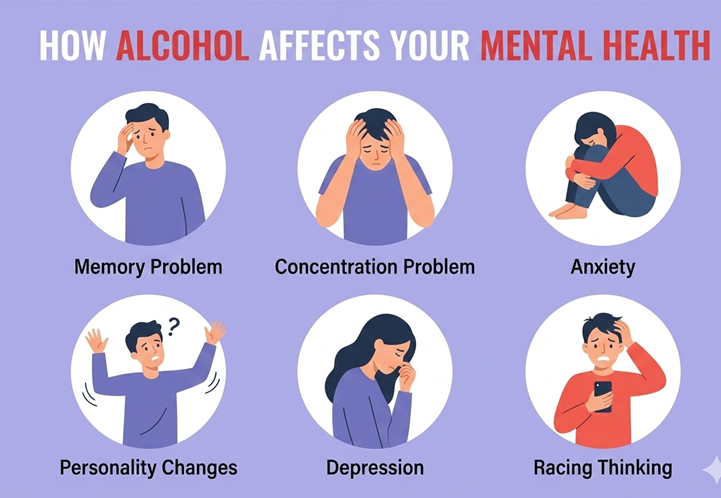
Beyond mood shifts, long-term alcohol use can lead to structural changes in the brain, often referred to as Alcohol-Related Brain Impairment (ARBI). This condition affects cognitive functions that are essential for daily living.
Cognitive Domain | Impact of Heavy Alcohol Use |
Executive Function | Impaired planning, problem-solving, and impulse control. |
Memory | Hippocampal shrinkage leads to difficulty forming new memories (blackouts). |
Emotional Regulation | Increased aggression and uncharacteristic mood swings. |
Motor Coordination | Damage to the cerebellum results in balance and walking issues (ataxia). |
Severe cases of ARBI include Wernicke-Korsakoff Syndrome, often called “wet brain,” which causes permanent confusion and memory loss. Early intervention in a monitored setting is the only way to halt and potentially reverse some of these neurodegenerative effects.
FACT: Alcohol is a depressant that can interfere with medications like antidepressants, making them less effective and potentially increasing dangerous side effects.
Co-Occurring Disorders: The Dual Diagnosis Challenge
When a person struggles with both a mental health disorder and an alcohol use disorder, they are said to have a dual diagnosis or co-occurring disorders. These conditions are deeply intertwined; treating one without the other often leads to relapse.
In a professional treatment environment, an integrated approach is used. This means that clinical teams provide supervised support for both the psychological and physical aspects of recovery. Common co-occurring disorders treated alongside AUD include:
- Post-Traumatic Stress Disorder (PTSD)
- Bipolar Disorder
- Panic and Social Anxiety Disorders
- Borderline Personality Disorder (BPD)
Effective recovery services utilize modalities like Cognitive Behavioral Therapy (CBT) and Dialectical Behavior Therapy (DBT) to help patients understand how their drinking and their mental health symptoms fuel each other.
The Importance of Professional Oversight in Detox
Stopping alcohol use when mental health issues are present is a high-risk endeavor. The withdrawal process can trigger acute psychological symptoms, including:
- Panic attacks and severe agitation
- Auditory or visual hallucinations
- Intense suicidal ideation
- Delirium Tremens (DTs), which can be fatal
A monitored setting ensures that withdrawal is handled safely. In this environment, medical professionals provide professional oversight, managing physical symptoms while ensuring the patient’s psychiatric state is stabilized. This safety net is crucial for preventing the “flight or fight” response that often drives people back to alcohol during early sobriety.
Orlando Treatment Solutions offers a safe, monitored setting for your journey to stability.

Recovery Services for Long-Term Mental Stability
True healing comes from a structured care plan that extends far beyond the initial detox. Long-term mental stability requires rebuilding the brain’s resilience through consistent, supervised support.
Recovery services often include:
- Individual Therapy: Identifying traumatic triggers and developing healthy coping mechanisms.
- Group Counseling: Breaking the isolation that often accompanies both addiction and mental illness.
- Nutritional Support: Addressing thiamine and vitamin deficiencies that contribute to brain impairment.
- Holistic Wellness: Incorporating mindfulness, exercise, and sleep hygiene to restore natural neurotransmitter functionpe.
At Orlando Treatment Solutions, we provide accessible, high-quality recovery services and professional oversight for those navigating the complexities of alcohol and mental health. Our approach focuses on a structured treatment environment that balances clinical expertise with compassionate care. By offering supervised support in a safe, monitored setting, we empower our clients to reclaim their mental clarity and achieve lasting emotional stability.
Medical Disclaimer: This blog is for informational purposes only and is not a substitute for professional medical advice.
Key Takeaways
- Alcohol is a depressant that fundamentally alters mood-regulating brain chemicals.
- Using alcohol to “self-medicate” creates a vicious cycle of worsening mental health.
- Long-term use can lead to permanent brain shrinkage and cognitive impairment (ARBI).
- Integrated treatment for “dual diagnosis” is the most effective path to recovery.
- Professional oversight is essential to safely manage the mental health risks of withdrawal.
- Stability is achieved through structured care and consistent therapeutic support.
FAQs
Why does my anxiety feel worse the day after drinking?
This is often called “hangxiety.” As alcohol (a depressant) leaves your system, your brain overcompensates by becoming hyper-active. This results in a surge of glutamate and a “fight or flight” response, leading to intense feelings of panic and nervousness.
Can alcohol cause depression, or do people drink because they are depressed?
It is both. Alcohol is a “bidirectional” drug. It can induce new-onset depression by depleting serotonin and dopamine, and it can also exacerbate pre-existing depression, making symptoms more severe and harder to treat.
Is brain damage from alcohol permanent?
While conditions like Korsakoff’s Syndrome can be permanent, many alcohol-related cognitive impairments are reversible with long-term abstinence, nutritional repair, and professional oversight in a structured care environment.
How do I know if I have a “dual diagnosis”?
If you find that your mental health symptoms (like anxiety or mood swings) persist even when you aren’t drinking, or if you feel unable to cope with your emotions without a drink, you may have co-occurring disorders. A clinical assessment in a monitored setting is the best way to get an accurate diagnosis.
Can I take mental health medications while drinking?
It is generally unsafe. Alcohol can interfere with the metabolism of antidepressants and anti-anxiety medications, either making them ineffective or causing dangerous toxicity. Always consult with a doctor providing professional oversight before mixing the two.