
In This Blog:
- Defining oxycodone and its primary medical uses
- The science of half-life and substance metabolism
- Detection windows for various testing methods
- Biological factors that influence elimination speed
- Differences between immediate and extended-release forms
- Risks associated with long-term use and dependency
- Accessing professional support for recovery
Oxycodone is a powerful semi-synthetic opioid that is utilized as a painkiller to treat moderate to severe pain. It works by changing the response of the brain and the nervous system to pain signals. Due to its power and abuse potential, a lot of people are interested in the longevity of the substance in their system.
Not all individuals have the same duration of time the substance remains in the body. It is based on the exact formulation used, i.e. immediate or prolonged release, and individual’s physical composition of the individual. The body needs a particular metabolism and excretion cycle whether applied to acute discomfort or chronic management.
It is a guide to the science of metabolism, the time to have different screenings and the biological aspects that may affect the speed of processing the substance by the body.
Expert Advice: The body typically clears most of this substance within a few days.
Understanding Oxycodone Formulations
This is a very strong opioid and is included in a range of prescription medications. It comes in various strengths and forms to suit a particular need.
- Immediate-Release: Designed for rapid-acting relief with a shorter duration of effects.
- Extended-Release: Formulated to release slowly into the system for all-day coverage.
- Combination Products: Often paired with non-opioid relievers like acetaminophen.
FACT: Urine tests generally detect this substance for up to four days.
The Science of Half-Life
A substance’s half-life is the time required for the concentration in the body to be reduced by fifty percent. For this specific opioid, the half-life typically ranges between three and five hours. This means it takes several half-lives for the body to be mostly clear of the primary compound.
The efficiency of this cycle determines how long the substance remains detectable. Once ingested, it is absorbed through the gastrointestinal tract and dismantled in the liver into metabolites. These metabolites are often what screenings look for during testing.
Detection Windows by Test Type
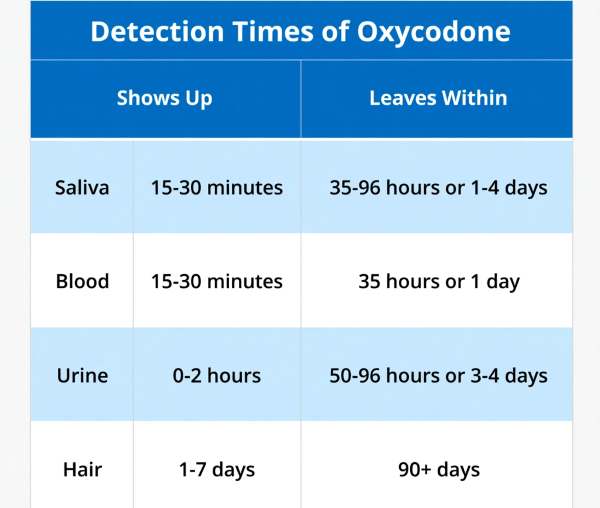
Different testing methods offer varying windows of detection based on where the substance or its metabolites accumulate.
- Urine: The most common method, usually detecting use for one to four days.
- Blood: Offers a very short window, typically up to twenty-four hours.
- Saliva: Can detect the substance for one to two days after the last dose.
- Hair: Provides a long-term record, detecting use for up to ninety days.
Testing Method | Typical Detection Window |
Urine | 1 to 4 Days |
Blood | Up to 24 Hours |
Saliva | 1 to 2 Days |
Hair | Up to 90 Days |
Biological Factors Influencing Metabolism
Individual biology plays a major role in how fast a substance leaves the body.
- Age: Younger individuals generally process substances faster than older adults.
- Organ Health: Efficient liver and kidney function are essential for clearing the drug.
- Metabolism: Unique metabolic rates influence the speed of breakdown.
The Role of Body Composition
While this substance does not accumulate in fat as heavily as some other drugs, body composition still impacts processing.
- Weight: Overall body mass can influence how the substance is distributed.
- Hydration: Proper hydration supports the kidneys in flushing waste.
- Urine pH: The acidity of urine can affect how quickly the drug is excreted.
100% Confidential Support is Available 24/7
No matter what you’re going through, you’re not alone. Our dedicated team is here to provide a safe, judgment-free space where you can talk openly and honestly. Whether you need emotional support, resources, or just someone to listen.
We’re here for you—completely confidential and always respectful of your privacy. Call us today!
Potential Side Effects and Risks
Like all opioids, this substance carries a risk of side effects that vary in severity.
- Common Effects: Nausea, constipation, drowsiness, and dizziness.
- Serious Risks: Slowed breathing, heart rate changes, and low blood pressure.
- Mental Health: Potential for anxiety, mood alterations, or irritability.
Can This Substance Be Cleared Faster From the Body?
Many individuals wonder whether it is possible to speed up how quickly the body eliminates this substance. In reality, the body follows a natural metabolic process that cannot be safely accelerated beyond its normal function.
Common Misconceptions
- Drinking excessive water will not significantly speed up elimination
- Exercise does not directly remove the substance faster
- Detox products often lack reliable evidence
What Actually Helps
- Maintaining overall health supports normal metabolism
- Staying hydrated assists natural kidney function
- Allowing time for the body to process the substance safely
The safest approach is to allow the body to clear the substance naturally while avoiding unverified methods that may cause harm or provide misleading expectations.
How Frequency of Use Affects Detection Time
Usage Pattern | Impact on Detection | Explanation |
Single use | Shorter detection window | The body clears substances relatively quickly |
Occasional use | Moderate detection window | Slight accumulation may occur |
Regular use | Longer detection window | Repeated exposure slows full clearance |
Heavy or prolonged use | Extended detection period | Build-up of metabolites increases detection time |
The frequency and duration of use significantly influence how long the substance remains detectable. Repeated use can lead to accumulation, which extends detection windows beyond standard estimates.
Understanding these patterns helps provide a clearer picture of why detection times vary between individuals, even when other factors remain similar.
Substance Interactions
Combining this opioid with other substances can be extremely hazardous.
- Alcohol: Significantly increases the risk of dangerous respiratory depression.
- Benzodiazepines: Can lead to extreme sedation and life-threatening interactions.
- Antacids: May alter how the body absorbs the substance.
Interaction Type | Potential Result |
Alcohol | Dangerous respiratory depression |
Other Stimulants | Increased heart strain |
Antidepressants | Potential blood pressure issues |
Tolerance and Dependency
Regular use can lead to the development of tolerance, where more of the substance is needed for the same effect.
- Physical Dependency: The body requires the substance to function normally.
- Withdrawal: Stopping use abruptly can lead to uncomfortable physical symptoms.
- Supervision: Long-term use should always be monitored by a professional.
Identifying the Need for Support
If use begins to interfere with daily responsibilities or health, it may be time to seek help.
- Behavioral Changes: Neglecting duties or social withdrawal.
- Physical Signs: Persistent drowsiness or changes in appetite.
Control: Finding it difficult to stop or reduce use.
Ready to get started? Call Orlando Treatment Solutions today and find out how we can support your recovery.

The Importance of professional Care
Choosing a professional program ensures that the process is managed safely and effectively.
- Stabilization: Assisting the body through the initial clearance phase.
- Therapy: Addressing the underlying behaviors and mental health factors.
- Aftercare: Providing ongoing support to sustain long-term changes.
Moving Toward Long-Term Health
The decision to seek help is a major milestone in the journey toward wellness. With professional guidance and a professional plan, individuals can navigate the complexities of recovery and build a stable future.
Orlando Treatment Solutions offers professional support services focused on delivering evidence-informed care and comprehensive recovery planning. The focus remains on providing a stable environment where progress is monitored and supported by experienced professionals who understand the complexities of substance use.
Medical Disclaimer: This article is for informational purposes only and is not a substitute for professional medical advice.
Struggling to regain balance? Contact Orlando Treatment Solutions for confidential help.
Key Takeaways
- This substance is a potent opioid used for moderate to severe pain management.
- Urine tests typically detect the substance for one to four days after use.
- Factors like age, metabolism, and organ health influence elimination speed.
- Combining this drug with alcohol or other depressants is life-threatening.
- Professional care provides the necessary tools for safe stabilization and long-term recovery.
FAQs
How long does oxycodone stay in your urine?
For most people, the substance is detectable in urine for one to four days. This window can vary based on individual metabolism, dose, and frequency of use. Heavy or long-term use may extend the detection time slightly beyond four days.
Can a blood test detect recent use?
Yes, but blood tests have a very short detection window compared to other methods. The substance typically remains in the bloodstream for up to twenty-four hours. Because of this brief timeframe, blood tests are usually used to confirm very recent use.
What factors slow down the body’s metabolism?
Several factors can slow elimination, including older age and impaired liver or kidney function. Additionally, certain medications or biological factors like a higher urine pH can cause the substance to stay in the system longer than usual.
Does this substance show up on hair tests?
Yes, hair follicle tests can detect the substance for approximately ninety days. As hair grows, traces of the substance are incorporated into the shaft, creating a long-term record. While not common for routine screenings, it is effective for identifying historical patterns.
Is there a way to flush the system?
There is no medically sanctioned way to instantly flush the substance from your system. While staying hydrated and maintaining a healthy metabolism support the body’s natural processes, the liver and kidneys must work at their own pace. Home detox kits are not recommended.