In This Blog
- Being Aware of the Systemic Effects of Alcohol
- Cognitive Processes and Neurological Effects
- Heart Health and Cardiovascular Risks
- Metabolic Issues and Liver Issues
- Professional Pathways of Stabilization and Support
- Strategies for Long-Term Wellness and Balance
Alcohol consumption is a social phenomenon that has an extensive and complex impact on human health.
Once the alcohol gets into the body, it is a central nervous system depressant; it is the one that affects every organ of the body, ranging from brain to the heart.
Effects of alcohol on the body vary greatly among individuals, and this varies according to genetics, body, and the rate of alcohol use.
Some individuals will have immediate effects on the body, and some will have some silent, unnoticed long-term damage, which would manifest after a couple of years of use.
To navigate toward healthier lifestyles, it is important to have a clear idea of how alcohol disturbs the body’s balance.
Regardless of whether the objective is to consume less or to be totally abstinent, professional support services present a systemic setting through which these health issues can be tackled.
Expert Advice: Knowledge of alcohol’s biological impact empowers individuals to make safer, health-conscious decisions daily.
How Does Alcohol Affect Your Brain and Nervous System?
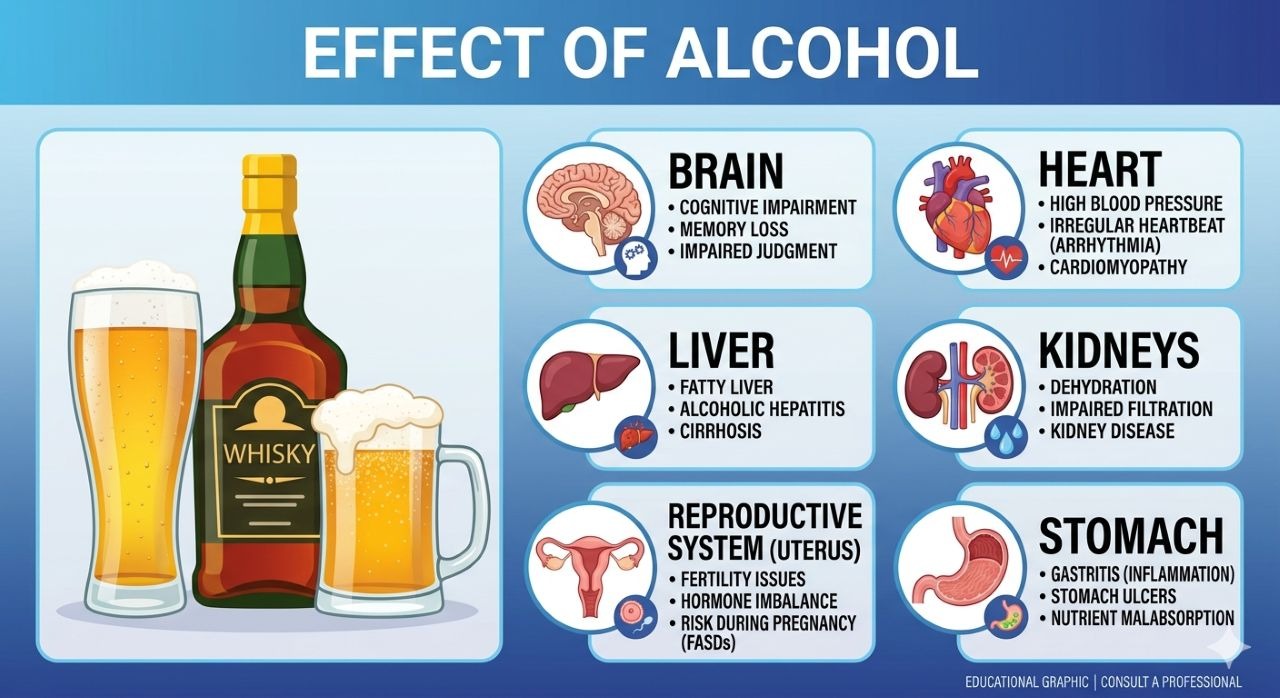
Alcohol is extremely strong in its influence on the way the brain functions; it influences its communication lines.
This kind of convulsion may alter mood and behavior and thereby make it more difficult to think and act practically.
The regular use of alcohol may bring changes in memory and the way the brain is programmed to control emotional systems.
- Cognitive Decline: The chronic use is related to attention problems and difficulties in problem-solving.
- Emotional Instability: Alcohol will increase the symptoms of anxiety or depression.
- Motor Impairment: Interrupted brain-muscle signals put people at risk of accidents.
What Does Alcohol Do to Your Heart Health?
Overconsumption of alcohol over a long period of time or overconsumption of alcohol during a single occasion is pure damage to the heart.
This damage may be manifested in the form of different diseases that will undercut the efficiency of the cardiovascular system.
They are major risks which should be taken into consideration in keeping the circulatory system healthy and avoiding cardiac distress in the long term.
- Cardiomyopathy: Stretching and drooping of the heart muscle.
- Arrhythmias: Irregular heartbeats, which may cause more severe complications.
- Stroke: Fluctuations in blood pressure are associated with higher risk heart disorders.
- Hypertension: High blood pressure is a common side effect of chronic use.
FACT: Alcohol interferes with the brain’s communication pathways and organ function.
Worried about how alcohol is affecting your health? Call Orlando Treatment Solutions and let us help you take the first step.
What Therapies Help With Alcohol Recovery?
Behavior therapies are directed towards ensuring that people understand the reasons behind their consumption of alcohol, which are psychological in nature.
These methods, including Cognitive Behavioral Therapy (CBT), help individuals to come up with triggers and learn how to deal with them in a healthy manner.
- Identifying Triggers: Learning to recognize social or emotional cues that lead to drinking.
- Skill Building: Learn to cope with stress and pressure without alcohol.
- Consistency: Having frequent sessions to support healthy behavior patterns.
Why Does a Support Network Matter in Alcohol Recovery?
A supportive community is the best way in which sustainable health can be attained. The work teams, peer support group and relatives are part of this network who are responsible and supportive. Sharing experiences reduces the isolation that often accompanies substance use challenges.
The family is equally important, as it helps to repair the relations and create a stable environment at home.
Many programs include family education so that the loved ones can be armed with knowledge of the nature of the disorder. Cohesive therapy can make the individual feel safer in his or her road to recovery.
How Do You Handle Social Situations During Alcohol Recovery?
The social environment where alcohol exists, requires management so as to live a healthy lifestyle.
This is significant in long-term relapse prevention, as it involves coming up with a plan in such instances.
This may include the choice of social groups that promote wellness or getting to know how to handle peer pressure.
- Set Boundaries: Deciding ahead of time how much to consume or whether to abstain.
- Alternative Beverages: It is most advantageous to consume non-alcoholic beverages to be socially active without taking the risks.
- Exit Strategy: To have a strategy of how to exit a situation in case it becomes uncomfortable or triggering.
How Do You Build Long-Term Wellness After Alcohol Recovery?
The process of attaining wellness is an ongoing process that is way beyond the stabilization stage.
It has to do with an ongoing dedication towards self-care such as visits to the hospital, eating right, and exercise.
Professional services will be dedicated towards the provision of environmental and professional skills required in this change.
By going through a continuum of care, people receive a guarantee that their recovery is grounded on a strong and evidence-based structure.
Each move towards wellness is an investment into the improved quality of life and a much more stable future.
Ready to start feeling better? Call Orlando Treatment Solutions and find out how we can support your recovery.
How Do You Plan for a Stable Future After Alcohol Recovery?
Mindfulness and nutrition information are usually holistic aspects, incorporated in a supportive scheme.
These tools can be used to regulate the nervous system and to cure the damage of organs caused by alcohol use.
Future planning involves realistic ambitions as far as personal growth is taken into consideration but there should be a definite plan for the management of health.
Through an effective and agile strategy, one will manage to gain control over his/her life, and will continue pursuing his/her goals.
The recommendations needed to make this success fall under professional services. Every stabilization step is a step towards a better and more predictable future.
Orlando Treatment Solutions is a company that provides programs and scientifically grounded professional care to help people struggling with alcohol recovery.
Our team is dedicated to offering tools and professional environments needed by individuals so that they can find pathways that are manageable and create a foundation in order to be stable and create long-term wellness.
Medical Disclaimer: This article is for informational purposes only and is not a substitute for professional medical advice.
Disclaimer
This content is intended for educational and informational purposes only and does not replace professional medical or mental health advice, diagnosis, or treatment. Always seek guidance from a qualified healthcare provider regarding mental health concerns.
Frequently Asked Questions (FAQs)
What are the symptoms of complex PTSD?
Complex PTSD symptoms include emotional flashbacks, difficulty regulating emotions, chronic shame, relationship struggles, and feeling unsafe even when no danger is present. Symptoms often stem from long-term or repeated trauma rather than a single event.
What is someone with complex PTSD like?
Someone with complex PTSD may appear emotionally guarded, highly sensitive to stress, or withdrawn. Internally, they may struggle with self-worth, trust, and emotional overwhelm, even while functioning well on the surface.
What does a CPTSD trigger feel like?
A CPTSD trigger can feel like an emotional wave of fear, shame, or panic without a clear cause. The body reacts as if the original trauma is happening again, even when the present situation is safe.
What is the difference between PTSD and Cptsd?
PTSD typically follows a single traumatic event, while CPTSD develops from repeated or prolonged trauma. CPTSD includes additional challenges with identity, emotional regulation, and relationships beyond standard PTSD symptoms.
Is CPTSD a severe mental illness?
CPTSD is a serious mental health condition, but it is treatable. With trauma-informed care and consistent support, many people experience meaningful improvement in emotional stability and quality of life.
What are the 4 F’s of CPTSD?
The 4 F’s: Fight, Flight, Freeze, and Fawn describe survival responses to trauma. People with CPTSD may rely on one or more of these patterns when feeling threatened or emotionally overwhelmed.
What does a CPTSD meltdown look like?
A CPTSD meltdown may involve intense emotional distress, crying, withdrawal, anger, or dissociation. It’s often triggered by feeling unsafe or emotionally invalidated, not by minor stress alone.
Do people with CPTSD cry a lot?
Some people with CPTSD cry frequently, while others feel emotionally numb. Both responses are common trauma reactions and do not reflect weakness or instability.
What not to say to someone with complex PTSD?
Avoid minimizing their experience or telling them to “just move on.” Statements that dismiss trauma or rush healing can deepen feelings of shame and isolation.