Key Takeaways
- Do people get addicted to cannabis? Yes. Medically recognized as Cannabis Use Disorder (CUD).
- The DSM-5 defines cannabis use disorder by reference to specific criteria for the behaviors and psychological effects.
- Cravings, withdrawal, tolerance, and use despite harm are all signs of cannabis addiction.
- Knowing cannabis use disorder vs. addiction helps to provide a distinction between how the medical community can diagnose it and how people speak in their everyday lives.
- Treatment initiated early has a particularly strong impact on recovery.
- Those who consume cannabis with use disorders are treated comprehensively with therapy, education, relapse prevention, and mental health services (which may be provided by professionals).
Is Cannabis Addiction Real? is more than just an issue to discuss; for many, it is a personal inquiry that has repercussions on their health, relationships, work, and future. While in the eyes of many, cannabis use is not as harmful as other drugs, experts have noted that there can be a syndrome of cannabis use disorder (CUD), which is a medical condition.
People who notice that cannabis is having an impact on their lives, ability to complete tasks, or emotional health may have a serious addiction to cannabis, which is treatable. A grasp of this and the science behind it will allow you to be able to not only spot many of the clues to your child’s growing issue but also react with the appropriate kind of support.
Yes, there’s such a thing as cannabis addiction. In the Diagnostic and Statistical Manual of Mental Disorders (DSM-5), medical professionals refer to it as Cannabis Use Disorder (CUD). However, if anyone has been using marijuana to the extent that it affects his or her physical health, relationships, work, or school life, or if someone wants to quit but is unable to stop using marijuana, then it’s cannabis addiction.
Not everyone who uses cannabis is likely to become addicted, but research shows that approximately 1 in 10 who use cannabis will develop cannabis use disorder and may be at higher risk for addiction if they are younger peers and use cannabis frequently. There is good news: evidence-based treatments like behavioral therapy, counselling, and complete addiction treatment can help people obtain sustained recovery from addiction.
100% Confidential Support is Available 24/7
No matter what you’re going through, you’re not alone. Our dedicated team is here to provide a safe, judgment-free space where you can talk openly and honestly. Whether you need emotional support, resources, or just someone to listen.
We’re here for you—completely confidential and always respectful of your privacy. Call us today!
What Is Cannabis Addiction?
There have been many questions raised about the existence of cannabis addiction.
There are decades of scientific research to support this response.
Cannabis addiction” refers to cannabis use patterns despite the negative consequences. Doctors do not usually refer to this as cannabis addiction but instead as Cannabis Use Disorder (CUD).
The disequilibrium can be on a continuum:
- Mild
- Moderate
- Severe
An individual with severe cannabis U.D. will have difficulties in regulating his/her consumption of cannabis and will likely exhibit symptoms in many aspects of life.
Recent findings from the MWC research indicate that contrary to popular opinion that marijuana is safe and non-addictive, the use of marijuana may alter reward, motivation, memory, and self-control brain functions with repeated use.
100% Confidential Support is Available 24/7
No matter what you’re going through, you’re not alone. Our dedicated team is here to provide a safe, judgment-free space where you can talk openly and honestly. Whether you need emotional support, resources, or just someone to listen.
We’re here for you—completely confidential and always respectful of your privacy. Call us today!
Is Cannabis Use Disorder Real?
Yes, but the short answer is yes.
While not a subject people like to talk about these days, particularly with marijuana legalization looming in the background, many medical organizations say,
“Yes, is cannabis use disorder real?”
Cannabis Use Disorder is a real medical condition acknowledged by the American Psychiatric Association, by the National Institute on Drug Abuse (NIDA), and also by the Centers for Disease Control and Prevention (CDC)
Individuals suffering from cannabis use disorder might:
- Become unable to limit the amount of cannabis used
Take cannabis for an extended amount of time - Continue use even if experiencing physical and/or emotional problems.
- Show signs of withdrawal when drug or alcohol use is discontinued
- Does not complete work, school, or home responsibilities
- It has a certain degree of severity, and early identification of the condition is critical.
Orlando Treatment Solutions
Battling with Drug and Alcohol Addition? Remember, you are not alone and we are here to help you!
Is Cannabis Addiction Physical or Psychological?
A frequently asked question is:
What type of addiction is weed, physical or mental?
The answer is both.
Cannabis addiction consists of psychological dependence, physical dependence, and behavioral tendencies.
Psychological symptoms include:
- Strong cravings
- Anxiety without cannabis
- Difficulty relaxing
- Mood swings
- Irritability
- Loss of motivation
Physical symptoms could involve:
- Sleep disturbances
- Reduced appetite
- Night sweats
- Headaches
- Restlessness
- Mild tremors
Withdrawal symptoms typically are not as severe as they are while quitting alcohol/benzodiazepines or other classics, but if a person doesn’t have professional help, it can be harder to quit.
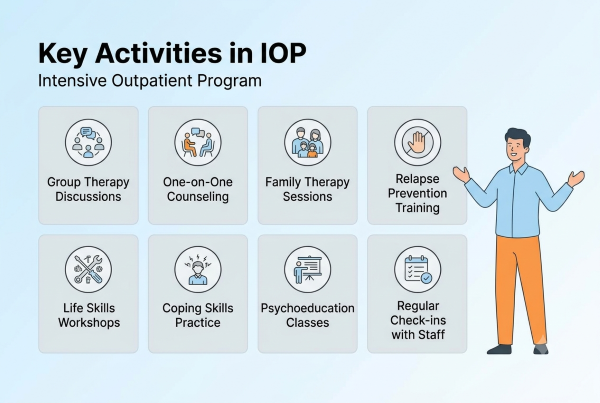
Want a clear number before committing to treatment? Orlando Treatment Solutions verifies your IOP benefits at no cost.
Understanding DSM-5 Cannabis Use Disorder
Healthcare professionals ask someone to answer the question of having two or more symptoms for 12 months.
Cannabis Use Disorder Diagnostic Criteria
Cannabis use disorder is defined as:
- Using more cannabis than intended
- Try to stop again if you don’t succeed!
- Using cannabis regularly, and intensely
- Strong cravings
- Other duties: Work, school, or family not met
- Using while experiencing relationship problems
- You don’t want to do something that you enjoy or consider important
- Using in hazardous situations
- And to never stop due to physical or psychological illness
- Developing tolerance
- Experiencing withdrawal
Meeting:
- 2-3 criteria are MILD CUD
- 4–5 indicates moderate CUD
- 6 or more: severe cannabis Use Disorder.
- There is a distinction between what is called cannabis use disorder (CUD) and what is called addiction.
- The information on cannabis use disorder versus addiction can help to demystify the situation.
- People in the public domain use the word “addiction” to mean drug addiction, which is compulsive drug use.
Cannabis Use Disorder vs Addiction
Either term denotes that which involves (generally):
- Loss of control
- Taking a drug even though he or she knows it is bad for him or her
- Cravings
- Withdrawal
- Impaired functioning
The DSM-5 diagnosis is the best diagnosis among health care providers, as it reflects the extent of the problem.
Cannabis Addiction Symptoms
People need to notice the signs of a cannabis addiction early on for treatment to start before there are too many issues.
Common symptoms include:
Behavioral
- Using every day
- Hiding cannabis use
- Spending excessive money
- Difficulty stopping
- Spending time on cannabis, rather than other commitments.
Emotional
- Anxiety
- Depression
- Irritability
- Mood instability
- Low motivation
Physical
- Sleep problems
- Appetite changes
- Fatigue
- Withdrawal discomfort
Social
- Relationship conflicts
- Declining work performance
- Academic struggles
- Isolation from family

Risk Factors for Cannabis Addiction
Although any individual can develop a cannabis use disorder, some factors increase an individual’s risk for developing the disorder.
These include:
- Can use cannabis at an early age during the teen years.
- Daily or heavy use
- High-potency cannabis products
- Having parents who are addicted
- Mental health disorders
- Trauma exposure
- Chronic stress
People suffering from anxiety, PTSD, or ADHD may be particularly sensitive if cannabis is their main coping mechanism.
Can Cannabis Affect Mental Health?
All of the impacts from cannabis use will differ depending on each individual.
- May help relieve those who are anxious from time to time.
- “It can be worse for some:
- Anxiety disorders
- Depression
- Panic attacks
- Memory problems
- Concentration difficulties
Another discovery is that excessive cannabis use has been related to the onset of psychosis in susceptible individuals, particularly in the case of high-concentration forms of THC used several times.
This is not to say that cannabis makes people mentally ill, but it can add to the symptoms of those who have risk factors.
When Does Recreational Use Become Addiction?
A person who uses a lot once in a while does not necessarily mean that it is an addiction.
- However, if someone exhibits symptoms of a stroke, he/she may be going through a stroke.
- Needing cannabis every day
- Use after waking up
- Those who are unable to chill out, relax or unwind without cannabis.
- Continuing despite consequences
- Attempts to quit that have not succeeded.
- Withdrawal symptoms
- Increasing tolerance
It’s okay to use cannabis one or two times, but if you start to notice that it’s beginning to get in the way of your decisions, then it might be time for a professional evaluation.
How Cannabis Use Disorder Treatment Helps
Successful cannabis use disorder treatment should involve behavior modifications and tackling emotional and mental health issues.
Treatment may include:
Cognitive behavioural therapy (CBT)
Helps to teach practical strategies to decrease cravings and reduce relapse.
Motivational Enhancement Therapy
Understands and practices a mindset approach to change behavior for good
Helps to communicate and to improve support systems.
If a person suffers from anxiety, depression, PTSD or another mental health disorder, and addiction as well, it treats both.
Treatments should be prescribed on a one-on-one basis and customized, with each person’s specific needs and treatment recovery goals in mind.
Take the First Step Toward Recovery
If cannabis is taking a toll on your health, relationships, work or emotions, you can get help.
At Orlando Treatment Solutions, evidence-based therapy is provided to those addicted to cannabis with co-occurring mental health conditions with a good amount of care and compassion. Our trained clinical staff create individualized treatment plans to ensure you know how to regain control, enhance your health and create enduring recovery.
Contact Orlando Treatment Solutions today to talk confidentially with an admissions specialist. Recovery can start with just one conversation.
References
- National Institute on Drug Abuse (NIDA). Cannabis (Marijuana) Research Report. https://nida.nih.gov/
- American Psychiatric Association. Diagnostic and Statistical Manual of Mental Disorders (DSM-5-TR).
- Centers for Disease Control and Prevention (CDC). Cannabis and Public Health. https://www.cdc.gov/cannabis/
- Substance Abuse and Mental Health Services Administration (SAMHSA). https://www.samhsa.gov/
- Addiction Center. Signs of Shopping Addiction (used as a general content structure and behavioral addiction reference only): https://www.addictioncenter.com/community/signs-of-shopping-addiction/
About the Author:
Dr. Zach Miller is the Chief Clinical Officer and Co-Founder of Orlando Treatment Solutions, where he champions holistic, evidence-based approaches to sustainable recovery and mental well-being. Holding credentials as a Ph.D., LMHC, MCAP, and CRRA, he provides expert clinical oversight to ensure all content and resources effectively guide individuals through every stage of their post-treatment journey.
Medical Disclaimer:
This content is for informational purposes only and does not constitute medical advice or a clinical recommendation. For a personalized assessment, please consult a licensed mental health professional. To learn more about evidence-based mental health and addiction treatment in Florida, visit orlandotreatmentsolutions.com or call (321) 415-3213.
Frequently Asked Questions
What are 5 warning signs of addiction?
Five common warning signs include losing control over use, experiencing cravings, continuing despite negative consequences, neglecting responsibilities, and unsuccessful attempts to quit. These signs suggest it may be time for a professional evaluation.
Is cannabis use disorder a real thing?
Yes. Cannabis Use Disorder is a recognized medical diagnosis in the DSM-5. It describes problematic cannabis use that causes significant impairment or distress and ranges from mild to severe.
What is the difference between cannabis abuse and cannabis dependence?
Older terms such as cannabis abuse and dependence have largely been replaced by Cannabis Use Disorder. The DSM-5 combines these concepts into one diagnosis with varying levels of severity based on specific diagnostic criteria.
What are the rates of cannabis use disorder?
Research suggests that about 10% of cannabis users develop Cannabis Use Disorder, with higher rates among people who begin using during adolescence or use cannabis frequently or in high-potency forms.
Can cannabis use cause mental illness?
Cannabis does not cause mental illness in everyone. However, frequent or high-potency use may increase the risk of anxiety, depression, or psychosis in individuals who are already vulnerable due to genetics or other factors.
Does cannabis make you talkative?
Some people become more social and talkative after using cannabis, while others become quiet or withdrawn. The effects vary depending on the person, dosage, THC concentration, and setting.
What are the personality traits of cannabis users?
There is no single personality profile for cannabis users. People from all backgrounds use cannabis. Individual behavior is influenced more by personal history, environment, mental health, and frequency of use than personality alone.
What is considered heavy cannabis use?
Heavy cannabis use generally refers to daily or near-daily use over an extended period. Frequent use increases the risk of developing tolerance, withdrawal symptoms, and Cannabis Use Disorder.
Who is most likely to use cannabis?
Cannabis use is more common among adolescents, young adults, individuals with mental health conditions, and those with a family history of substance use disorders. However, people of any age or background can use cannabis.