
Key Takeaways
- Complex PTSD develops from repeated or prolonged trauma, often during childhood or long-term abusive situations
- Symptoms affect emotional regulation, self-identity, and relationships
- CPTSD is different from PTSD and borderline personality disorder (BPD)
- Effective treatment focuses on trauma-informed therapy and emotional stabilization
- Early support can significantly improve long-term outcomes
What is CPTSD?
Complex post-traumatic stress disorder (CPTSD) is a condition that builds up due to repeated trauma, which is chronic and especially where escape was not possible or challenging. This can encompass child abuse in childhood, domestic abuse, prolonged neglect, human trafficking, captivity, or continuous emotional abuse.
Compared to PTSD, CPTSD influences not only the way a person recalls the trauma, but his or her perception of the self and his/her relations with others. It may have a drastic influence on identity, emotional control, self-esteem, and trust.
100% Confidential Support is Available 24/7
No matter what you’re going through, you’re not alone. Our dedicated team is here to provide a safe, judgment-free space where you can talk openly and honestly. Whether you need emotional support, resources, or just someone to listen.
We’re here for you—completely confidential and always respectful of your privacy. Call us today!
What’s the Difference Between CPTSD and PTSD?
The center of the difference is the length and intricacy of the trauma.
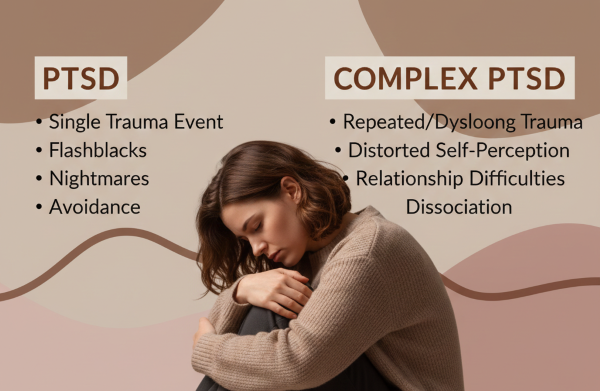
PTSD is a condition that is normally caused by one traumatic event. CPTSD is a result of consistent trauma that takes place within months or years. Despite the fact that the symptoms of the two problems are quite similar as they all involve flashbacks, avoidance, and hypervigilance, CPTSD has other issues concerning emotional management, self-esteem, and human relationships.
In numbers: PTSD is concerned with the trauma memories, but CPTSD is concerned with the system in totality in terms of the emotional and relational system.
Orlando Treatment Solutions
Battling with Drug and Alcohol Addition? Remember, you are not alone and we are here to help you!
What’s the Difference Between CPTSD and BPD?
CPTSD and borderline personality disorder (BPD) may seem alike at the surface level, especially in the appearance of emotionality and difficulties in relationships. They are, however, different diagnoses.
CPTSD is also trauma-related, and the symptoms of the disease are based on the long-term exposure to threat and to harm. BPD is a personality disorder, which is characterized by persistent cycles of emotional instability, disturbances in persistent self-image, and impulsive behaviors. The correct diagnosis is required since the two conditions vary greatly in their treatment.
Feeling stuck in survival mode? Professional help can make a difference.
👉 Contact Orlando Treatment Solutions for compassionate support.
Complex PTSD (C-PTSD) Symptoms
Such symptoms of complex PTSD do not revolve around fear responses. They tend to influence emotional experience, self-identity and the inability to develop and sustain healthy relationships.
People can always be unsure about their safety, not feel emotions and be suffocated by shame and guilt. Believing in people may be immensely hard even after the traumatic episode is over.
Signs and Symptoms of CPTSD?
Common symptoms and signs may include:
- Flashback memories that are not vivid are also visual memory.
- Issue with emotion management.
- Strengths and Weaknesses Continued depression, rumination or depreciation.
- The want of trust in survival, of being an outcast.
- Difficulties in maintaining good relations.
- Restless anxiety, an emotionless condition or felt numbness.
They do not constitute personal weaknesses, but acquired means of survival based on the traumatic experience in the long run.

Complex PTSD Diagnostic Criteria
CPTSD is listed under ICD-11 (List of International Diseases). The diagnostic criteria do not only include the four, but three additional areas, namely, the core symptoms of PTSD.
Negative self-concept
Interpersonal difficulties
The mental health professional who makes the diagnosis takes a close examination of the trauma history, patterns of symptoms and how the patient functions in his or her normal life.
How is CPTSD Diagnosed?
Diagnosis involves intensive mental assessment in contrast to a single test assessment. The clinicians investigate the previous trauma, emotional and coping processes as well as the current problems in life.
Since CPTSD symptoms might be similar to those of anxiety disorder, depression or personality disorder, it is vital to engage a trauma-informed professional to diagnose and have an effective treatment plan.
Complex PTSD (C-PTSD) Treatment
Complex trauma needs to be considered in compounded therapy. Complex PTSD (C-PTSD) Treatment is aimed at enabling patients to feel safe in their bodies and in their minds before proceeding straight to the processing of traumatic memories.
Treatment is never rushed. It is also a healing done in stages with the emphasis made on the emotional stability, development of trust, and the management of the nervous system.
How is CPTSD Treated?
The treatment plans may comprise:
- Some trauma-related therapies are EMDR or CPT.
- Body somatics courses, including rabbinic and active courses.
- Training of emotional grounding skills.
Medication assistance, where the patient receives medication in situations of anxiety and depression or sleeping disorders on a case-by-case basis.
Relational healing assists in strengthening family or group therapy.
Personal and trauma-focused care interventions yield the most success every time.
Complex Post-Traumatic Stress Disorder (PTSD) Treatment Approach
At Orlando treatment solutions, evidence-based methods that focus on the lived experience of the person are employed in a manner that is predetermined by the use of trauma-based approaches. The treatment is aimed at the creation of safety, restoration of self-confidence, and establishment of more helpful coping methods with stress and relationships.
Healing is not the process of forgetting trauma; it is the process of coming to know how to live well and fully in spite of trauma.
When Should I See My Healthcare Provider?
When the trauma-related symptoms disrupt everyday life, use of work, relationship, or emotional stabilization, it can be the time of turning to professional assistance. It is a good sign when there is constant emotional pain, dissociation, or the feeling of being stuck in survival mode.
The severity of the symptoms can be lowered considerably, and the long-term results can be enhanced through early intervention.
Take the First Step Toward Healing
You need not find your way through the Complex PTSD on your own. Trauma-informed care offered in a compassionate way will make you feel in control creatively again, restore confidence, and reassure you to resume living.
Orlando Treatment Solutions should be contacted today to talk to a mental health professional who has knowledge of complex trauma. Just one phone call will privatize the treatment plan, personalized and earnest hope of recovery.
Disclaimer
This content is intended for educational and informational purposes only and does not replace professional medical or mental health advice, diagnosis, or treatment. Always seek guidance from a qualified healthcare provider regarding mental health concerns.
Frequently Asked Questions (FAQs)
What are the symptoms of complex PTSD?
Complex PTSD symptoms include emotional flashbacks, difficulty regulating emotions, chronic shame, relationship struggles, and feeling unsafe even when no danger is present. Symptoms often stem from long-term or repeated trauma rather than a single event.
What is someone with complex PTSD like?
Someone with complex PTSD may appear emotionally guarded, highly sensitive to stress, or withdrawn. Internally, they may struggle with self-worth, trust, and emotional overwhelm, even while functioning well on the surface.
What does a CPTSD trigger feel like?
A CPTSD trigger can feel like an emotional wave of fear, shame, or panic without a clear cause. The body reacts as if the original trauma is happening again, even when the present situation is safe.
What is the difference between PTSD and Cptsd?
PTSD typically follows a single traumatic event, while CPTSD develops from repeated or prolonged trauma. CPTSD includes additional challenges with identity, emotional regulation, and relationships beyond standard PTSD symptoms.
Is CPTSD a severe mental illness?
CPTSD is a serious mental health condition, but it is treatable. With trauma-informed care and consistent support, many people experience meaningful improvement in emotional stability and quality of life.
What are the 4 F’s of CPTSD?
The 4 F’s: Fight, Flight, Freeze, and Fawn describe survival responses to trauma. People with CPTSD may rely on one or more of these patterns when feeling threatened or emotionally overwhelmed.
What does a CPTSD meltdown look like?
A CPTSD meltdown may involve intense emotional distress, crying, withdrawal, anger, or dissociation. It’s often triggered by feeling unsafe or emotionally invalidated, not by minor stress alone.
Do people with CPTSD cry a lot?
Some people with CPTSD cry frequently, while others feel emotionally numb. Both responses are common trauma reactions and do not reflect weakness or instability.
What not to say to someone with complex PTSD?
Avoid minimizing their experience or telling them to “just move on.” Statements that dismiss trauma or rush healing can deepen feelings of shame and isolation.